

No products
chicory seeds
-
Semi ortaggi
-
Summer vegetables seeds
- Garlic seeds
- Watermelon seeds
- Asparagus seeds
- Chili seeds
- Beet seeds
- Basil seeds
- Chard seeds
- Cabbage seeds
- Onion seeds
- Carrot seeds
- artichoke seeds
- Cucumber seeds
- Strawberry seeds
- Bean and green bean seeds
- Broad bean seeds
- Lettuce seeds
- Corn seed
- Eggplant seeds
- Melon seeds
- Okra seeds
- Tomato seeds
- Pea seeds
- Leek seeds
- Pepper seeds
- Radish seeds
- Arugula seeds
- Shallot seeds
- Celery seeds
- Spinach seeds
- Valerian seeds
- Pumpkin seeds
- Courgette seeds
-
Winter vegetables seeds
- broccoli seeds
- cauliflower seeds
- semi di cavolo
- fennel seeds
- Semi di lattuga
- chicory seeds
- Radicchio seeds
- Rocket seeds
- Chard and Beet Seeds
- Escarole Seeds
- Onion Seeds
- Basil Seeds
- Chard Seeds
- Artichoke Seeds
- Carrot Seeds
- Cucumber Seeds
- Bean Seeds
- Endive Seeds
- Leek Seeds
- Parsley Seeds
- Celery Seeds
- Spinach Seeds
- Valerian Seeds
-
Summer vegetables seeds
- Peperoncino secco
- Peperoncino in polvere
- Semi piante aromatiche
- Prati e tappeti erbosi
- Semi fiori ornamentali
- Fertilizzanti
- Fertilizzante solido
- Spezie
- eBook
- Bulbi
- Starter kit / Micro orto
- Idea regalo / Bomboniere
- Patate e tuberi da semina
- Buoni regalo digitali
- TEST posizioni
 View larger
Semi di Cicoria Palla Rossa Medio Precoce
New product
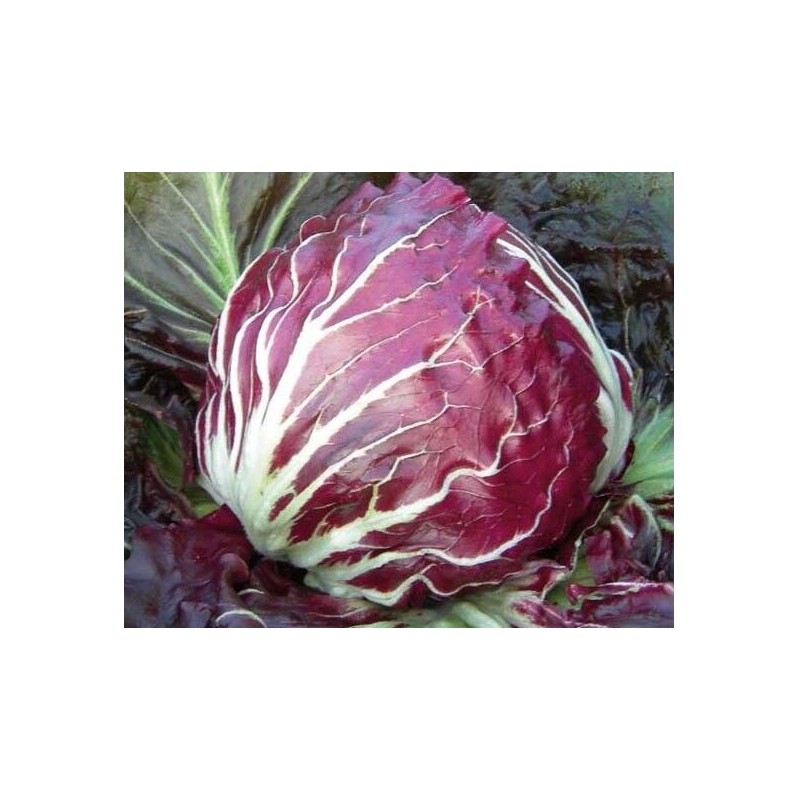
[Cichorium intybus] Mid-early red ball chicory seeds, forming compact, uniform red heads with good bolting resistance.
100 Items
More info
- Mid-Early Red Ball Chicory
- The mid-early red ball chicory Plant
- How to Sow Mid-Early Red Ball Chicory
- How to Grow Mid-Early Red Ball Chicory
- Tips for Growing Mid-Early Red Ball Chicory
- Diseases and Pests of Mid-Early Red Ball Chicory
- Properties and Nutritional Values
Mid-Early Red Ball Chicory
The mid-early red ball chicory is a highly regarded variety in Italian vegetable gardens for its balance between earliness and yield: it forms a compact, medium-sized head, ready for harvest with a slightly longer cycle than the earliest selections, but with greater uniformity and firmness of the heart. The leaves take on an intense red colour with clearly marked white veins.
The mid-early red ball chicory Plant
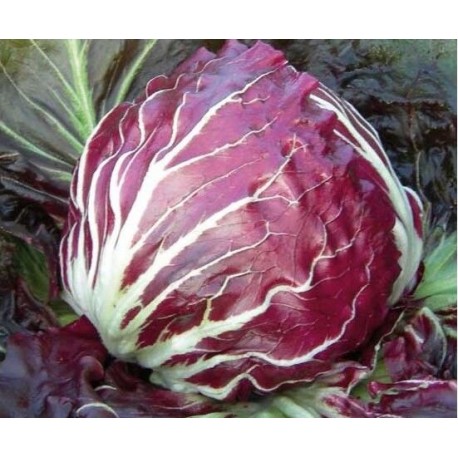
It belongs to the species Cichorium intybus, like all heading chicory and radicchio types. The head is round, tightly closed and uniform, with an average weight between 300 and 350 grams. The leaves, initially green, turn a deep, bright red as the first cool temperatures arrive, while the veins remain white, creating the characteristic colour contrast that makes this variety highly sought after for retail sale too.
How to Sow Mid-Early Red Ball Chicory
Sowing is generally carried out in mid-July in Northern Italy and towards the end of July in Central and Southern regions, to ensure a staggered harvest between October and December. It is sown in seedbeds or directly in the open field, at a depth of about 1 cm, later thinning the seedlings to about 30 cm apart along the row, with rows spaced 35-40 cm.
How to Grow Mid-Early Red Ball Chicory
It prefers fertile, well-drained soil and a sunny position. Watering should be regular but moderate, avoiding waterlogging that could cause crown rot. This variety offers good bolting resistance, an important advantage in summer sowings when high temperatures and long daylight hours could otherwise trigger premature flowering.
Tips for Growing Mid-Early Red Ball Chicory
To encourage the formation of a tightly closed head, it is best to avoid excessive nitrogen fertilisation in the final growth stages. During prolonged drought or excessive heat, supplemental watering helps prevent water stress that could compromise the head's compactness. The plant adapts well to different soil types but does not tolerate persistent frost.
Diseases and Pests of Mid-Early Red Ball Chicory
Like other chicory varieties, it can be affected by aphids, slugs and snails, especially during the early growth stages. In high humidity conditions, downy mildew or leaf rot may appear: good airflow between rows and watering aimed at the base of the plants significantly reduce the risk.
Properties and Nutritional Values
Like all red-leaved chicory, it is rich in minerals, B vitamins, vitamin C and antioxidants, and is known for its depurative and digestive properties. Its slightly bitter taste pairs well both with raw consumption in salads and with cooked preparations such as risottos, sautéed side dishes or oven-gratinated dishes.
| Average nutritional values (100 g) | |
|---|---|
| Energy | 23 kcal |
| Protein | 1.4 g |
| Carbohydrates | 4.7 g |
| Fibre | 0.9 g |
| Vitamin C | 24 mg |
| Potassium | 290 mg |