

No products
Melon seeds
-
Semi ortaggi
-
Summer vegetables seeds
- Garlic seeds
- Watermelon seeds
- Asparagus seeds
- Chili seeds
- Beet seeds
- Basil seeds
- Chard seeds
- Cabbage seeds
- Onion seeds
- Carrot seeds
- artichoke seeds
- Cucumber seeds
- Strawberry seeds
- Bean and green bean seeds
- Broad bean seeds
- Lettuce seeds
- Corn seed
- Eggplant seeds
- Melon seeds
- Okra seeds
- Tomato seeds
- Pea seeds
- Leek seeds
- Pepper seeds
- Radish seeds
- Arugula seeds
- Shallot seeds
- Celery seeds
- Spinach seeds
- Valerian seeds
- Pumpkin seeds
- Courgette seeds
-
Winter vegetables seeds
- broccoli seeds
- cauliflower seeds
- semi di cavolo
- fennel seeds
- Semi di lattuga
- chicory seeds
- Radicchio seeds
- Rocket seeds
- Chard and Beet Seeds
- Escarole Seeds
- Onion Seeds
- Basil Seeds
- Chard Seeds
- Artichoke Seeds
- Carrot Seeds
- Cucumber Seeds
- Bean Seeds
- Endive Seeds
- Leek Seeds
- Parsley Seeds
- Celery Seeds
- Spinach Seeds
- Valerian Seeds
-
Summer vegetables seeds
- Peperoncino secco
- Peperoncino in polvere
- Semi piante aromatiche
- Prati e tappeti erbosi
- Semi fiori ornamentali
- Fertilizzanti
- Fertilizzante solido
- Spezie
- eBook
- Bulbi
- Starter kit / Micro orto
- Idea regalo / Bomboniere
- Patate e tuberi da semina
- Buoni regalo digitali
- TEST posizioni
 View larger
Winter green melon seeds
New product
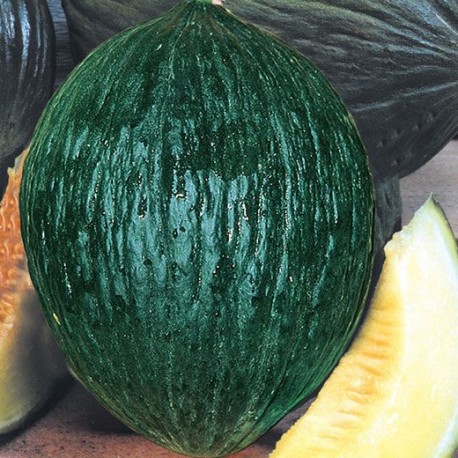
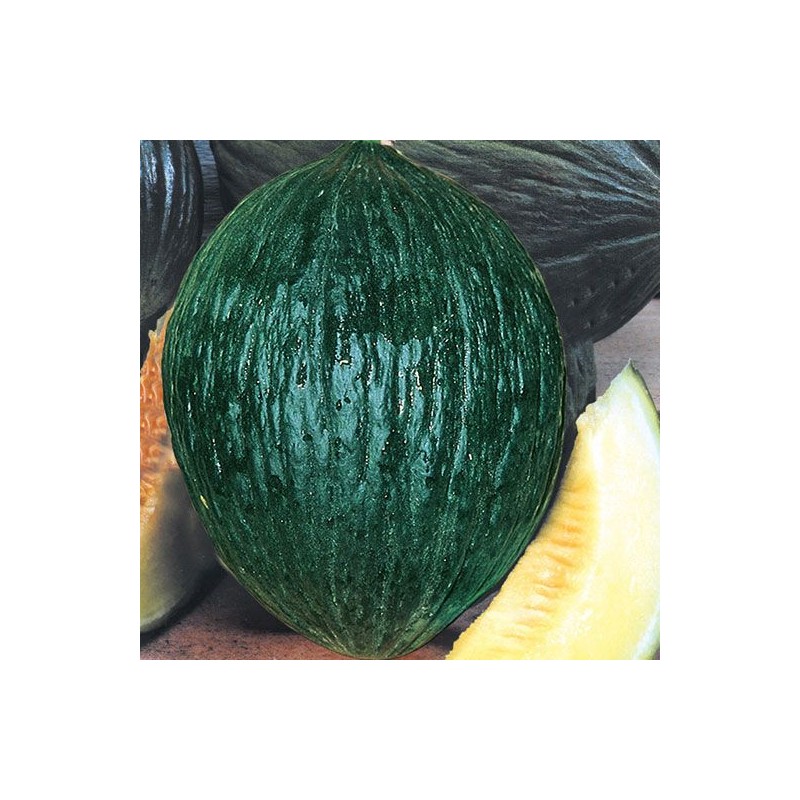
Winter melons have an ovoid shape and green skin, and although grown in the warm season, their real strength is how long they keep, thanks to a late-cycle nature. Their skin is smooth, with no ribbing.
99 Items
More info
Characteristics of winter green melon
Winter green melon belongs to the "inodorus" group, grown in summer but able to keep for a long time thanks to its late-cycle nature. The fruits are ovoid, with smooth green skin and no ribbing, and white, firm, sugary flesh. Unlike summer netted melons, this variety ripens more slowly, needing 120 to 150 days from sowing.
The plant
The plant belongs to the Cucurbitaceae family and has a medium-to-late growth cycle. It needs plenty of space to develop, with large, lobed leaves and an extensive root system. The yellow flowers require insect pollination for fruit set.
Sowing and transplanting
Sow in spring, from April to May, directly in the field once temperatures are steadily above 15-18°C, or in a protected seedbed to get a head start on the cycle. Plant 2-3 seeds per hole, about 2 cm deep, spacing plants 80-100 cm apart to allow the vines to spread freely.
Growing
Winter green melon prefers fertile, well-drained soil rich in organic matter, in a sunny spot sheltered from wind. Water regularly during the growing phase, gradually reducing watering as the fruit approaches ripeness to concentrate sugars in the flesh. Harvest usually takes place at the end of summer, once the fruit reaches full physiological ripeness.
Useful tips
For good winter storage, harvest fruits with the stem intact and keep them in a cool, dry, well-ventilated place, avoiding direct contact between fruits. Mulching the soil helps retain moisture and control weeds, while also protecting the fruit from direct contact with the ground.
Diseases and pests
Like other cucurbits, winter green melon can be affected by powdery mildew, downy mildew and attacks from aphids or whitefly. Good ventilation between plants and crop rotation with unrelated species help prevent the main plant health issues.
Storage and uses
This variety's real strength is its long shelf life: it can be eaten even 2-3 months after harvest, keeping its flesh and sweetness intact. Perfect eaten fresh as an end-of-season or winter fruit, green melon is also excellent in fruit salads and mixed salads for a touch of out-of-season freshness.
Quick facts
- Botanical name: Cucumis melo (inodorus group)
- Sowing: April - May
- Harvest: late summer
- Growing cycle: 120-150 days
- Storage: up to 2-3 months
- Exposure: full sun