

No products
Semi fiori ornamentali
-
Semi ortaggi
-
Summer vegetables seeds
- Garlic seeds
- Watermelon seeds
- Asparagus seeds
- Chili seeds
- Beet seeds
- Basil seeds
- Chard seeds
- Cabbage seeds
- Onion seeds
- Carrot seeds
- artichoke seeds
- Cucumber seeds
- Strawberry seeds
- Bean and green bean seeds
- Broad bean seeds
- Lettuce seeds
- Corn seed
- Eggplant seeds
- Melon seeds
- Okra seeds
- Tomato seeds
- Pea seeds
- Leek seeds
- Pepper seeds
- Radish seeds
- Arugula seeds
- Shallot seeds
- Celery seeds
- Spinach seeds
- Valerian seeds
- Pumpkin seeds
- Courgette seeds
-
Winter vegetables seeds
- broccoli seeds
- cauliflower seeds
- semi di cavolo
- fennel seeds
- Semi di lattuga
- chicory seeds
- Radicchio seeds
- Rocket seeds
- Chard and Beet Seeds
- Escarole Seeds
- Onion Seeds
- Basil Seeds
- Chard Seeds
- Artichoke Seeds
- Carrot Seeds
- Cucumber Seeds
- Bean Seeds
- Endive Seeds
- Leek Seeds
- Parsley Seeds
- Celery Seeds
- Spinach Seeds
- Valerian Seeds
-
Summer vegetables seeds
- Peperoncino secco
- Peperoncino in polvere
- Semi piante aromatiche
- Prati e tappeti erbosi
- Semi fiori ornamentali
- Encyclopedia vegetables
- Erbe aromatiche
- Enciclopedia dei pomodori
- Enciclopedia delle cipolle
- Enciclopedia delle melanzane
- Enciclopedia della lattuga
- Enciclopedia del cetriolo
- Enciclopedia delle zucchine
- Enciclopedia del cocomero
- Enciclopedia della carota
- Enciclopedia dell'asparago
- Enciclopedia del peperoncino
- Enciclopedia del carciofo
- Enciclopedia anguria
- Enciclopedia della barbabietola
- Enciclopedia del basilico
- Enciclopedia della bieta
- Enciclopedia del broccolo
- Enciclopedia del cavolfiore
- Enciclopedia del cavolo
- Enciclopedia della cicoria
- Enciclopedia del fagiolo e fagiolino
- Enciclopedia della fava
- Enciclopedia del finocchio
- Enciclopedia delle fragole
- Enciclopedia dell'indivia
- Enciclopedia del mais
- Enciclopedia dell'okra
- Enciclopedia del peperone
- Enciclopedia del pisello
- Enciclopedia del porro
- Enciclopedia del radicchio
- Enciclopedia del ravanello
- Enciclopedia della rucola
- Enciclopedia dello scalogno
- Enciclopedia del sedano
- Enciclopedia della scarola
- Enciclopedia dello spinacio
- Enciclopedia della valeriana
- Enciclopedia della zucca
 View larger
Cornflower Seeds
New product
25 Items
More info
- Cornflower Seeds
- The Cornflower Plant
- How to Sow Cornflower
- How to Grow Cornflower
- Tips for Growing Cornflower
- Diseases and Pests
- Uses and Curiosities
Cornflower Seeds
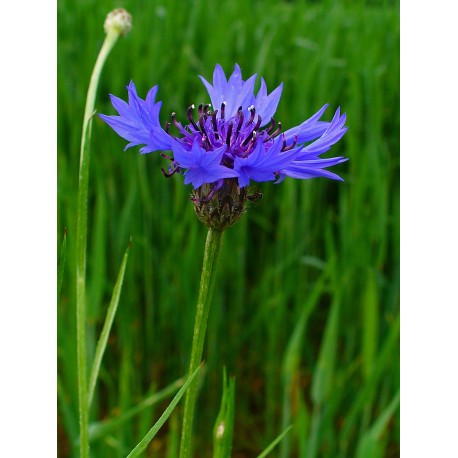
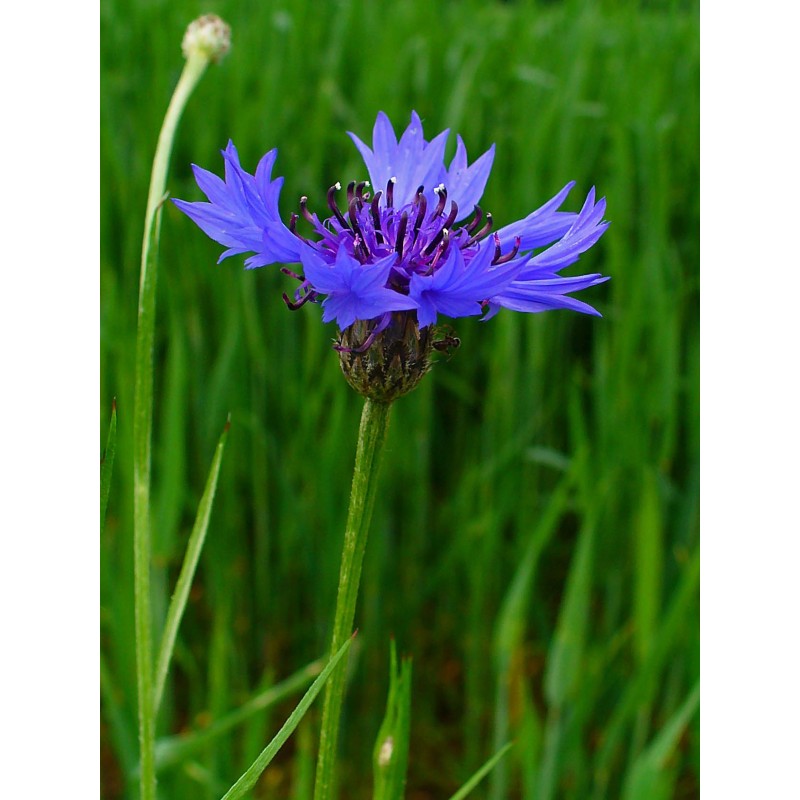
The cornflower (Centaurea cyanus), also called bachelor's button or bluebottle, is an annual herbaceous plant of the Asteraceae family. It once grew wild among wheat fields across Europe; today it is increasingly rare in the wild but much loved in gardens for its vivid deep-blue flowers.
The Cornflower Plant
It forms an upright bush averaging 50-70 cm tall, with a taproot-rhizome system and cylindrical stems covered in slightly hairy grey-green foliage. Basal leaves are large and arranged in a rosette, while stem leaves are smaller and lance-shaped. The flowers, gathered in heads, display the classic blue-violet shade, though white and pink hybrid varieties also exist. Modern cultivars also come in pink, white and burgundy shades, useful for creating mixed borders with strong visual impact.
How to Sow Cornflower
In mild-winter areas, autumn sowing (September-October) produces stronger plants and earlier late-spring blooms; in colder regions, sow instead in late February-March. Broadcast the seeds, mixing them with a little sand for even distribution, and cover with a thin layer of light soil. Germination takes about 10 days.
How to Grow Cornflower
It prefers sunny, wind-sheltered spots and loose, cool soil rich in organic matter, though it also adapts well to sandy soils as long as they are well-drained. Water regularly, letting the soil dry slightly between waterings to avoid waterlogging. Feeding every 15-20 days with a flowering-plant fertilizer encourages abundant blooms from May to August.
Tips for Growing Cornflower
Once seedlings are easy to handle, thin them to 20-40 cm apart to encourage a fuller, bushier plant. In pots, use a soft, perfectly draining substrate in full sun or partial shade. Cornflower tends to self-seed if some flower heads are left to dry on the plant.
Diseases and Pests
A hardy, generally resistant plant, it can occasionally suffer from powdery mildew in poorly ventilated or waterlogged conditions; good drainage and adequate spacing prevent most issues.
The rare true-blue color of the cornflower has long made it a symbolic flower: in several European countries it is linked to remembrance, while in the language of flowers it represents delicacy and faithfulness. In the past, dried petals were also used as a natural dye for fabrics and inks.
It pairs beautifully in flower beds with other contrasting annuals such as poppies, nigella and ornamental grasses, creating a natural wildflower-meadow effect. In vegetable gardens, besides being a valuable plant for pollinators, it helps attract beneficial insects that prey on pests of brassica crops like cabbages.
Uses and Curiosities
The flowers are edible and used to decorate summer salads, and make an excellent cut flower for bouquets. Cornflower is also a valuable plant for pollinators, attracting bees and beneficial insects, and has traditionally been used in herbalism for its soothing effect on the eyes.