

No products
Semi fiori ornamentali
-
Semi ortaggi
-
Summer vegetables seeds
- Garlic seeds
- Watermelon seeds
- Asparagus seeds
- Chili seeds
- Beet seeds
- Basil seeds
- Chard seeds
- Cabbage seeds
- Onion seeds
- Carrot seeds
- artichoke seeds
- Cucumber seeds
- Strawberry seeds
- Bean and green bean seeds
- Broad bean seeds
- Lettuce seeds
- Corn seed
- Eggplant seeds
- Melon seeds
- Okra seeds
- Tomato seeds
- Pea seeds
- Leek seeds
- Pepper seeds
- Radish seeds
- Arugula seeds
- Shallot seeds
- Celery seeds
- Spinach seeds
- Valerian seeds
- Pumpkin seeds
- Courgette seeds
-
Winter vegetables seeds
- broccoli seeds
- cauliflower seeds
- semi di cavolo
- fennel seeds
- Semi di lattuga
- chicory seeds
- Radicchio seeds
- Rocket seeds
- Chard and Beet Seeds
- Escarole Seeds
- Onion Seeds
- Basil Seeds
- Chard Seeds
- Artichoke Seeds
- Carrot Seeds
- Cucumber Seeds
- Bean Seeds
- Endive Seeds
- Leek Seeds
- Parsley Seeds
- Celery Seeds
- Spinach Seeds
- Valerian Seeds
-
Summer vegetables seeds
- Peperoncino secco
- Peperoncino in polvere
- Semi piante aromatiche
- Prati e tappeti erbosi
- Semi fiori ornamentali
- Fertilizzanti
- Fertilizzante solido
- Spezie
- eBook
- Bulbi
- Starter kit / Micro orto
- Idea regalo / Bomboniere
- Patate e tuberi da semina
- Buoni regalo digitali
- TEST posizioni
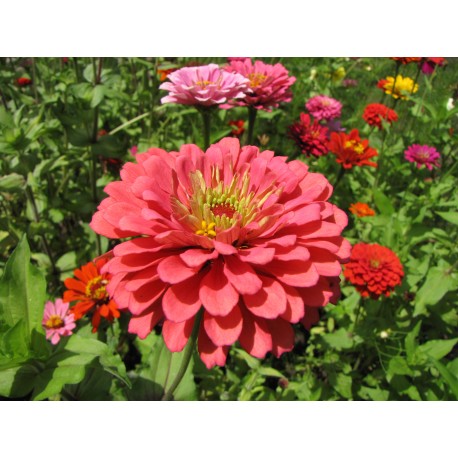 View larger
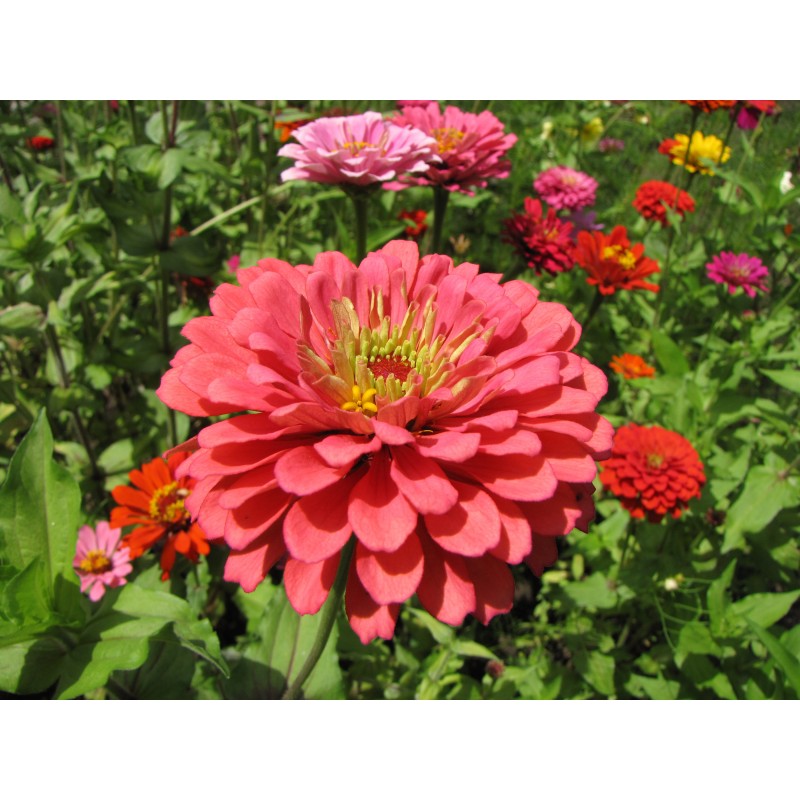
Zinnia Seeds
New product
[Zinnia elegans] A Mexican annual with vivid, long-lasting blooms, one of the best-selling garden flowers worldwide for borders, beds and cut flowers, loved by butterflies.
20 Items
More info
- Zinnia Seeds
- The Zinnia Plant
- How to Sow Zinnia
- How to Grow Zinnia
- Growing Tips
- Diseases and Pests
- Uses and Curiosities
Zinnia Seeds
Zinnia (Zinnia elegans) is an annual herbaceous plant native to Mexico, now one of the most widely grown garden flowers in the world thanks to its easy cultivation and abundant, colorful blooms. The flowers, simple or double, come in many shades: red, pink, orange, yellow, white and purple.
The Zinnia Plant
It belongs to the Asteraceae family. It has opposite lance-shaped leaves and upright stems that, depending on the variety, range from 15 centimeters in dwarf forms up to a meter in the most vigorous varieties, such as giant Zinnia elegans. Its root system is delicate, made up of thin roots.
Many varieties grown today are hybrids selected from Zinnia elegans, such as the popular Lilliput and Pompon series, with compact, semi-globe shaped flowers.
How to Sow Zinnia
Sow in March in a protected seedbed, keeping the soil light and constantly moist at a temperature of 16-18 degrees C, or directly in the ground from April-May, after the last frost, at a depth of about 0.5-1 cm. Germination usually occurs within a week.
How to Grow Zinnia
Zinnia prefers full sun, with at least 6-8 hours of direct light a day, and well-drained soil that is not particularly demanding in fertility. Seedlings should be spaced 30 cm apart for dwarf varieties and about 50 cm for giant ones. Watering should be regular but moderate, avoiding wetting the leaves to prevent fungal disease.
Growing Tips
Regularly deadheading spent flowers encourages the plant to keep producing new buds throughout summer. For container growing, dwarf varieties are the better choice, as they need less space and watering.
Diseases and Pests
Zinnia is a robust plant, but in conditions of high humidity or poor air circulation it can be affected by powdery mildew, recognizable by the whitish coating on leaves and stems, and occasionally by alternaria leaf spot. Mealybugs are among the most common pests. Good air circulation and watering at the base of the plant help prevent these issues.
Uses and Curiosities
Thanks to sturdy stems and long vase life, zinnia is one of the most popular cut flowers. It attracts many butterflies to the garden and is generally not favored by deer. Seeds are easily collected from dried flower heads at the end of the season and remain viable for 3-4 years.
- Sowing: March indoors, April-May outdoors
- Exposure: full sun
- Flowering: June to September
- Height: 15 cm - 1 m depending on variety
- Soil: well-drained, not demanding
- Watering: regular, avoid wetting leaves
- Recommended use: borders, beds, containers, cut flower