

No products
Semi fiori ornamentali
-
Semi ortaggi
-
Summer vegetables seeds
- Garlic seeds
- Watermelon seeds
- Asparagus seeds
- Chili seeds
- Beet seeds
- Basil seeds
- Chard seeds
- Cabbage seeds
- Onion seeds
- Carrot seeds
- artichoke seeds
- Cucumber seeds
- Strawberry seeds
- Bean and green bean seeds
- Broad bean seeds
- Lettuce seeds
- Corn seed
- Eggplant seeds
- Melon seeds
- Okra seeds
- Tomato seeds
- Pea seeds
- Leek seeds
- Pepper seeds
- Radish seeds
- Arugula seeds
- Shallot seeds
- Celery seeds
- Spinach seeds
- Valerian seeds
- Pumpkin seeds
- Courgette seeds
-
Winter vegetables seeds
- broccoli seeds
- cauliflower seeds
- semi di cavolo
- fennel seeds
- Semi di lattuga
- chicory seeds
- Radicchio seeds
- Rocket seeds
- Chard and Beet Seeds
- Escarole Seeds
- Onion Seeds
- Basil Seeds
- Chard Seeds
- Artichoke Seeds
- Carrot Seeds
- Cucumber Seeds
- Bean Seeds
- Endive Seeds
- Leek Seeds
- Parsley Seeds
- Celery Seeds
- Spinach Seeds
- Valerian Seeds
-
Summer vegetables seeds
- Peperoncino secco
- Peperoncino in polvere
- Semi piante aromatiche
- Prati e tappeti erbosi
- Semi fiori ornamentali
- Fertilizzanti
- Fertilizzante solido
- Spezie
- eBook
- Bulbi
- Starter kit / Micro orto
- Idea regalo / Bomboniere
- Patate e tuberi da semina
- Buoni regalo digitali
- TEST posizioni
 View larger
Petunia Seeds
New product
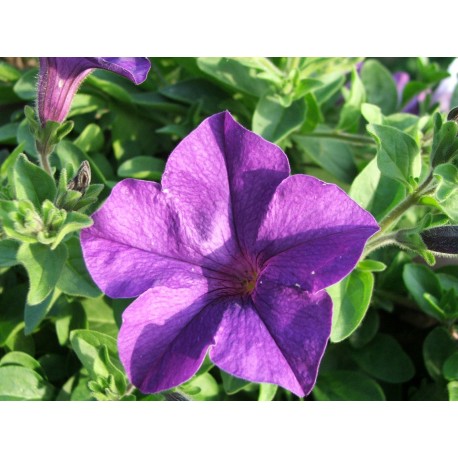
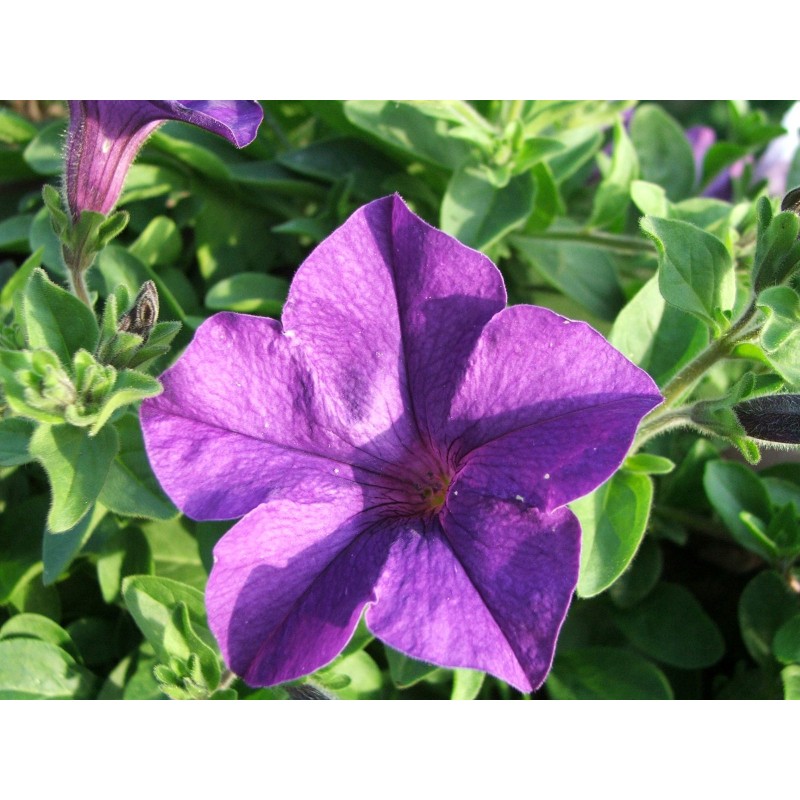
[Petunia x hybrida] One of the world's best-loved balcony plants, funnel-shaped flowers in countless colours, blooming non-stop from June to the first frosts.
20 Items
More info
- Petunia Seeds
- The Petunia Plant
- How to Sow Petunia
- How to Grow Petunia
- Growing Tips
- Diseases and Pests
- Uses and Curiosities
Petunia Seeds
Petunia (Petunia x hybrida) is one of the most beloved and widely grown balcony plants in the world, native to South America and belonging to the Solanaceae family, the same as tomato and eggplant. It is the result of historic crosses between wild species such as Petunia axillaris and Petunia violacea, now available in hundreds of varieties.
The Petunia Plant
It has a bushy or trailing habit depending on the variety, with oval, dark green leaves that feel slightly sticky to the touch. The funnel-shaped, five-lobed flowers come in a huge range of colours: from white to pink, purple to red, often with contrasting stripes, speckles or edges.
It blooms abundantly from June until the first autumn frosts, providing an almost uninterrupted display all summer long.
How to Sow Petunia
Sow in early spring in a protected, heated seed tray, or directly outdoors once the risk of night frost has passed. Use cell trays with a specific potting mix: 1-2 seeds per cell at about 0.5 cm depth, lightly firming the soil and misting with a light spray.
Keep the seed tray in a sheltered, bright spot until germination, which generally takes one to two weeks.
How to Grow Petunia
Petunia loves very sunny spots and well-drained soil enriched with good quality potting mix. It does not tolerate prolonged dryness: during hotter periods, water it regularly, preferably early morning or evening, avoiding wetting the flowers and leaves to prevent fungal disease.
Overly wet soil can instead cause root rot, so drainage remains a key factor both in pots and in open ground.
Growing Tips
For pots around 30 cm in diameter, it's best to dedicate the space to a single variety, while in mixed borders it can be alternated with other annuals such as Verbena. Regularly removing spent flowers and bare stems encourages new blooms and keeps the plant compact.
Diseases and Pests
Petunia leaves are often the first to be affected by pests: if they appear black or sticky to the touch, it's important to act quickly. Among the most common fungal diseases is grey mould (Botrytis), favoured by high humidity, which is prevented with good air circulation and by avoiding wetting the plant's upper parts.
Uses and Curiosities
Besides being the quintessential balcony and terrace plant, Petunia is also used as ground cover in sunny borders and readily attracts bees and butterflies. Its name comes from the French "petun", itself taken from a Tupi-Guarani word for tobacco, a plant related to Petunia since both belong to the Solanaceae family.