

No products
Semi fiori ornamentali
-
Semi ortaggi
-
Summer vegetables seeds
- Garlic seeds
- Watermelon seeds
- Asparagus seeds
- Chili seeds
- Beet seeds
- Basil seeds
- Chard seeds
- Cabbage seeds
- Onion seeds
- Carrot seeds
- artichoke seeds
- Cucumber seeds
- Strawberry seeds
- Bean and green bean seeds
- Broad bean seeds
- Lettuce seeds
- Corn seed
- Eggplant seeds
- Melon seeds
- Okra seeds
- Tomato seeds
- Pea seeds
- Leek seeds
- Pepper seeds
- Radish seeds
- Arugula seeds
- Shallot seeds
- Celery seeds
- Spinach seeds
- Valerian seeds
- Pumpkin seeds
- Courgette seeds
-
Winter vegetables seeds
- broccoli seeds
- cauliflower seeds
- semi di cavolo
- fennel seeds
- Semi di lattuga
- chicory seeds
- Radicchio seeds
- Rocket seeds
- Chard and Beet Seeds
- Escarole Seeds
- Onion Seeds
- Basil Seeds
- Chard Seeds
- Artichoke Seeds
- Carrot Seeds
- Cucumber Seeds
- Bean Seeds
- Endive Seeds
- Leek Seeds
- Parsley Seeds
- Celery Seeds
- Spinach Seeds
- Valerian Seeds
-
Summer vegetables seeds
- Peperoncino secco
- Peperoncino in polvere
- Semi piante aromatiche
- Prati e tappeti erbosi
- Semi fiori ornamentali
- Fertilizzanti
- Fertilizzante solido
- Spezie
- eBook
- Bulbi
- Starter kit / Micro orto
- Idea regalo / Bomboniere
- Patate e tuberi da semina
- Buoni regalo digitali
- TEST posizioni
 View larger
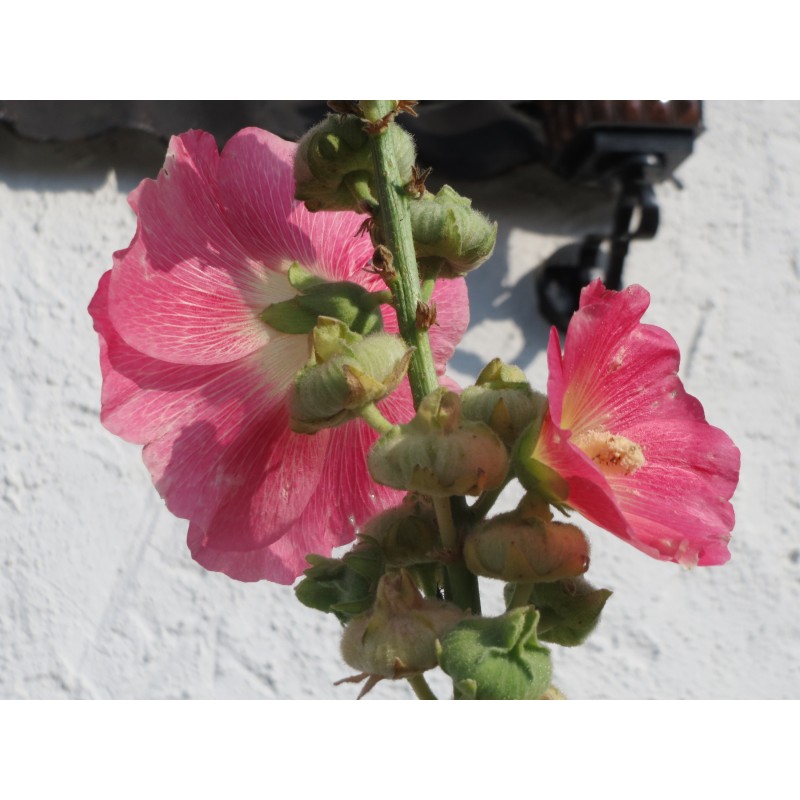
Hollyhock Seeds
New product
20 Items
More info
- Hollyhock Seeds
- The Hollyhock Plant
- How to Sow Hollyhock
- How to Grow Hollyhock
- Tips for Growing Hollyhock
- Hollyhock Diseases and Pests
- Uses and Curiosities of Hollyhock
Hollyhock Seeds
The Hollyhock (Alcea rosea) is a herbaceous plant native to southeastern Asia, grown for centuries in gardens for its majestic stems that can exceed two metres in height. The large cup-shaped flowers, similar to peonies or hibiscus, bloom all along the stem from the bottom up, offering a spectacular display from June to September.
The Hollyhock Plant
It belongs to the Malvaceae family and is characterised by a basal rosette of large, rough-textured palmate leaves, from which erect, lightly branched stems develop. The flowers, up to 10 cm wide, come in a wide range of colours: white, yellow, pink, red, purple, including double-flowered varieties.
It is a biennial or short-lived perennial: the most abundant flowering usually occurs in the second year after sowing.
How to Sow Hollyhock
Sow in a seedbed from April to June, burying the seeds about 1 cm deep. Seedlings should be transplanted once they show 2-3 true leaves, spacing them at least 60 cm apart to allow proper development.
How to Grow Hollyhock
It prefers deep, well-drained soil and a sunny position sheltered from wind, given the height the stems reach. Watering should be regular but moderate, increasing during prolonged dry spells and while flowering.
Deadheading spent flowers helps prolong blooming; at the end of the season the dry stems can be cut back, leaving the base to overwinter and resprout in spring.
Tips for Growing Hollyhock
Given its considerable height, it is best placed at the back of mixed borders or along walls and fences, staked if needed in windier spots. It pairs well with delphiniums and clematis for striking combinations.
Hollyhock Diseases and Pests
The most common issue is hollyhock rust (Puccinia malvacearum), recognisable by brown spots on the leaves: good air circulation helps prevent it, and horsetail extract or specific fungicides can control it. Overwatering may lead to root rot.
Uses and Curiosities of Hollyhock
Grown since ancient times in cottage gardens, the Hollyhock self-seeds easily as the wind scatters its abundant seeds. It is often associated with the romantic image of the English cottage garden, thanks to its stately presence and long flowering season.