

No products
Semi fiori ornamentali
-
Semi ortaggi
-
Summer vegetables seeds
- Garlic seeds
- Watermelon seeds
- Asparagus seeds
- Chili seeds
- Beet seeds
- Basil seeds
- Chard seeds
- Cabbage seeds
- Onion seeds
- Carrot seeds
- artichoke seeds
- Cucumber seeds
- Strawberry seeds
- Bean and green bean seeds
- Broad bean seeds
- Lettuce seeds
- Corn seed
- Eggplant seeds
- Melon seeds
- Okra seeds
- Tomato seeds
- Pea seeds
- Leek seeds
- Pepper seeds
- Radish seeds
- Arugula seeds
- Shallot seeds
- Celery seeds
- Spinach seeds
- Valerian seeds
- Pumpkin seeds
- Courgette seeds
-
Winter vegetables seeds
- broccoli seeds
- cauliflower seeds
- semi di cavolo
- fennel seeds
- Semi di lattuga
- chicory seeds
- Radicchio seeds
- Rocket seeds
- Chard and Beet Seeds
- Escarole Seeds
- Onion Seeds
- Basil Seeds
- Chard Seeds
- Artichoke Seeds
- Carrot Seeds
- Cucumber Seeds
- Bean Seeds
- Endive Seeds
- Leek Seeds
- Parsley Seeds
- Celery Seeds
- Spinach Seeds
- Valerian Seeds
-
Summer vegetables seeds
- Peperoncino secco
- Peperoncino in polvere
- Semi piante aromatiche
- Prati e tappeti erbosi
- Semi fiori ornamentali
- Fertilizzanti
- Fertilizzante solido
- Spezie
- eBook
- Bulbi
- Starter kit / Micro orto
- Idea regalo / Bomboniere
- Patate e tuberi da semina
- Buoni regalo digitali
- TEST posizioni
 View larger
Nemesia Seeds
New product
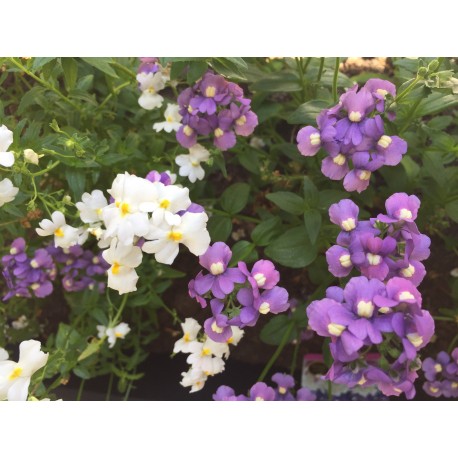
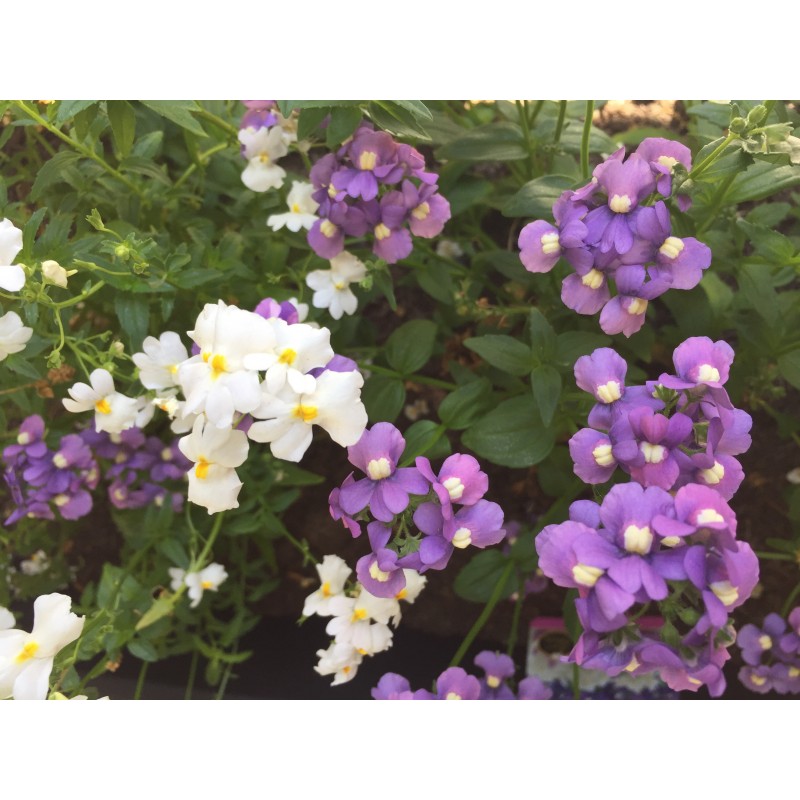
[Nemesia strumosa] Annual herbaceous plant with generous, non-stop flowering in bicoloured shades of white, yellow, pink, red, blue and purple. Compact, spreading habit, 15-40 cm tall, perfect both in the ground and in pots or balcony window boxes. Blooms from April until the first autumn frosts, with a delicate fragrance. Ideal for mixed borders and colourful flower beds, it attracts bees and pollinators to the garden.
20 Items
More info
- Nemesia Seeds
- The Nemesia Plant
- How to Sow Nemesia
- How to Grow Nemesia
- Tips for Growing Nemesia
- Pests and Diseases of Nemesia
- Uses and Curiosities of Nemesia
Nemesia Seeds
Nemesia (Nemesia strumosa) is a herbaceous plant native to South Africa, prized for its generous, non-stop flowering in a stunning range of colours: white, yellow, pink, red, blue and purple, often bicoloured with a contrasting central eye. The name comes from Nemesis, the Greek goddess of justice, while the epithet "strumosa" refers to the peculiar shape of the flowers.
The Nemesia Plant
It belongs to the Scrophulariaceae family, the same as Snapdragon, which its flowers resemble in shape. It is a compact plant, 15-40 cm tall, with a spreading or slightly trailing habit, ideal both in the ground and in pots.
The stems are herbaceous, thin and highly branched, with a square cross-section; the leaves are small, light or dark green, lance-shaped and slightly toothed at the edges. The flowers, gathered in terminal racemes, give off a delicate fragrance that intensifies during the warmest hours of the day.
How to Sow Nemesia
Sowing is done in a seedbed in February-March, in a protected, bright environment, at temperatures around 18-20 degrees. The seeds are very small and should be barely covered with a thin layer of fine soil, keeping the substrate constantly moist until germination, which takes 10-15 days.
How to Grow Nemesia
It prefers full sun or partial shade in hotter areas, with at least 5-6 hours of direct light per day to ensure abundant flowering. The ideal soil is medium-textured, slightly acidic, rich in organic matter and well-drained.
Watering should be regular, more frequent during summer, while avoiding waterlogging which favours root rot. Liquid feeding every 15 days during flowering, from April to September, supports lush, continuous growth.
Tips for Growing Nemesia
Regularly removing spent flowers (deadheading) stimulates new buds and significantly extends the flowering period. Cutting back the stems after the first summer bloom can produce a second flush of flowers between late summer and early autumn.
It is a delicate plant that dislikes intense cold and temperature swings: in areas with harsh winters it is grown as an annual, while in mild climates it can behave as a short-lived perennial.
Pests and Diseases of Nemesia
Young shoots can be attacked by aphids, which can be controlled with biological treatments based on nettle or garlic. Excess moisture at the collar can favour root rot, so good drainage of the soil or potting substrate is essential.
Uses and Curiosities of Nemesia
Perfect for mixed borders, flower beds, pots and balcony window boxes, Nemesia shows off its best in mixed compositions thanks to its compact habit and vivid colours. It is also highly appreciated by pollinators for its abundant nectar and the intense fragrance of its flowers.