

No products
Semi fiori ornamentali
-
Semi ortaggi
-
Summer vegetables seeds
- Garlic seeds
- Watermelon seeds
- Asparagus seeds
- Chili seeds
- Beet seeds
- Basil seeds
- Chard seeds
- Cabbage seeds
- Onion seeds
- Carrot seeds
- artichoke seeds
- Cucumber seeds
- Strawberry seeds
- Bean and green bean seeds
- Broad bean seeds
- Lettuce seeds
- Corn seed
- Eggplant seeds
- Melon seeds
- Okra seeds
- Tomato seeds
- Pea seeds
- Leek seeds
- Pepper seeds
- Radish seeds
- Arugula seeds
- Shallot seeds
- Celery seeds
- Spinach seeds
- Valerian seeds
- Pumpkin seeds
- Courgette seeds
-
Winter vegetables seeds
- broccoli seeds
- cauliflower seeds
- semi di cavolo
- fennel seeds
- Semi di lattuga
- chicory seeds
- Radicchio seeds
- Rocket seeds
- Chard and Beet Seeds
- Escarole Seeds
- Onion Seeds
- Basil Seeds
- Chard Seeds
- Artichoke Seeds
- Carrot Seeds
- Cucumber Seeds
- Bean Seeds
- Endive Seeds
- Leek Seeds
- Parsley Seeds
- Celery Seeds
- Spinach Seeds
- Valerian Seeds
-
Summer vegetables seeds
- Peperoncino secco
- Peperoncino in polvere
- Semi piante aromatiche
- Prati e tappeti erbosi
- Semi fiori ornamentali
- Fertilizzanti
- Fertilizzante solido
- Spezie
- eBook
- Bulbi
- Starter kit / Micro orto
- Idea regalo / Bomboniere
- Patate e tuberi da semina
- Buoni regalo digitali
- TEST posizioni
 View larger
Scarlet Flax Seeds
New product
20 Items
More info
- Scarlet Flax Seeds
- The Scarlet Flax Plant
- How to Sow Scarlet Flax
- How to Grow Scarlet Flax
- Tips for Growing Scarlet Flax
- Diseases and Pests of Scarlet Flax
- Uses and Curiosities of Scarlet Flax
Scarlet Flax Seeds
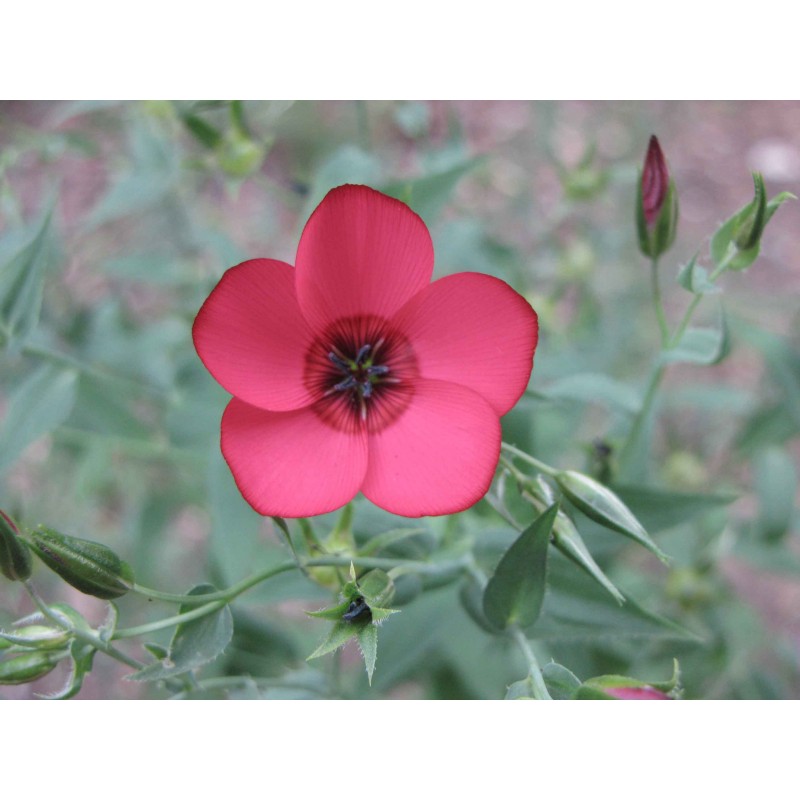
Scarlet Flax (Linum grandiflorum), also known as Flowering Flax or Red Flax, is a hardy annual plant in the Flax family, native to North Africa. It differs from common fiber flax in its large, vividly colored flowers, often an intense crimson red with a darker center.
The Scarlet Flax Plant
It forms a small, upright, slender bush with thin, sturdy, hairless stems in silvery-green, reaching 40-50 cm in height. The leaves are small, linear to lance-shaped, with prominent veins.
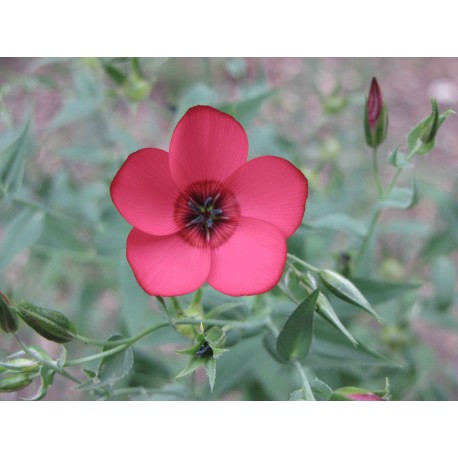
The flat, cup-shaped flowers, 2-4 cm wide, are made of five lobed, satiny petals; in the most common variety (Rubrum) they are blood red, though white, sky-blue and salmon variants also exist. Each flower lasts only a day, but the plant keeps producing new ones from early summer through autumn.
How to Sow Scarlet Flax
Sow directly outdoors in spring, once frost danger has passed, in light, well-drained soil and a sunny spot. It dislikes transplanting, so direct sowing is always preferable to starting it in a seedbed.
How to Grow Scarlet Flax
It's one of the easiest hardy annuals to grow: it prefers full sun and, once established, tolerates drought well thanks to its North African origins suited to Mediterranean summer heat. Regular watering is only needed during germination and early growth.
It blooms from summer into autumn with an uninterrupted succession of flowers, and readily self-seeds in light soils, often returning spontaneously the following year.
Tips for Growing Scarlet Flax
Ideal for sunny beds, rockeries and cottage-style borders, where its light, continuous blooming quickly creates a natural, spontaneous effect. It also does well broadcast-sown in dense groups for a fuller display.
Diseases and Pests of Scarlet Flax
It's a generally very resistant plant with no major disease issues. Excess moisture and heavy, poorly drained soil can favor root rot, best avoided by ensuring good drainage.
Uses and Curiosities of Scarlet Flax
Unlike Linum usitatissimum, grown for textile fiber and edible seeds, Scarlet Flax is grown purely as an ornamental for the beauty of its satiny flowers. Its simple, fleeting bloom, similar to a poppy's, makes it perfect for quickly creating a naturalistic or Mediterranean-style garden scene.