

No products
Semi fiori ornamentali
-
Semi ortaggi
-
Summer vegetables seeds
- Garlic seeds
- Watermelon seeds
- Asparagus seeds
- Chili seeds
- Beet seeds
- Basil seeds
- Chard seeds
- Cabbage seeds
- Onion seeds
- Carrot seeds
- artichoke seeds
- Cucumber seeds
- Strawberry seeds
- Bean and green bean seeds
- Broad bean seeds
- Lettuce seeds
- Corn seed
- Eggplant seeds
- Melon seeds
- Okra seeds
- Tomato seeds
- Pea seeds
- Leek seeds
- Pepper seeds
- Radish seeds
- Arugula seeds
- Shallot seeds
- Celery seeds
- Spinach seeds
- Valerian seeds
- Pumpkin seeds
- Courgette seeds
-
Winter vegetables seeds
- broccoli seeds
- cauliflower seeds
- semi di cavolo
- fennel seeds
- Semi di lattuga
- chicory seeds
- Radicchio seeds
- Rocket seeds
- Chard and Beet Seeds
- Escarole Seeds
- Onion Seeds
- Basil Seeds
- Chard Seeds
- Artichoke Seeds
- Carrot Seeds
- Cucumber Seeds
- Bean Seeds
- Endive Seeds
- Leek Seeds
- Parsley Seeds
- Celery Seeds
- Spinach Seeds
- Valerian Seeds
-
Summer vegetables seeds
- Peperoncino secco
- Peperoncino in polvere
- Semi piante aromatiche
- Prati e tappeti erbosi
- Semi fiori ornamentali
- Fertilizzanti
- Fertilizzante solido
- Spezie
- eBook
- Bulbi
- Starter kit / Micro orto
- Idea regalo / Bomboniere
- Patate e tuberi da semina
- Buoni regalo digitali
- TEST posizioni
 View larger
Clarkia Seeds
New product
20 Items
More info
- Clarkia Seeds
- The Clarkia Plant
- How to Sow Clarkia
- How to Grow Clarkia
- Tips for Growing Clarkia
- Diseases and Pests of Clarkia
- Uses and Curiosities of Clarkia
Clarkia Seeds
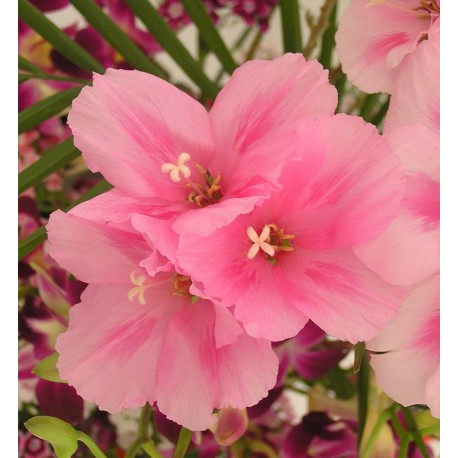
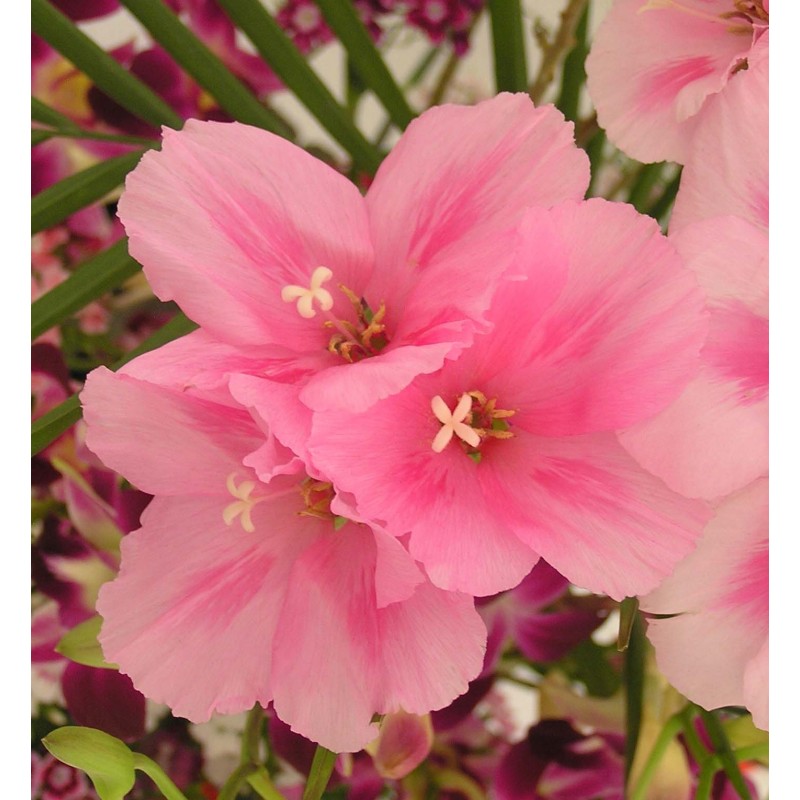
Clarkia (Clarkia amoena), also known as Godetia after its former botanical name, is an annual plant in the Evening Primrose family, native to the western coasts of North America, from British Columbia to California. It is prized for its silky flowers resembling small azaleas.
The Clarkia Plant
It forms vigorous, bushy plants with numerous slender branches reaching 50-60 cm in height. The leaves are narrow and linear, 2-7 cm long.
The funnel-shaped flowers, single or double depending on the cultivar, have four broad, silky-textured petals in shades ranging from pink to salmon, white to purple, often streaked or bicolor toward the throat. They bloom in terminal spikes from late spring through early autumn.
How to Sow Clarkia
Sow directly outdoors in spring (April), or in trays for later transplanting at about 40x40 cm spacing. It's best not to sow too densely, to encourage strong, well-branched plants.
How to Grow Clarkia
It prefers well-drained, moderately fertile, fairly cool and light soil in a sunny spot. It's one of the easiest hardy annuals to grow, with low maintenance requirements.
Flowering, staggered from June to September depending on sowing date, can be extended by sowing at different times through the same season.
Tips for Growing Clarkia
Ideal for borders, mixed beds and cottage-style plantings. It's also an excellent cut flower: the slender but sturdy stems work well in fresh arrangements.
Diseases and Pests of Clarkia
It's generally a resistant plant with no major disease issues. Heavy soil or waterlogging can favor root rot, best avoided by ensuring good substrate drainage.
Uses and Curiosities of Clarkia
Its English common name "farewell to spring" comes from its bloom period, which marks the transition from late spring to summer in its native range. Once a bit forgotten in modern gardens, Clarkia is making a comeback thanks to its abundant blooms and the silky texture of its petals, closely resembling those of the azalea.