

No products
Basil seeds
-
Semi ortaggi
-
Summer vegetables seeds
- Garlic seeds
- Watermelon seeds
- Asparagus seeds
- Chili seeds
- Beet seeds
- Basil seeds
- Chard seeds
- Cabbage seeds
- Onion seeds
- Carrot seeds
- artichoke seeds
- Cucumber seeds
- Strawberry seeds
- Bean and green bean seeds
- Broad bean seeds
- Lettuce seeds
- Corn seed
- Eggplant seeds
- Melon seeds
- Okra seeds
- Tomato seeds
- Pea seeds
- Leek seeds
- Pepper seeds
- Radish seeds
- Arugula seeds
- Shallot seeds
- Celery seeds
- Spinach seeds
- Valerian seeds
- Pumpkin seeds
- Courgette seeds
-
Winter vegetables seeds
- broccoli seeds
- cauliflower seeds
- semi di cavolo
- fennel seeds
- Semi di lattuga
- chicory seeds
- Radicchio seeds
- Rocket seeds
- Chard and Beet Seeds
- Escarole Seeds
- Onion Seeds
- Basil Seeds
- Chard Seeds
- Artichoke Seeds
- Carrot Seeds
- Cucumber Seeds
- Bean Seeds
- Endive Seeds
- Leek Seeds
- Parsley Seeds
- Celery Seeds
- Spinach Seeds
- Valerian Seeds
-
Summer vegetables seeds
- Peperoncino secco
- Peperoncino in polvere
- Semi piante aromatiche
- Prati e tappeti erbosi
- Semi fiori ornamentali
- Fertilizzanti
- Fertilizzante solido
- Spezie
- eBook
- Bulbi
- Starter kit / Micro orto
- Idea regalo / Bomboniere
- Patate e tuberi da semina
- Buoni regalo digitali
- TEST posizioni
 View larger

Greek Basil Seeds
New product
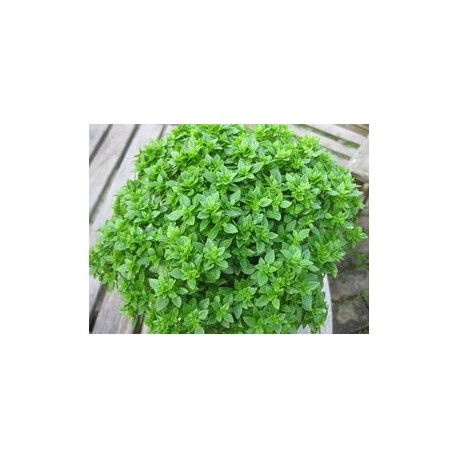
[Ocimum basilicum var. minimum] Greek basil seeds, a compact variety with small aromatic leaves and naturally spherical form, perfect for container gardening and garnishing.
100 Items
More info
- Greek Basil
- The Greek Basil Plant
- How to Sow Greek Basil
- How to Grow Greek Basil
- Tips for Greek Basil
- Diseases and Pests of Greek Basil
- Uses and Curiosities of Greek Basil
Greek Basil
Greek basil, scientifically known as Ocimum basilicum var. minimum, is a compact and highly aromatic basil variety, also known as bush basil for its naturally rounded shape. Originating from tropical Asia, it has been widely cultivated in Mediterranean countries and remains an excellent choice for both gardens and container cultivation, thanks to its small leaves and sweeter, spicier flavour compared to traditional varieties.
The Greek Basil Plant
Ocimum basilicum var. minimum belongs to the Lamiaceae family. The plant is an annual herb with a strongly bushy and compact habit, reaching a height of about 20-30 centimetres. The leaves are very small, oval and bright green, much smaller than Genovese basil. The most distinctive character is the naturally rounded shape of the plant, which forms a sort of green dome without requiring pruning. The flowers are small and white, grouped in terminal inflorescences.
How to Sow Greek Basil
Sowing takes place from March to April in a protected seedbed, transplanting seedlings to the field from May onwards, once night temperatures stay steadily above 10°C. Greek basil is slightly more cold-tolerant than other varieties. Seeds should be covered with a thin layer of soil, keeping the substrate moist: germination occurs in about 7-14 days at a temperature of 20-25°C. Plants develop vigorously and regularly if they start from fresh seeds.
How to Grow Greek Basil
Greek basil prefers fertile, well-draining soil that is moderately moist, in a sunny position. It grows well in both open ground and containers, making it ideal for balconies and terraces. Watering should be regular but not excessive. Unlike other varieties, Greek basil is more cold-tolerant and can withstand slightly lower temperatures, although the optimum thermal range remains around 20-25°C.
Tips for Greek Basil
This variety reaches a compact and spherical shape naturally without requiring specific pruning, making it ideal for those seeking an immediate ornamental effect. It is recommended to remove flowers as soon as they bloom to keep the plant more leafy and productive. The leaves are easily harvested by pinching them between the fingers, and can be used fresh, dried or frozen for prolonged use over time.
Diseases and Pests of Greek Basil
Greek basil, being a compact plant with dense foliage, may be slightly more prone to humidity-related problems than taller varieties. Downy mildew can appear in conditions of high humidity and poor ventilation. Aphids and slugs are the most frequent pests. Good airflow and watering at the base of the plant, avoiding wetting the foliage, significantly reduce the risk of problems.
Uses and Curiosities of Greek Basil
The small leaves of Greek basil are perfect for being used whole as a garnish on salads, fish dishes, soups and sauces. Its flavour is sweeter and spicier than Genovese basil, with delicate clove notes. It is excellent in cold dressings, in marinades and added fresh to mixed vegetable salads. In phytotherapy it is valued for its anti-inflammatory and antioxidant properties. Its compactness and ornamental value make it a perfect choice also for those seeking a decorative aromatic herb on their balcony.