

No products
Cabbage seeds
-
Semi ortaggi
-
Summer vegetables seeds
- Garlic seeds
- Watermelon seeds
- Asparagus seeds
- Chili seeds
- Beet seeds
- Basil seeds
- Chard seeds
- Cabbage seeds
- Onion seeds
- Carrot seeds
- artichoke seeds
- Cucumber seeds
- Strawberry seeds
- Bean and green bean seeds
- Broad bean seeds
- Lettuce seeds
- Corn seed
- Eggplant seeds
- Melon seeds
- Okra seeds
- Tomato seeds
- Pea seeds
- Leek seeds
- Pepper seeds
- Radish seeds
- Arugula seeds
- Shallot seeds
- Celery seeds
- Spinach seeds
- Valerian seeds
- Pumpkin seeds
- Courgette seeds
-
Winter vegetables seeds
- broccoli seeds
- cauliflower seeds
- semi di cavolo
- fennel seeds
- Semi di lattuga
- chicory seeds
- Radicchio seeds
- Rocket seeds
- Chard and Beet Seeds
- Escarole Seeds
- Onion Seeds
- Basil Seeds
- Chard Seeds
- Artichoke Seeds
- Carrot Seeds
- Cucumber Seeds
- Bean Seeds
- Endive Seeds
- Leek Seeds
- Parsley Seeds
- Celery Seeds
- Spinach Seeds
- Valerian Seeds
-
Summer vegetables seeds
- Peperoncino secco
- Peperoncino in polvere
- Semi piante aromatiche
- Prati e tappeti erbosi
- Semi fiori ornamentali
- Fertilizzanti
- Fertilizzante solido
- Spezie
- eBook
- Bulbi
- Starter kit / Micro orto
- Idea regalo / Bomboniere
- Patate e tuberi da semina
- Buoni regalo digitali
- TEST posizioni
 View larger
Savoy Cabbage Seeds
New product
[Brassica oleracea] Seeds of Savoy cabbage, a hardy vegetable with wrinkled leaves, versatile in the kitchen and rich in vitamins.
98 Items
More info
- Savoy Cabbage
- The Savoy Cabbage Plant
- How to Sow Savoy Cabbage
- How to Grow Savoy Cabbage
- Tips for Growing Savoy Cabbage
- Diseases and Pests of Savoy Cabbage
- Properties of Savoy Cabbage
- Nutritional Values of Savoy Cabbage (per 100 g)
Savoy Cabbage
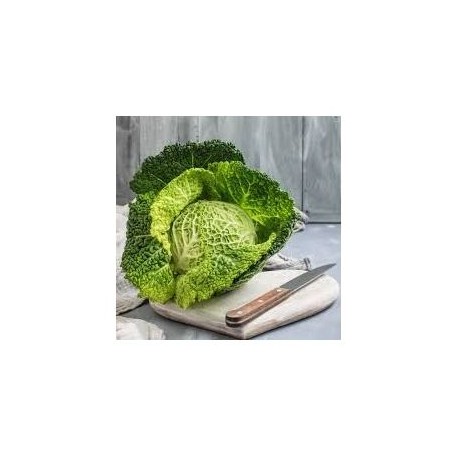
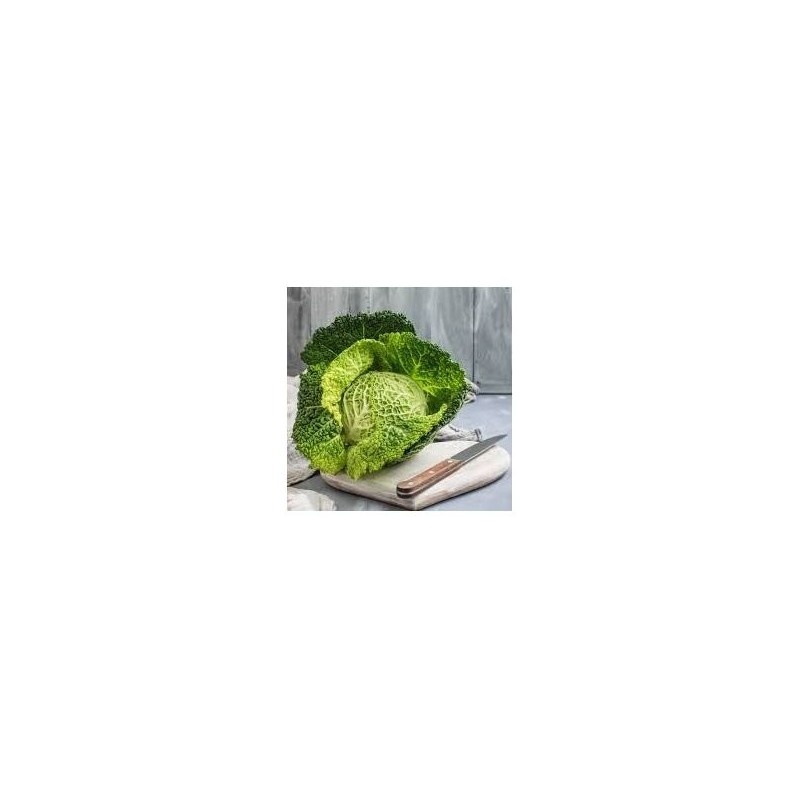
Savoy cabbage, also known as Milan cabbage, is a well-known vegetable grown in nearly every Italian region. It is recognizable by its crinkled, wrinkled leaves, with prominent veins, which form a loosely packed head of light green or red-purple color.
The Savoy cabbage Plant
Botanically it is a Brassica oleracea var. sabauda, part of the Brassicaceae family. It is a biennial plant grown as an annual, with a shallow taproot and an upright stem bearing numerous bubbled leaves, green on the outside and whitish-yellow on the inside.
It is a hardy vegetable, among the most adaptable of the cabbage family, with good cold tolerance.
How to Sow Savoy cabbage
Sowing takes place in a seedbed, more rarely in the open field, burying the seeds about 1-2 cm deep. The timing varies depending on the desired maturity period: from January to May for summer-autumn varieties, April-May for late varieties, and August-September for early ones. Transplanting takes place once seedlings are about 20 cm tall, spacing them 50 cm apart along the row and 60 cm between rows.
How to Grow Savoy cabbage
This variety favors a temperate-humid climate, with good cold tolerance but limited drought resistance. It adapts to all soil types, even compact ones, as long as they are cool, deep and well-drained, with a pH between 6.5 and 7.5.
Harvest of Savoy cabbage takes place before the plant flowers, typically in winter for winter varieties, though spring and summer types also exist with different timing.
Tips for Growing Savoy cabbage
Watering should be kept consistent, since Savoy cabbage does not withstand long periods of drought; a layer of mulch helps limit evaporation and keep the soil moist. Companion planting with tomatoes, celery, lettuce and beans favors more balanced growth.
Diseases and Pests of Savoy cabbage
Common pests include cabbage white butterflies, cockchafers, cabbage root flies and slugs, which chew on the leaves and can be kept away by scattering ash around the plant base. Common fungal diseases include root rot and powdery mildew.
Properties of Savoy cabbage
The leaves of this cabbage are rich in vitamins and beneficial substances, with a modest calorie content. It is a versatile vegetable in the kitchen, suitable both for cooked preparations, such as soups and side dishes, and for raw consumption in finely shredded salads.
Nutritional Values of Savoy cabbage (per 100 g)
- Calories: 27 kcal
- Protein: 2.0 g
- Fat: 0.1 g
- Carbohydrates: 4.3 g
- Fiber: 3.1 g
- Vitamin C: 31 mg
- Vitamin K: 68 mcg