

No products
Cabbage seeds
-
Semi ortaggi
-
Summer vegetables seeds
- Garlic seeds
- Watermelon seeds
- Asparagus seeds
- Chili seeds
- Beet seeds
- Basil seeds
- Chard seeds
- Cabbage seeds
- Onion seeds
- Carrot seeds
- artichoke seeds
- Cucumber seeds
- Strawberry seeds
- Bean and green bean seeds
- Broad bean seeds
- Lettuce seeds
- Corn seed
- Eggplant seeds
- Melon seeds
- Okra seeds
- Tomato seeds
- Pea seeds
- Leek seeds
- Pepper seeds
- Radish seeds
- Arugula seeds
- Shallot seeds
- Celery seeds
- Spinach seeds
- Valerian seeds
- Pumpkin seeds
- Courgette seeds
-
Winter vegetables seeds
- broccoli seeds
- cauliflower seeds
- semi di cavolo
- fennel seeds
- Semi di lattuga
- chicory seeds
- Radicchio seeds
- Rocket seeds
- Chard and Beet Seeds
- Escarole Seeds
- Onion Seeds
- Basil Seeds
- Chard Seeds
- Artichoke Seeds
- Carrot Seeds
- Cucumber Seeds
- Bean Seeds
- Endive Seeds
- Leek Seeds
- Parsley Seeds
- Celery Seeds
- Spinach Seeds
- Valerian Seeds
-
Summer vegetables seeds
- Peperoncino secco
- Peperoncino in polvere
- Semi piante aromatiche
- Prati e tappeti erbosi
- Semi fiori ornamentali
- Fertilizzanti
- Fertilizzante solido
- Spezie
- eBook
- Bulbi
- Starter kit / Micro orto
- Idea regalo / Bomboniere
- Patate e tuberi da semina
- Buoni regalo digitali
 View larger
Tuscan Kale Seeds
New product
[Brassica oleracea] Seeds of Tuscan kale, a hardy heirloom cabbage with dark bubbled leaves, ideal for soups, pesto and winter harvests.
95 Items
More info
- Tuscan Kale
- The Tuscan Kale Plant
- How to Sow Tuscan Kale
- How to Grow Tuscan Kale
- Tips for Growing Tuscan Kale
- Diseases and Pests of Tuscan Kale
- Properties of Tuscan Kale
- Nutritional Values of Tuscan Kale (per 100 g)
Tuscan Kale
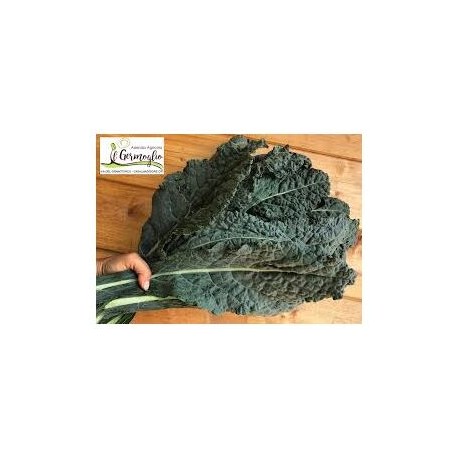
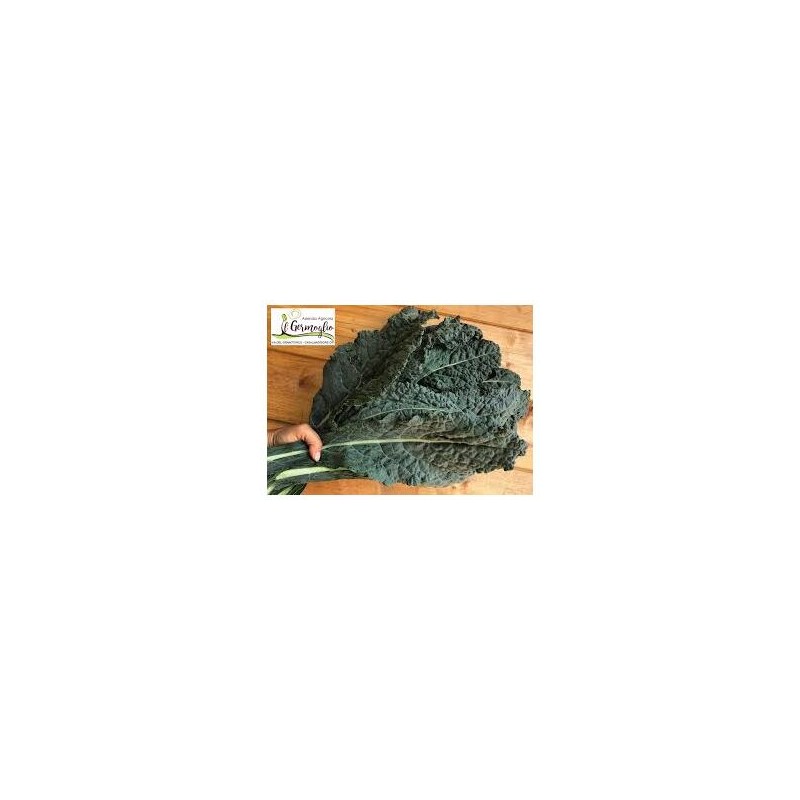
Tuscan kale, also known as black cabbage, Lacinato kale or dinosaur kale, is a vegetable typical of Tuscan tradition. It is recognizable by its long, narrow, heavily bubbled leaves, dark green almost blackish in color, growing neatly along the stem without forming a compact head.
The Tuscan kale Plant
Botanically it is a Brassica oleracea var. acephala, part of the Brassicaceae family. It is a perennial plant grown as a biennial, hardy and vigorous, unable to form a head: instead it produces numerous oblong, crinkled leaves up to 30-40 cm long, which stay on the plant for a long time.
It is a vegetable with ancient origins, dating back to Etruscan times, which found its greatest diffusion in Tuscany and a central role in local peasant cuisine.
How to Sow Tuscan kale
Sowing takes place in a seedbed or directly in the open field, burying the seeds about 0.5-1 cm deep. The best period runs from June to mid-August, to ensure harvest during the winter months. Transplanting takes place about a month after sowing, once seedlings reach 10-15 cm in height, spacing them about 50 cm apart.
How to Grow Tuscan kale
This variety favors fertile, cool, well-worked soil in a sunny position. The ideal climate is mild autumn-winter weather; intense cold does not damage the plant but actually improves its flavor, making the leaves crunchier and tastier, withstanding temperatures down to minus ten degrees.
Harvest generally begins after the first frosts, picking the most developed outer leaves and letting the inner ones continue growing, allowing continuous production from November to March.
Tips for Growing Tuscan kale
A nitrogen-based fertilization at planting time is recommended to stimulate leaf development. Watering should be moderate in the early growth stages and gradually reduced, stopping altogether at least a month before harvest. Companion planting with chard, cucumbers, beans, lettuce and tomatoes favors more balanced growth.
Diseases and Pests of Tuscan kale
Common pests include cabbage root flies, which attack the roots, cabbage white caterpillars, leaf beetles and slugs. Among fungal diseases, clubroot is the most dangerous, affecting the root system.
Properties of Tuscan kale
The leaves of this kale are rich in vitamins, minerals and antioxidants, with a modest calorie content. It is a very versatile vegetable in the kitchen, ideal for soups and stews, as a base for pesto, or raw finely shredded in salads.
Nutritional Values of Tuscan kale (per 100 g)
- Calories: 30 kcal
- Protein: 2.9 g
- Fat: 0.3 g
- Carbohydrates: 3.6 g
- Fiber: 3.6 g
- Vitamin C: 93 mg
- Vitamin K: 407 mcg