

No products
Cabbage seeds
-
Semi ortaggi
-
Summer vegetables seeds
- Garlic seeds
- Watermelon seeds
- Asparagus seeds
- Chili seeds
- Beet seeds
- Basil seeds
- Chard seeds
- Cabbage seeds
- Onion seeds
- Carrot seeds
- artichoke seeds
- Cucumber seeds
- Strawberry seeds
- Bean and green bean seeds
- Broad bean seeds
- Lettuce seeds
- Corn seed
- Eggplant seeds
- Melon seeds
- Okra seeds
- Tomato seeds
- Pea seeds
- Leek seeds
- Pepper seeds
- Radish seeds
- Arugula seeds
- Shallot seeds
- Celery seeds
- Spinach seeds
- Valerian seeds
- Pumpkin seeds
- Courgette seeds
-
Winter vegetables seeds
- broccoli seeds
- cauliflower seeds
- semi di cavolo
- fennel seeds
- Semi di lattuga
- chicory seeds
- Radicchio seeds
- Rocket seeds
- Chard and Beet Seeds
- Escarole Seeds
- Onion Seeds
- Basil Seeds
- Chard Seeds
- Artichoke Seeds
- Carrot Seeds
- Cucumber Seeds
- Bean Seeds
- Endive Seeds
- Leek Seeds
- Parsley Seeds
- Celery Seeds
- Spinach Seeds
- Valerian Seeds
-
Summer vegetables seeds
- Peperoncino secco
- Peperoncino in polvere
- Semi piante aromatiche
- Prati e tappeti erbosi
- Semi fiori ornamentali
- Fertilizzanti
- Fertilizzante solido
- Spezie
- eBook
- Bulbi
- Starter kit / Micro orto
- Idea regalo / Bomboniere
- Patate e tuberi da semina
- Buoni regalo digitali
- TEST posizioni
 View larger
Ox Heart Cabbage Seeds
New product
[Brassica oleracea] Seeds of Ox Heart cabbage, a fast-growing early variety with compact cone-shaped heads, crisp and ideal for spring harvests.
100 Items
More info
- Ox Heart Cabbage
- The Ox Heart Cabbage Plant
- How to Sow Ox Heart Cabbage
- How to Grow Ox Heart Cabbage
- Tips for Growing Ox Heart Cabbage
- Diseases and Pests of Ox Heart Cabbage
- Properties of Ox Heart Cabbage
- Nutritional Values of Ox Heart Cabbage (per 100 g)
Ox Heart Cabbage
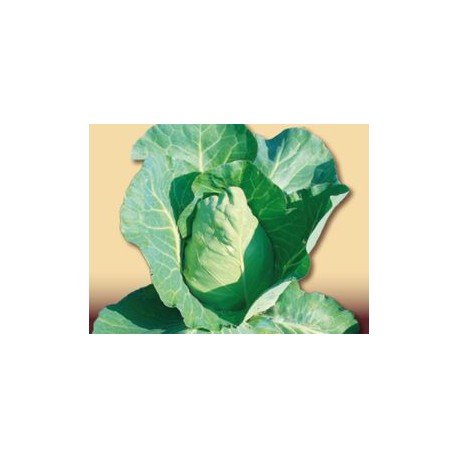
Ox Heart cabbage is a very early cabbage variety, prized for its compact, cone-shaped head with smooth light green leaves. It is among the most widely grown spring varieties in home gardens for its fast maturity.
The Ox Heart cabbage Plant
Botanically it is a Brassica oleracea var. capitata, part of the Brassicaceae family. It is a biennial plant grown as an annual, similar to Savoy cabbage but with a more compact head and smooth rather than crinkled leaves. The heart, crisp and firm, is entirely light-colored, with a short stem and grey-green outer leaves.
It is a hardy and vigorous variety, with fast growth and excellent resistance to splitting.
How to Sow Ox Heart cabbage
Sowing takes place in a seedbed, burying the seeds about 2-2.5 cm deep in rows 15 cm apart. Germination occurs after 7-12 days, and thinning to 3-5 cm should follow as soon as possible. Being a spring variety, sowing takes place in August-September or January-February for transplanting in February-March.
How to Grow Ox Heart cabbage
Transplanting takes place 5-7 weeks after germination, once seedlings are 10-15 cm tall, spacing them about 30x30 cm apart. It favors fertile, well-worked soil, with consistent watering especially during dry spells.
Harvest occurs about 55 days after transplanting, when the cone-shaped head reaches a weight of up to 1-1.5 kg, making it ideal for successive harvests from spring to summer.
Tips for Growing Ox Heart cabbage
A balanced fertilization at transplanting is recommended to support head development. Companion planting with lettuce, mint, potato, pea, tomato, celery and spinach favors healthier growth. Avoid waterlogging, which can cause rot at the base of the plant.
Diseases and Pests of Ox Heart cabbage
Common pests include root flies, cabbage white caterpillars, leaf beetles and slugs. Among fungal diseases, clubroot is the most dangerous: infected plants should be removed and burned, rotating cabbage crops each year.
Properties of Ox Heart cabbage
The leaves of this cabbage are rich in vitamins and fiber, with a modest calorie content. It is a versatile vegetable in the kitchen, excellent both raw in salads and cooked in soups and stews, and also suitable for making sauerkraut.
Nutritional Values of Ox Heart cabbage (per 100 g)
- Calories: 25 kcal
- Protein: 1.3 g
- Fat: 0.1 g
- Carbohydrates: 5.8 g
- Fiber: 2.5 g
- Vitamin C: 36 mg
- Vitamin K: 76 mcg