

No products
cauliflower seeds
-
Semi ortaggi
-
Summer vegetables seeds
- Garlic seeds
- Watermelon seeds
- Asparagus seeds
- Chili seeds
- Beet seeds
- Basil seeds
- Chard seeds
- Cabbage seeds
- Onion seeds
- Carrot seeds
- artichoke seeds
- Cucumber seeds
- Strawberry seeds
- Bean and green bean seeds
- Broad bean seeds
- Lettuce seeds
- Corn seed
- Eggplant seeds
- Melon seeds
- Okra seeds
- Tomato seeds
- Pea seeds
- Leek seeds
- Pepper seeds
- Radish seeds
- Arugula seeds
- Shallot seeds
- Celery seeds
- Spinach seeds
- Valerian seeds
- Pumpkin seeds
- Courgette seeds
-
Winter vegetables seeds
- broccoli seeds
- cauliflower seeds
- semi di cavolo
- fennel seeds
- Semi di lattuga
- chicory seeds
- Radicchio seeds
- Rocket seeds
- Chard and Beet Seeds
- Escarole Seeds
- Onion Seeds
- Basil Seeds
- Chard Seeds
- Artichoke Seeds
- Carrot Seeds
- Cucumber Seeds
- Bean Seeds
- Endive Seeds
- Leek Seeds
- Parsley Seeds
- Celery Seeds
- Spinach Seeds
- Valerian Seeds
-
Summer vegetables seeds
- Peperoncino secco
- Peperoncino in polvere
- Semi piante aromatiche
- Prati e tappeti erbosi
- Semi fiori ornamentali
- Fertilizzanti
- Fertilizzante solido
- Spezie
- eBook
- Bulbi
- Starter kit / Micro orto
- Idea regalo / Bomboniere
- Patate e tuberi da semina
- Buoni regalo digitali
- TEST posizioni
 View larger
Memphis White Cauliflower
New product
[Brassica oleracea var. botrytis] Memphis white cauliflower seeds, valued for its uniform, compact milk-white curd suited to both fresh market and processing.
100 Items
More info
- Memphis White Cauliflower
- The Memphis white cauliflower plant
- How to Sow Memphis White Cauliflower
- How to Grow Memphis White Cauliflower
- Tips for Growing Memphis White Cauliflower
- Diseases and Pests of Memphis White Cauliflower
- Properties of Memphis White Cauliflower
- Nutritional Values of Memphis White Cauliflower
Memphis White Cauliflower
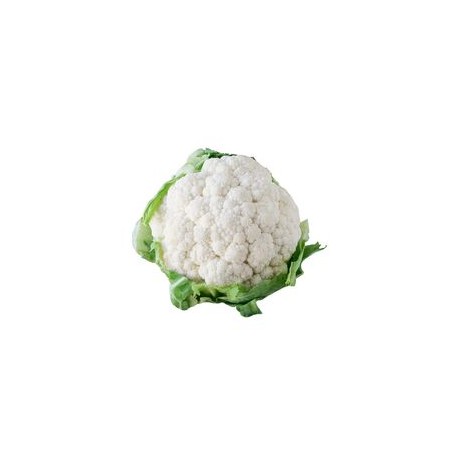
Memphis White Cauliflower is a white cauliflower variety valued for the uniformity and compactness of its curd, making it suitable for both the fresh market and industrial processing. The head is milk-white in colour, with a fine texture and high specific weight.
The Memphis white cauliflower plant
Memphis White Cauliflower belongs to the species Brassica oleracea var. botrytis, with an upright habit and dense foliage that effectively covers the curd throughout its growth. This protection helps maintain the variety's typical bright white colour, preventing yellowing caused by direct sun exposure.
How to Sow Memphis White Cauliflower
Transplanting usually takes place between June and September, with a medium growing cycle of around 85-95 days. To speed up cultivation, pre-started seedlings can be used, about 15 cm tall with five or six true leaves, saving a few weeks compared to direct sowing.
How to Grow Memphis White Cauliflower
Memphis White Cauliflower is very demanding in terms of calcium and sulphur, like all Brassicas, and also needs adequate boron: a deficiency can cause stem deformities with internal hollow cavities. Molybdenum deficiency should also be avoided, as it causes blistered, deformed leaves.
Tips for Growing Memphis White Cauliflower
Avoid excess nitrogen, which can compromise curd quality, and ensure a good magnesium supply by choosing NPK fertilisers containing MgO. Harvest when the head is compact and tightly closed, cutting the plant with part of the leaves and stem attached to ease handling.
Diseases and Pests of Memphis White Cauliflower
Memphis White Cauliflower can be attacked by large and small cabbage white caterpillars, which erode the leaves down to the main veins in severe infestations. Aphids, thrips and flea beetle are other common threats, along with slugs, which can damage leaves, stems and even the head itself.
Properties of Memphis White Cauliflower
Memphis White Cauliflower is a low-calorie vegetable, rich in vitamin C, calcium and fibre. Its compact curds, made up of undeveloped flowers, lend themselves to many preparations, from steaming to gratin-style dishes.
Nutritional Values of Memphis White Cauliflower
| Value per 100g | Amount |
|---|---|
| Energy | 25 kcal |
| Protein | 1.9 g |
| Carbohydrates | 2.3 g |
| Fibre | 2.4 g |
| Vitamin C | 48 mg |