

No products
Chard seeds
-
Semi ortaggi
-
Summer vegetables seeds
- Garlic seeds
- Watermelon seeds
- Asparagus seeds
- Chili seeds
- Beet seeds
- Basil seeds
- Chard seeds
- Cabbage seeds
- Onion seeds
- Carrot seeds
- artichoke seeds
- Cucumber seeds
- Strawberry seeds
- Bean and green bean seeds
- Broad bean seeds
- Lettuce seeds
- Corn seed
- Eggplant seeds
- Melon seeds
- Okra seeds
- Tomato seeds
- Pea seeds
- Leek seeds
- Pepper seeds
- Radish seeds
- Arugula seeds
- Shallot seeds
- Celery seeds
- Spinach seeds
- Valerian seeds
- Pumpkin seeds
- Courgette seeds
-
Winter vegetables seeds
- broccoli seeds
- cauliflower seeds
- semi di cavolo
- fennel seeds
- Semi di lattuga
- chicory seeds
- Radicchio seeds
- Rocket seeds
- Chard and Beet Seeds
- Escarole Seeds
- Onion Seeds
- Basil Seeds
- Chard Seeds
- Artichoke Seeds
- Carrot Seeds
- Cucumber Seeds
- Bean Seeds
- Endive Seeds
- Leek Seeds
- Parsley Seeds
- Celery Seeds
- Spinach Seeds
- Valerian Seeds
-
Summer vegetables seeds
- Peperoncino secco
- Peperoncino in polvere
- Semi piante aromatiche
- Prati e tappeti erbosi
- Semi fiori ornamentali
- Fertilizzanti
- Fertilizzante solido
- Spezie
- eBook
- Bulbi
- Starter kit / Micro orto
- Idea regalo / Bomboniere
- Patate e tuberi da semina
- Buoni regalo digitali
- TEST posizioni
 View larger
Rainbow Salad Chard Seeds
New product
[Beta vulgaris var. cicla] Seeds of an ornamental chard with bright yellow, magenta and orange stalks, ideal for colorful baby leaf salads.
97 Items
More info
- Rainbow Salad Chard
- The Rainbow Salad Chard Plant
- How to Sow Rainbow Salad Chard
- How to Grow Rainbow Salad Chard
- Tips for Growing Rainbow Salad Chard
- Diseases and Pests of Rainbow Salad Chard
- Properties of Rainbow Salad Chard
- Nutritional Values of Rainbow Salad Chard (per 100 g)
Rainbow Salad Chard
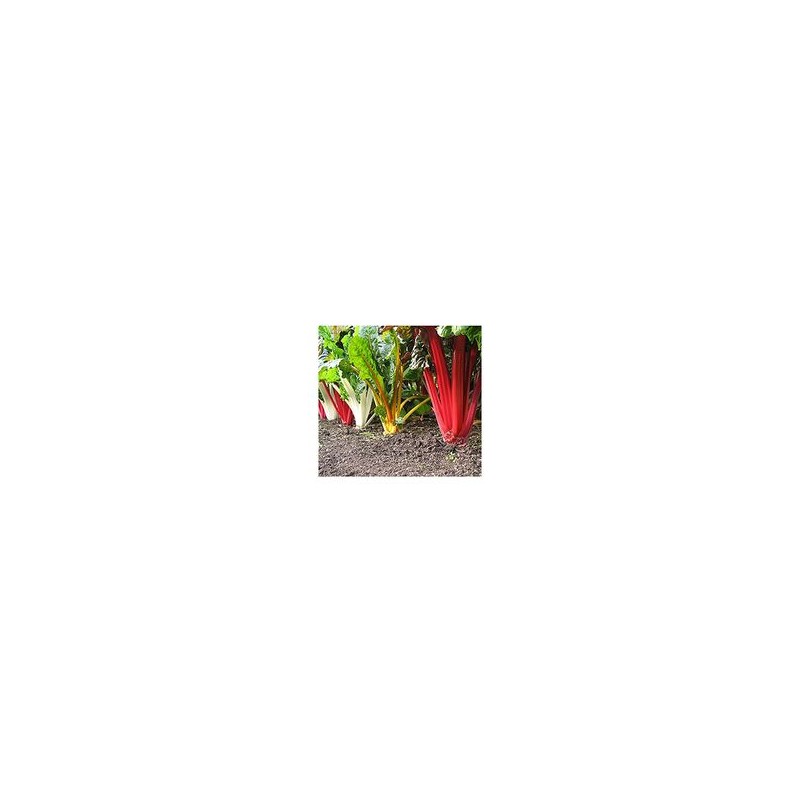
rainbow salad chard is a plant of very ancient origins, not widely grown but highly valued for its ornamental appearance: its main feature is its brightly colored stalks, ranging from yellow to magenta to bright orange. The heads are upright, with green leaves concentrated mainly at the tip.
The rainbow salad chard Plant
Botanically it is a Beta vulgaris var. cicla, part of the Amaranthaceae family (formerly Chenopodiaceae). The plant stands out for its colorful leaf stalks, particularly suited to baby leaf cultivation, harvested young for colorful mixed salads.
It is a hardy and versatile species that can be grown almost all year round thanks to its good climatic adaptability.
How to Sow rainbow salad chard
Sowing is done broadcast or in rows spaced 10-15 cm apart, burying the seeds about 0.5-1 cm deep. Since this is a crop harvested young, as baby leaf, it can be sown more densely than traditional chard varieties. Direct outdoor sowing is possible from March-April through September.
How to Grow rainbow salad chard
This variety favors soft soil, rich in humus and with constant moisture, conditions that keep the leaves tender and prevent them from becoming bitter. A sunny or partly shaded position is ideal, while in the hottest months light shading helps slow down bolting.
When harvested as baby leaf, picking takes place once the leaves reach about 8-10 cm in length, generally a few weeks after sowing; if grown to full maturity, harvest instead takes place 7-8 weeks after transplanting.
Tips for Growing rainbow salad chard
It needs plentiful watering throughout the growing cycle, especially after cutting, to promote rapid and vigorous leaf regrowth. Successive sowings every 2-3 weeks allow for a continuous harvest of fresh, colorful leaves.
Diseases and Pests of rainbow salad chard
Common threats include Cercospora leaf spot, as well as downy mildew and bacterial diseases, favored by excess leaf moisture: watering directed at the soil helps prevent them. Good soil drainage also reduces the risk of root rot.
Properties of rainbow salad chard
The leaves of this chard have a fair energy value and are rich in vitamins and minerals. Their colorful appearance makes them particularly suited to enriching mixed salads, minestrone and soups with a decorative as well as nutritional touch.
Nutritional Values of rainbow salad chard (per 100 g)
- Calories: 26 kcal
- Protein: 1.8 g
- Fat: 0.2 g
- Carbohydrates: 4.3 g
- Fiber: 1.6 g
- Iron: 1.8 mg
- Vitamin A: 306 mcg