

No products
Chard seeds
-
Semi ortaggi
-
Summer vegetables seeds
- Garlic seeds
- Watermelon seeds
- Asparagus seeds
- Chili seeds
- Beet seeds
- Basil seeds
- Chard seeds
- Cabbage seeds
- Onion seeds
- Carrot seeds
- artichoke seeds
- Cucumber seeds
- Strawberry seeds
- Bean and green bean seeds
- Broad bean seeds
- Lettuce seeds
- Corn seed
- Eggplant seeds
- Melon seeds
- Okra seeds
- Tomato seeds
- Pea seeds
- Leek seeds
- Pepper seeds
- Radish seeds
- Arugula seeds
- Shallot seeds
- Celery seeds
- Spinach seeds
- Valerian seeds
- Pumpkin seeds
- Courgette seeds
-
Winter vegetables seeds
- broccoli seeds
- cauliflower seeds
- semi di cavolo
- fennel seeds
- Semi di lattuga
- chicory seeds
- Radicchio seeds
- Rocket seeds
- Chard and Beet Seeds
- Escarole Seeds
- Onion Seeds
- Basil Seeds
- Chard Seeds
- Artichoke Seeds
- Carrot Seeds
- Cucumber Seeds
- Bean Seeds
- Endive Seeds
- Leek Seeds
- Parsley Seeds
- Celery Seeds
- Spinach Seeds
- Valerian Seeds
-
Summer vegetables seeds
- Peperoncino secco
- Peperoncino in polvere
- Semi piante aromatiche
- Prati e tappeti erbosi
- Semi fiori ornamentali
- Fertilizzanti
- Fertilizzante solido
- Spezie
- eBook
- Bulbi
- Starter kit / Micro orto
- Idea regalo / Bomboniere
- Patate e tuberi da semina
- Buoni regalo digitali
- TEST posizioni
 View larger
Red Ruby Chard Seeds
New product
[Beta vulgaris var. cicla] Seeds of a chard variety with striking bright red stalks and green leaves, decorative and nutritious.
97 Items
More info
- Red Ruby Chard
- The Red Ruby Chard Plant
- How to Sow Red Ruby Chard
- How to Grow Red Ruby Chard
- Tips for Growing Red Ruby Chard
- Diseases and Pests of Red Ruby Chard
- Properties of Red Ruby Chard
- Nutritional Values of Red Ruby Chard (per 100 g)
Red Ruby Chard
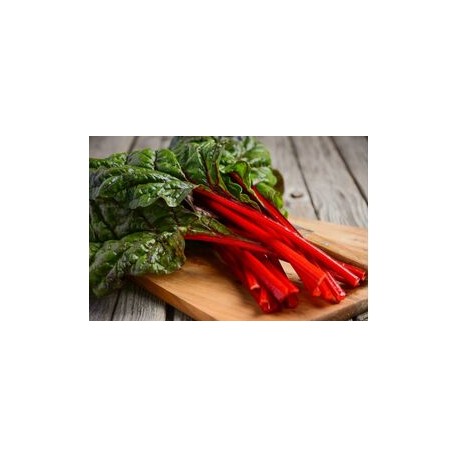
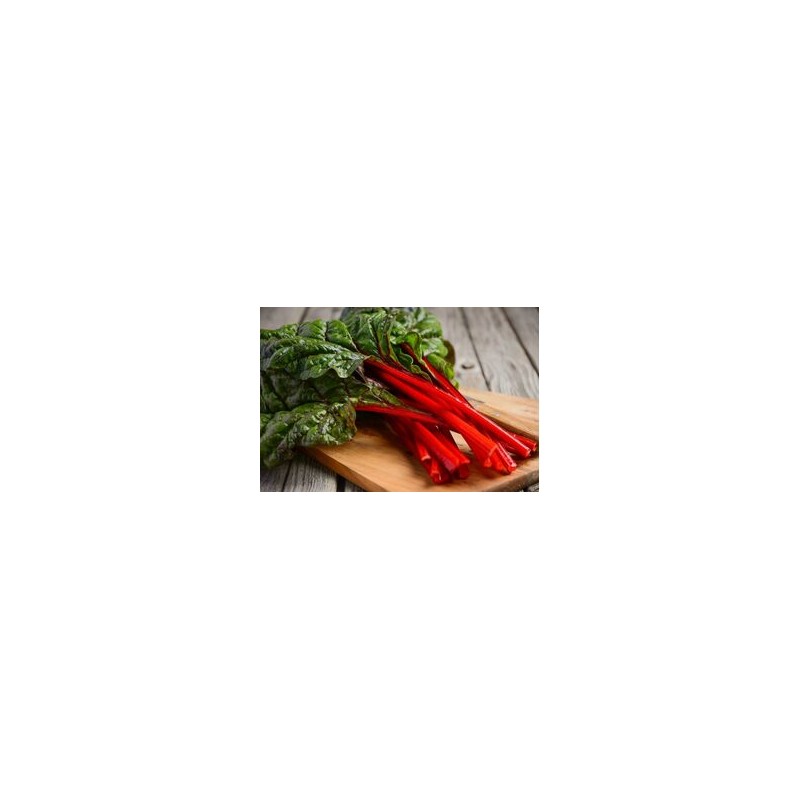
red ruby chard is a chard variety with an intense red-colored stalk, which contrasts pleasantly with the wide green leaves. Besides its ornamental value in the garden, this variety adds a touch of color to the kitchen too, in minestrone and soups.
The red ruby chard Plant
Botanically it is a Beta vulgaris var. cicla, part of the Amaranthaceae family (formerly Chenopodiaceae). The plant forms large green leaves arranged in a rosette, supported by sturdy, fleshy stalks of bright red color, clearly visible even from a distance.
It is a hardy species, grown as an annual in home gardens despite its biennial biological cycle, with good tolerance to low temperatures.
How to Sow red ruby chard
Sowing takes place from March to August, placing 2-3 seeds per station at intervals of 35-40 cm along the row, at about 1.5-2 cm deep. As soon as the seedlings can be handled, they should be thinned to one per station.
How to Grow red ruby chard
This variety favors medium-textured, cool, deep soil rich in organic matter, with a pH between 7 and 7.5, avoiding waterlogging which favors rot. It needs plentiful watering throughout the growing cycle, especially after cutting, to promote rapid leaf regrowth.
Harvest usually takes place 7-8 weeks after transplanting, progressively cutting the outer leaves to extend the production period.
Tips for Growing red ruby chard
It is advisable not to grow chard on the same plot where it was grown the previous year, alternating it with dwarf beans, onions, lettuce or cabbages. Repeated hoeing helps control weeds between stations.
Diseases and Pests of red ruby chard
The most dangerous leaf disease is Cercospora leaf spot, along with downy mildew and bacterial diseases as other fungal issues to keep under control. Good soil drainage and watering directed at the soil help prevent them.
Properties of red ruby chard
The leaves and stalks of this chard have a fair energy value and are rich in vitamins and minerals, particularly iron. Its bright-colored stalks make it a decorative as well as nutritious ingredient for minestrone, soups and side dishes.
Nutritional Values of red ruby chard (per 100 g)
- Calories: 26 kcal
- Protein: 1.8 g
- Fat: 0.2 g
- Carbohydrates: 4.3 g
- Fiber: 1.6 g
- Iron: 1.8 mg
- Vitamin A: 306 mcg