

No products
chicory seeds
-
Semi ortaggi
-
Summer vegetables seeds
- Garlic seeds
- Watermelon seeds
- Asparagus seeds
- Chili seeds
- Beet seeds
- Basil seeds
- Chard seeds
- Cabbage seeds
- Onion seeds
- Carrot seeds
- artichoke seeds
- Cucumber seeds
- Strawberry seeds
- Bean and green bean seeds
- Broad bean seeds
- Lettuce seeds
- Corn seed
- Eggplant seeds
- Melon seeds
- Okra seeds
- Tomato seeds
- Pea seeds
- Leek seeds
- Pepper seeds
- Radish seeds
- Arugula seeds
- Shallot seeds
- Celery seeds
- Spinach seeds
- Valerian seeds
- Pumpkin seeds
- Courgette seeds
-
Winter vegetables seeds
- broccoli seeds
- cauliflower seeds
- semi di cavolo
- fennel seeds
- Semi di lattuga
- chicory seeds
- Radicchio seeds
- Rocket seeds
- Chard and Beet Seeds
- Escarole Seeds
- Onion Seeds
- Basil Seeds
- Chard Seeds
- Artichoke Seeds
- Carrot Seeds
- Cucumber Seeds
- Bean Seeds
- Endive Seeds
- Leek Seeds
- Parsley Seeds
- Celery Seeds
- Spinach Seeds
- Valerian Seeds
-
Summer vegetables seeds
- Peperoncino secco
- Peperoncino in polvere
- Semi piante aromatiche
- Prati e tappeti erbosi
- Semi fiori ornamentali
- Fertilizzanti
- Fertilizzante solido
- Spezie
- eBook
- Bulbi
- Starter kit / Micro orto
- Idea regalo / Bomboniere
- Patate e tuberi da semina
- Buoni regalo digitali
- TEST posizioni
 View larger
Semi di Cicoria Palla Rossa Precoce
New product
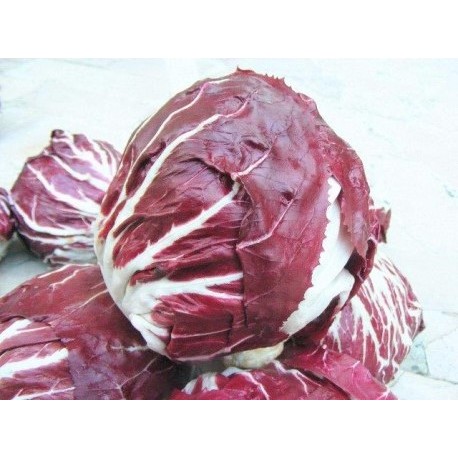
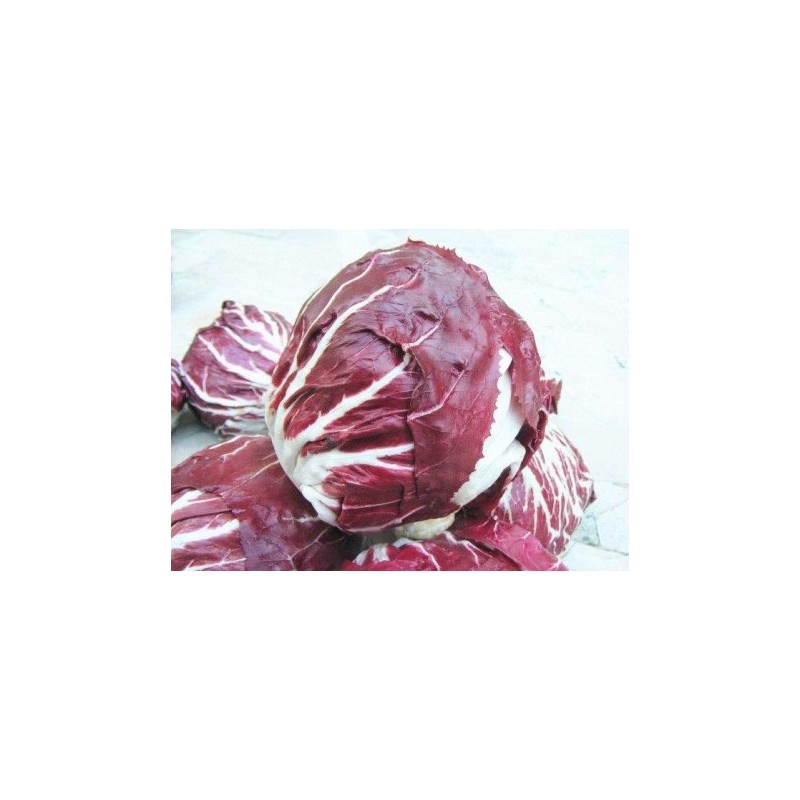
[Cichorium intybus] Early red ball chicory seeds, a fast-growing radicchio variety forming compact, bright red heads in just 60-80 days.
99 Items
More info
- Early Red Ball Chicory
- The early red ball chicory Plant
- How to Sow Early Red Ball Chicory
- How to Grow Early Red Ball Chicory
- Tips for Growing Early Red Ball Chicory
- Diseases and Pests of Early Red Ball Chicory
- Properties and Nutritional Values
Early Red Ball Chicory
The early red ball chicory is one of the most widely grown radicchio varieties in Italian vegetable gardens, also known as red Chioggia ball radicchio. It stands out for its earliness: it forms a round, compact and tightly wrapped head in just 60-80 days from transplanting, well ahead of late-season varieties. The leaves are thick, enveloping and crunchy, with a bright red colour and clearly visible white veins.
The early red ball chicory Plant
Botanically it belongs to the species Cichorium intybus, the same as all radicchio and leaf chicory types. The plant initially forms a green-leaved head with a few red streaks; it is only with the arrival of the first cold weather that the colour intensifies, turning a bright, vivid red while the ribs and veins become pure white. The mature head weighs on average between 300 and 400 grams, with thick, crunchy leaves particularly suited to eating raw.
How to Sow Early Red Ball Chicory
Sowing takes place from May to October, either in seedbeds or directly in the open field, at a depth of about 1 cm. It is best sown thinly or in rows, then thinned out to about 30 cm between plants, with rows spaced 40 cm apart. The soil should be fertilised beforehand, as chicory prefers soil rich in organic matter.
How to Grow Early Red Ball Chicory
It prefers an open, sunny position, though it tolerates partial shade well during the hottest periods. Watering should be regular, especially in the first weeks after transplanting, avoiding waterlogging. Being an early variety, it is particularly suited to early-season field crops: in this case it is advisable to protect the young plants with garden fleece to shield them from temperature fluctuations. Good companion plants include carrots, climbing beans, fennel, lettuce, peppers and tomatoes.
Tips for Growing Early Red Ball Chicory
To obtain well-formed, compact heads it is important not to overdo nitrogen fertilisation, which tends to encourage leaf growth at the expense of head compactness. Lightly tying the outer leaves, as traditionally done to blanch some chicory varieties, can help achieve a paler, crunchier heart, although it is not strictly necessary for this ball-shaped variety.
Diseases and Pests of Early Red Ball Chicory
It is a hardy plant, generally resistant, but can be affected by aphids and slugs, especially in the early growth stages. In excessively humid conditions, leaf rot or fungal issues such as downy mildew may appear: good air circulation between plants and avoiding standing water are the best forms of prevention.
Properties and Nutritional Values
Like all red-leaved radicchio, red ball chicory is rich in potassium, magnesium, phosphorus and iron, as well as B vitamins, vitamin C, E and K. It has depurative and digestive properties, and is traditionally eaten both raw in salads and cooked, for example grilled, roasted or as an ingredient in risottos and lasagne.
| Average nutritional values (100 g) | |
|---|---|
| Energy | 23 kcal |
| Protein | 1.4 g |
| Carbohydrates | 4.7 g |
| Fibre | 0.9 g |
| Vitamin C | 24 mg |
| Potassium | 290 mg |