

No products
chicory seeds
-
Semi ortaggi
-
Summer vegetables seeds
- Garlic seeds
- Watermelon seeds
- Asparagus seeds
- Chili seeds
- Beet seeds
- Basil seeds
- Chard seeds
- Cabbage seeds
- Onion seeds
- Carrot seeds
- artichoke seeds
- Cucumber seeds
- Strawberry seeds
- Bean and green bean seeds
- Broad bean seeds
- Lettuce seeds
- Corn seed
- Eggplant seeds
- Melon seeds
- Okra seeds
- Tomato seeds
- Pea seeds
- Leek seeds
- Pepper seeds
- Radish seeds
- Arugula seeds
- Shallot seeds
- Celery seeds
- Spinach seeds
- Valerian seeds
- Pumpkin seeds
- Courgette seeds
-
Winter vegetables seeds
- broccoli seeds
- cauliflower seeds
- semi di cavolo
- fennel seeds
- Semi di lattuga
- chicory seeds
- Radicchio seeds
- Rocket seeds
- Chard and Beet Seeds
- Escarole Seeds
- Onion Seeds
- Basil Seeds
- Chard Seeds
- Artichoke Seeds
- Carrot Seeds
- Cucumber Seeds
- Bean Seeds
- Endive Seeds
- Leek Seeds
- Parsley Seeds
- Celery Seeds
- Spinach Seeds
- Valerian Seeds
-
Summer vegetables seeds
- Peperoncino secco
- Peperoncino in polvere
- Semi piante aromatiche
- Prati e tappeti erbosi
- Semi fiori ornamentali
- Fertilizzanti
- Fertilizzante solido
- Spezie
- eBook
- Bulbi
- Starter kit / Micro orto
- Idea regalo / Bomboniere
- Patate e tuberi da semina
- Buoni regalo digitali
- TEST posizioni
 View larger

Semi di Cicoria Palla Rossa Medio Tardiva
New product
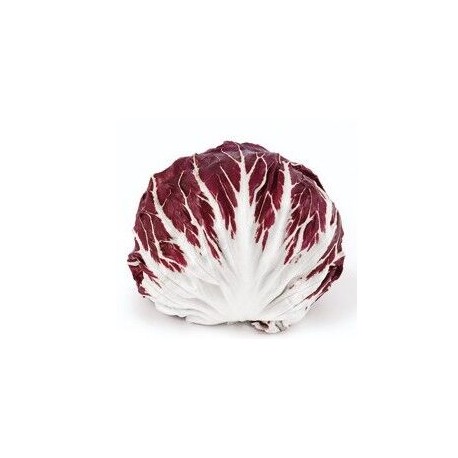
[Cichorium intybus] Mid-late red ball chicory seeds, forming large, globe-shaped heads with intense red-purple colouring, ideal for autumn and winter harvests.
100 Items
More info
- Mid-Late Red Ball Chicory
- The mid-late red ball chicory Plant
- How to Sow Mid-Late Red Ball Chicory
- How to Grow Mid-Late Red Ball Chicory
- Tips for Growing Mid-Late Red Ball Chicory
- Diseases and Pests of Mid-Late Red Ball Chicory
- Properties and Nutritional Values
Mid-Late Red Ball Chicory
The mid-late red ball chicory is a variety with the typical round, compact ball shape, particularly valued for autumn and winter harvests. Compared to early selections, it requires a longer growing cycle, but rewards growers with larger heads and an intense red-purple colouring that becomes even more pronounced with the arrival of cold weather.
The mid-late red ball chicory Plant
It belongs to the species Cichorium intybus. The leaves, all gathered in a circle to form the characteristic rounded head, are large and display a red-purple pigmentation with visible white spots and veins, creating a vivid contrast with the leaf colour. The head reaches generous dimensions, with an average weight that can exceed 350-400 grams.
How to Sow Mid-Late Red Ball Chicory
Sowing is generally carried out from June to September, in seedbeds or directly in the open field, at a depth of about 1 cm. Transplanting takes place about 4-6 weeks after sowing, once the seedlings have reached a height of 8-10 cm. It is best to space plants about 30-35 cm apart along the row, with rows spaced 35-40 cm apart, to allow proper head development.
How to Grow Mid-Late Red Ball Chicory
The harvest cycle is completed in about 90 days from transplanting, making this variety ideal for autumn and winter crops. It prefers fertile, medium-textured, cool and well-drained soil, with a sunny exposure. Optimal growing temperatures range between 15°C and 20°C, with a minimum tolerance down to about 5°C, though it does not withstand persistent frost.
Tips for Growing Mid-Late Red Ball Chicory
Being a hardy, highly adaptable plant, it tolerates cool autumn temperatures well, but it is advisable to protect it with garden fleece on the coldest nights to preserve head quality. Regular watering, without excess, encourages the development of a compact, well-formed head, preventing the outer leaves from staying too open.
Diseases and Pests of Mid-Late Red Ball Chicory
It can be affected by aphids and slugs, especially in the early growth stages, and by leaf rot in cases of prolonged waterlogging. Good airflow between rows and well-drained soil are the main preventive measures against fungi and pathogens typical of chicory.
Properties and Nutritional Values
Like other red-leaved chicory varieties, it is rich in minerals, B vitamins and vitamin C, with recognised depurative and digestive properties. Its slightly bitter flavour softens with the cool autumn temperatures, making it perfect both for raw salads and cooked dishes such as risottos and side dishes.
| Average nutritional values (100 g) | |
|---|---|
| Energy | 23 kcal |
| Protein | 1.4 g |
| Carbohydrates | 4.7 g |
| Fibre | 0.9 g |
| Vitamin C | 24 mg |
| Potassium | 290 mg |