

No products
chicory seeds
-
Semi ortaggi
-
Summer vegetables seeds
- Garlic seeds
- Watermelon seeds
- Asparagus seeds
- Chili seeds
- Beet seeds
- Basil seeds
- Chard seeds
- Cabbage seeds
- Onion seeds
- Carrot seeds
- artichoke seeds
- Cucumber seeds
- Strawberry seeds
- Bean and green bean seeds
- Broad bean seeds
- Lettuce seeds
- Corn seed
- Eggplant seeds
- Melon seeds
- Okra seeds
- Tomato seeds
- Pea seeds
- Leek seeds
- Pepper seeds
- Radish seeds
- Arugula seeds
- Shallot seeds
- Celery seeds
- Spinach seeds
- Valerian seeds
- Pumpkin seeds
- Courgette seeds
-
Winter vegetables seeds
- broccoli seeds
- cauliflower seeds
- semi di cavolo
- fennel seeds
- Semi di lattuga
- chicory seeds
- Radicchio seeds
- Rocket seeds
- Chard and Beet Seeds
- Escarole Seeds
- Onion Seeds
- Basil Seeds
- Chard Seeds
- Artichoke Seeds
- Carrot Seeds
- Cucumber Seeds
- Bean Seeds
- Endive Seeds
- Leek Seeds
- Parsley Seeds
- Celery Seeds
- Spinach Seeds
- Valerian Seeds
-
Summer vegetables seeds
- Peperoncino secco
- Peperoncino in polvere
- Semi piante aromatiche
- Prati e tappeti erbosi
- Semi fiori ornamentali
- Fertilizzanti
- Fertilizzante solido
- Spezie
- eBook
- Bulbi
- Starter kit / Micro orto
- Idea regalo / Bomboniere
- Patate e tuberi da semina
- Buoni regalo digitali
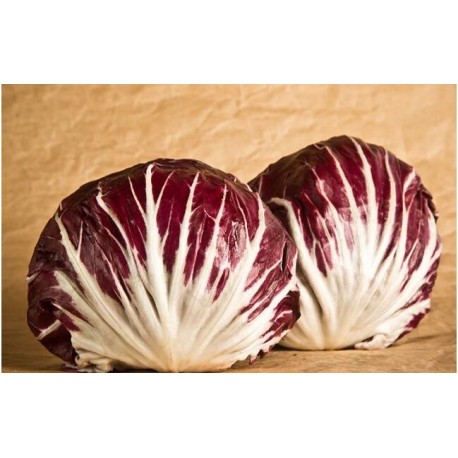 View larger
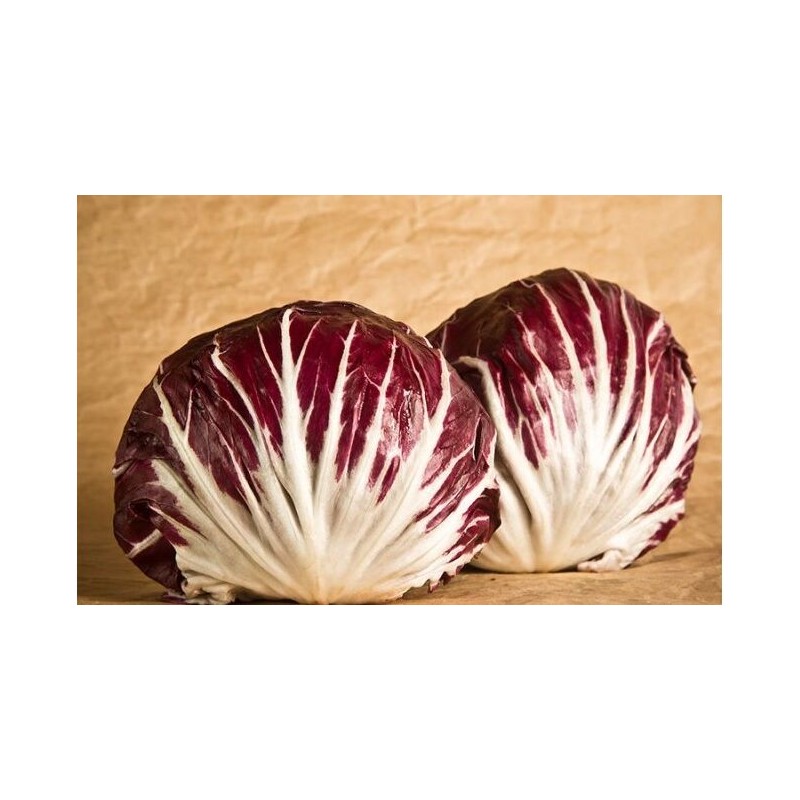
Semi di Cicoria Palla Rossa Tardiva
New product
[Cichorium intybus] Late red ball chicory seeds, the most cold-hardy ball-type chicory, forming large dark red heads with bright white veins for winter harvests.
100 Items
More info
- Late Red Ball Chicory
- The late red ball chicory Plant
- How to Sow Late Red Ball Chicory
- How to Grow Late Red Ball Chicory
- Tips for Growing Late Red Ball Chicory
- Diseases and Pests of Late Red Ball Chicory
- Properties and Nutritional Values
Late Red Ball Chicory
The late red ball chicory is the most cold-hardy selection among ball-type chicories, bred specifically for winter harvests. Compared to early and mid-early varieties, it requires a longer growing cycle, but rewards growers with distinctly larger heads, capable of reaching up to 500 grams in weight, with an intense dark red colour and bright white veins.
The late red ball chicory Plant
It belongs to the species Cichorium intybus. It has a globe-shaped, rounded form, with leaves showing the classic red-purple colour with white streaks, clearly marked. Belonging to the same family as the early and mid-early red ball varieties, this selection boasts a longer cycle that allows it to develop large, compact heads that are particularly resistant to intense cold.
How to Sow Late Red Ball Chicory
Sowing is carried out from July to September, in seedbeds or directly in the open field, with a recommended minimum temperature of 15°C, at a depth of about 1 cm. Transplanting takes place a few weeks after sowing; it is best to space seedlings about 30-35 cm apart along the row, with rows spaced 35-40 cm apart, to give enough room for the voluminous head typical of this variety to develop.
How to Grow Late Red Ball Chicory
Harvest takes place after about 120 days from transplanting, generally between November and January, making it one of the latest varieties among ball-type chicories. It is extremely cold-resistant, a trait that makes it ideal for autumn-winter crops even in areas with harsh winters. It should be watered regularly, without excess, to avoid waterlogging that could harm the root system.
Tips for Growing Late Red Ball Chicory
Thanks to its high cold resistance, it generally does not require special protection, but in the case of exceptionally intense frost, covering with garden fleece helps preserve the integrity of the outer leaves. It is important not to harvest too early: the more intense dark red colouring develops precisely as temperatures gradually drop.
Diseases and Pests of Late Red Ball Chicory
Generally resistant to the main chicory diseases, it can still be affected by pests such as aphids and slugs, especially during the early growth stages. It is important to regularly monitor the plants and act promptly in case of infestations, as well as ensuring good airflow between rows to prevent leaf rot.
Properties and Nutritional Values
Like all red-leaved chicory, it is rich in minerals, B vitamins, vitamin C and antioxidants, with well-known depurative and digestive properties. The typical bitter taste of chicory softens further with winter cold, making it perfect both raw in salads and cooked in risottos, sautéed side dishes or gratinated dishes.
| Average nutritional values (100 g) | |
|---|---|
| Energy | 23 kcal |
| Protein | 1.4 g |
| Carbohydrates | 4.7 g |
| Fibre | 0.9 g |
| Vitamin C | 24 mg |
| Potassium | 290 mg |