

No products
chicory seeds
-
Semi ortaggi
-
Summer vegetables seeds
- Garlic seeds
- Watermelon seeds
- Asparagus seeds
- Chili seeds
- Beet seeds
- Basil seeds
- Chard seeds
- Cabbage seeds
- Onion seeds
- Carrot seeds
- artichoke seeds
- Cucumber seeds
- Strawberry seeds
- Bean and green bean seeds
- Broad bean seeds
- Lettuce seeds
- Corn seed
- Eggplant seeds
- Melon seeds
- Okra seeds
- Tomato seeds
- Pea seeds
- Leek seeds
- Pepper seeds
- Radish seeds
- Arugula seeds
- Shallot seeds
- Celery seeds
- Spinach seeds
- Valerian seeds
- Pumpkin seeds
- Courgette seeds
-
Winter vegetables seeds
- broccoli seeds
- cauliflower seeds
- semi di cavolo
- fennel seeds
- Semi di lattuga
- chicory seeds
- Radicchio seeds
- Rocket seeds
- Chard and Beet Seeds
- Escarole Seeds
- Onion Seeds
- Basil Seeds
- Chard Seeds
- Artichoke Seeds
- Carrot Seeds
- Cucumber Seeds
- Bean Seeds
- Endive Seeds
- Leek Seeds
- Parsley Seeds
- Celery Seeds
- Spinach Seeds
- Valerian Seeds
-
Summer vegetables seeds
- Peperoncino secco
- Peperoncino in polvere
- Semi piante aromatiche
- Prati e tappeti erbosi
- Semi fiori ornamentali
- Fertilizzanti
- Fertilizzante solido
- Spezie
- eBook
- Bulbi
- Starter kit / Micro orto
- Idea regalo / Bomboniere
- Patate e tuberi da semina
- Buoni regalo digitali
- TEST posizioni
 View larger
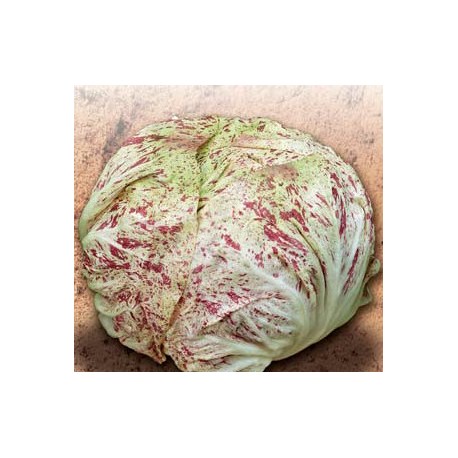
Semi di Cicoria Variegata di Lusia
New product
[Cichorium intybus] Variegated Lusia chicory seeds, a Veneto variety with attractive red-speckled leaves and a sweet, crunchy taste, almost free of bitterness.
100 Items
More info
- Variegated Lusia Chicory
- The variegated lusia chicory Plant
- How to Sow Variegated Lusia Chicory
- How to Grow Variegated Lusia Chicory
- Tips for Growing Variegated Lusia Chicory
- Diseases and Pests of Variegated Lusia Chicory
- Properties and Nutritional Values
Variegated Lusia Chicory
The variegated Lusia chicory is a variety typical of the Veneto region, celebrated for its decorative appearance: the inner leaves, cream-white or pale green in colour, are speckled with delicate red marks that give them a very attractive look. With a mid-late cycle, it is particularly valued for its sweet, crunchy taste, free of the bitter note typical of other chicory varieties.
The variegated lusia chicory Plant
It belongs to the species Cichorium intybus, family Asteraceae. The head is large, round and compact, with an average weight ranging from 350 up to 500-700 grams depending on the selection. The inner leaves are thin, with faint veining, pale green or cream-white with light red variegation; the outer leaves are more expanded and mottled with red on a white-yellow background.
How to Sow Variegated Lusia Chicory
Transplanting is recommended from August to October, for staggered harvests ranging from November through to December-January depending on the selection (early, mid-season or late). Seedbed sowing precedes transplanting by about 4-5 weeks; a field density of about 7 plants per square metre is recommended to ensure optimal head development.
How to Grow Variegated Lusia Chicory
It grows well in cool, loose, medium-textured soil, well worked and rich in organic matter. Watering should be constant and generous immediately after transplanting, to encourage regrowth; once the plant is established, watering can be reduced to 2-3 times a week, adjusted according to rainfall. It has good bolting resistance but does not tolerate excessively harsh temperatures.
Tips for Growing Variegated Lusia Chicory
To obtain well-formed heads with the most pronounced red variegation, good sun exposure and an autumn climate with moderate temperature swings are beneficial. In case of intense frost, it is advisable to protect the plants with garden fleece, as this variety is less resistant to extreme cold than other red ball chicory types.
Diseases and Pests of Variegated Lusia Chicory
It can be affected by aphids and slugs, especially in the early growth stages, and by rot in cases of waterlogging. Good airflow between plants and well-drained soil significantly reduce the risk of fungal diseases typical of chicory.
Properties and Nutritional Values
Like other chicory varieties, it is rich in minerals, B vitamins and vitamin C, with digestive and depurative properties. Its sweet, delicate taste, almost free of bitterness, makes it particularly suited to raw consumption in fresh salads, but it also works well in cooked dishes such as grilled or roasted vegetables and gratinated lasagne or risottos.
| Average nutritional values (100 g) | |
|---|---|
| Energy | 23 kcal |
| Protein | 1.4 g |
| Carbohydrates | 4.7 g |
| Fibre | 0.9 g |
| Vitamin C | 24 mg |
| Potassium | 290 mg |