

No products
chicory seeds
-
Semi ortaggi
-
Summer vegetables seeds
- Garlic seeds
- Watermelon seeds
- Asparagus seeds
- Chili seeds
- Beet seeds
- Basil seeds
- Chard seeds
- Cabbage seeds
- Onion seeds
- Carrot seeds
- artichoke seeds
- Cucumber seeds
- Strawberry seeds
- Bean and green bean seeds
- Broad bean seeds
- Lettuce seeds
- Corn seed
- Eggplant seeds
- Melon seeds
- Okra seeds
- Tomato seeds
- Pea seeds
- Leek seeds
- Pepper seeds
- Radish seeds
- Arugula seeds
- Shallot seeds
- Celery seeds
- Spinach seeds
- Valerian seeds
- Pumpkin seeds
- Courgette seeds
-
Winter vegetables seeds
- broccoli seeds
- cauliflower seeds
- semi di cavolo
- fennel seeds
- Semi di lattuga
- chicory seeds
- Radicchio seeds
- Rocket seeds
- Chard and Beet Seeds
- Escarole Seeds
- Onion Seeds
- Basil Seeds
- Chard Seeds
- Artichoke Seeds
- Carrot Seeds
- Cucumber Seeds
- Bean Seeds
- Endive Seeds
- Leek Seeds
- Parsley Seeds
- Celery Seeds
- Spinach Seeds
- Valerian Seeds
-
Summer vegetables seeds
- Peperoncino secco
- Peperoncino in polvere
- Semi piante aromatiche
- Prati e tappeti erbosi
- Semi fiori ornamentali
- Fertilizzanti
- Fertilizzante solido
- Spezie
- eBook
- Bulbi
- Starter kit / Micro orto
- Idea regalo / Bomboniere
- Patate e tuberi da semina
- Buoni regalo digitali
- TEST posizioni
 View larger
Semi di Cicoria Variegata di Castelfranco
New product
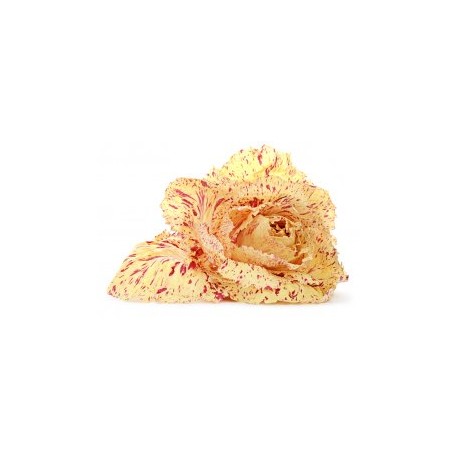
[Cichorium intybus] Variegated Castelfranco chicory seeds, the ornamental "winter rose" chicory with red-speckled pale leaves and a sweet, delicate taste.
99 Items
More info
- Variegated Castelfranco Chicory
- The variegated Castelfranco chicory Plant
- How to Sow Variegated Castelfranco Chicory
- How to Grow Variegated Castelfranco Chicory
- Tips for Growing Variegated Castelfranco Chicory
- Diseases and Pests of Variegated Castelfranco Chicory
- Properties and Nutritional Values
Variegated Castelfranco Chicory
Also known as the "winter rose" for the decorative rose-like shape of its head, the variegated Castelfranco chicory is one of the most beautiful and elegant leaf chicory varieties. Originally from the Veneto region, it combines a sweet, delicate taste with a unique ornamental look, with pale leaves speckled in red and purple.
The variegated Castelfranco chicory Plant
It belongs to the species Cichorium intybus, family Asteraceae. The head is voluminous, round and compact, formed by broad, wavy outer leaves with slightly toothed margins, pale green with light red pigmentation; the inner leaves are thinner, greenish-yellow almost white, with delicate red variegation that intensifies with cold weather.
How to Sow Variegated Castelfranco Chicory
Sowing is done in a seedbed at a depth of about 1 cm, with subsequent transplanting thinned to about 30 cm, corresponding to a density of 7-9 plants per square metre. Early selections are ready for October harvest, while mid-late ones mature between November and January, with a cycle ranging from 85 to 95 days after transplanting.
How to Grow Variegated Castelfranco Chicory
It prefers an open, sunny position, on previously fertilised, well-drained soil. It is a highly productive plant, with good bolting resistance, but it does not tolerate intense cold: in colder areas it is advisable to protect the plants or harvest before the harshest frosts. Watering should be kept regular, avoiding waterlogging.
Tips for Growing Variegated Castelfranco Chicory
To obtain crunchy leaves and the most vivid variegation, blanching can be used, covering the heads with straw or keeping them in the dark at 14-16°C: this technique enhances the red streaks by reducing the green component. Good companion plants include carrots, climbing beans, fennel, lettuce, peppers and tomatoes.
Diseases and Pests of Variegated Castelfranco Chicory
The most frequent issues are powdery mildew, downy mildew and collar rot in cases of excessive humidity, plus aphid and slug attacks in the early growth stages. Good airflow between plants and well-drained soil significantly reduce these risks.
Properties and Nutritional Values
It is rich in vitamin C and vitamin A, as well as minerals such as potassium, with digestive properties typical of chicory. Its sweet, delicate taste makes it perfect raw in salads, but it also works well pan-cooked, perhaps paired with meat, or used to prepare mousse and refined side dishes.
| Average nutritional values (100 g) | |
|---|---|
| Energy | 23 kcal |
| Protein | 1.4 g |
| Carbohydrates | 4.7 g |
| Fibre | 0.9 g |
| Vitamin C | 24 mg |
| Potassium | 290 mg |