

No products
Peperoncino secco
-
Semi ortaggi
-
Summer vegetables seeds
- Garlic seeds
- Watermelon seeds
- Asparagus seeds
- Chili seeds
- Beet seeds
- Basil seeds
- Chard seeds
- Cabbage seeds
- Onion seeds
- Carrot seeds
- artichoke seeds
- Cucumber seeds
- Strawberry seeds
- Bean and green bean seeds
- Broad bean seeds
- Lettuce seeds
- Corn seed
- Eggplant seeds
- Melon seeds
- Okra seeds
- Tomato seeds
- Pea seeds
- Leek seeds
- Pepper seeds
- Radish seeds
- Arugula seeds
- Shallot seeds
- Celery seeds
- Spinach seeds
- Valerian seeds
- Pumpkin seeds
- Courgette seeds
-
Winter vegetables seeds
- broccoli seeds
- cauliflower seeds
- semi di cavolo
- fennel seeds
- Semi di lattuga
- chicory seeds
- Radicchio seeds
- Rocket seeds
- Chard and Beet Seeds
- Escarole Seeds
- Onion Seeds
- Basil Seeds
- Chard Seeds
- Artichoke Seeds
- Carrot Seeds
- Cucumber Seeds
- Bean Seeds
- Endive Seeds
- Leek Seeds
- Parsley Seeds
- Celery Seeds
- Spinach Seeds
- Valerian Seeds
-
Summer vegetables seeds
- Peperoncino secco
- Peperoncino in polvere
- Semi piante aromatiche
- Prati e tappeti erbosi
- Semi fiori ornamentali
- Fertilizzanti
- Fertilizzante solido
- Spezie
- eBook
- Bulbi
- Starter kit / Micro orto
- Idea regalo / Bomboniere
- Patate e tuberi da semina
- Buoni regalo digitali
- TEST posizioni
 View larger
Dried Rawit Bird Eye Pepper
New product
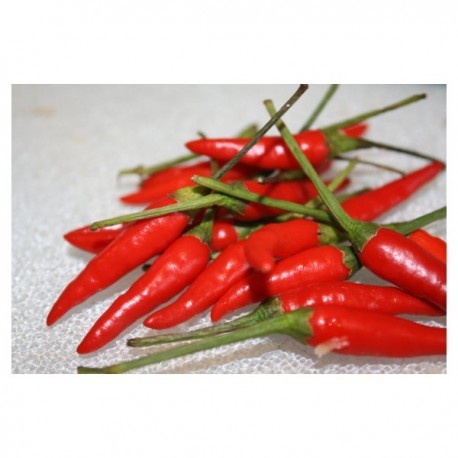
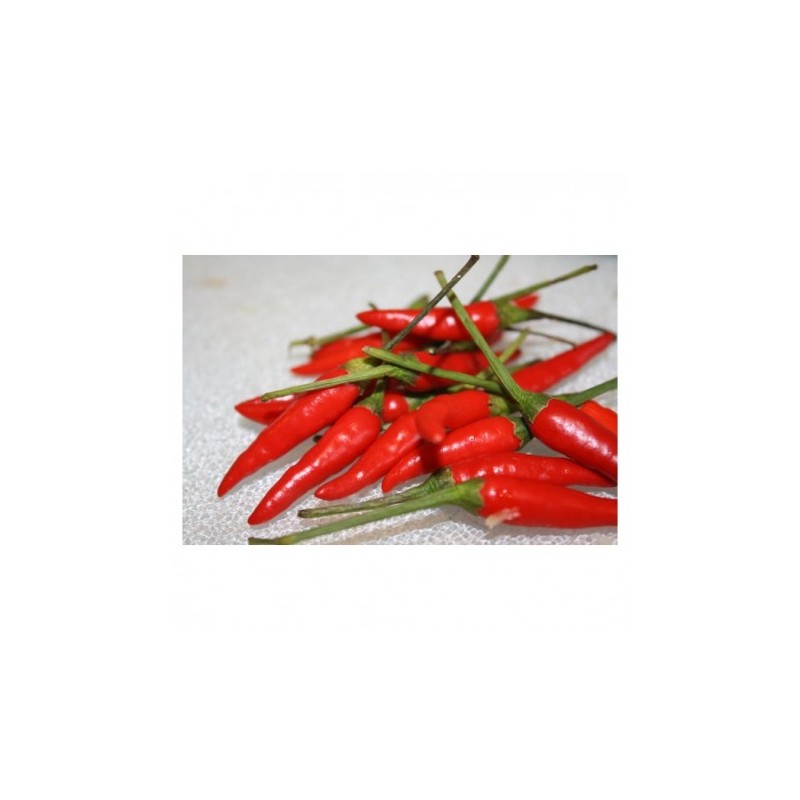
[Capsicum annuum] Dried Rawit Bird Eye pepper, upward-growing Asian chili, key in Southeast Asian cuisine.
100 Items
More info
- Dried Rawit Bird Eye Pepper
- The Rawit Bird Eye Plant
- How to Sow Rawit Bird Eye
- How to Grow Rawit Bird Eye
- Heat Level and Care Tips for Rawit Bird Eye
- Diseases and Pests of Rawit Bird Eye
- Properties and Uses of Rawit Bird Eye
- Nutritional Values of Rawit Bird Eye (per 100 g)
Dried Rawit Bird Eye Pepper
Dried Rawit Bird Eye Pepper belongs to the species Capsicum annuum, of Asian origin and also widespread in Africa; it is often mistaken for Capsicum frutescens due to its similar elongated, pointed shape.
The Rawit Bird Eye Plant
The plant grows in a small-tree shape, very productive, and can reach up to 2 meters in height; the flowers have a white corolla. The fruits, thin and horn-shaped, grow pointing upward rather than downward, turning from green to bright red at maturity, which is fairly late.
How to Sow Rawit Bird Eye
Sow in a heated seedbed between February and March, keeping temperatures constant at 25-28°C until germination, which usually takes 2-3 weeks.
How to Grow Rawit Bird Eye
Transplant from April to June, once temperatures start to rise steadily. It prefers full sun, permeable fertile soil; given the late maturation, it needs a long warm season.
Heat Level and Care Tips for Rawit Bird Eye
The heat level is medium-high (about 150,000-200,000 SHU): gloves are essential when handling the fruits, carefully avoiding contact with eyes and mucous membranes.
Diseases and Pests of Rawit Bird Eye
It can be affected by aphids, spider mites and whitefly; avoiding wetting the foliage during watering reduces the risk of fungal disease.
Properties and Uses of Rawit Bird Eye
The high capsaicin content gives strong thermogenic and metabolism-stimulating properties. Dried Rawit Bird Eye pepper, widely used in Vietnamese, Indonesian and Thai cuisine, is used ground into powder or flakes to season meat and fish dishes.
Nutritional Values of Rawit Bird Eye (per 100 g)
- Calories: 40 kcal
- Protein: 1.9 g
- Fat: 0.4 g
- Carbohydrates: 8.8 g
- Fibre: 1.5 g
- Vitamin C: 143 mg
- Potassium: 322 mg