

No products
semi di cavolo
-
Semi ortaggi
-
Summer vegetables seeds
- Garlic seeds
- Watermelon seeds
- Asparagus seeds
- Chili seeds
- Beet seeds
- Basil seeds
- Chard seeds
- Cabbage seeds
- Onion seeds
- Carrot seeds
- artichoke seeds
- Cucumber seeds
- Strawberry seeds
- Bean and green bean seeds
- Broad bean seeds
- Lettuce seeds
- Corn seed
- Eggplant seeds
- Melon seeds
- Okra seeds
- Tomato seeds
- Pea seeds
- Leek seeds
- Pepper seeds
- Radish seeds
- Arugula seeds
- Shallot seeds
- Celery seeds
- Spinach seeds
- Valerian seeds
- Pumpkin seeds
- Courgette seeds
-
Winter vegetables seeds
- broccoli seeds
- cauliflower seeds
- semi di cavolo
- fennel seeds
- Semi di lattuga
- chicory seeds
- Radicchio seeds
- Rocket seeds
- Chard and Beet Seeds
- Escarole Seeds
- Onion Seeds
- Basil Seeds
- Chard Seeds
- Artichoke Seeds
- Carrot Seeds
- Cucumber Seeds
- Bean Seeds
- Endive Seeds
- Leek Seeds
- Parsley Seeds
- Celery Seeds
- Spinach Seeds
- Valerian Seeds
-
Summer vegetables seeds
- Peperoncino secco
- Peperoncino in polvere
- Semi piante aromatiche
- Prati e tappeti erbosi
- Semi fiori ornamentali
- Fertilizzanti
- Fertilizzante solido
- Spezie
- eBook
- Bulbi
- Starter kit / Micro orto
- Idea regalo / Bomboniere
- Patate e tuberi da semina
- Buoni regalo digitali
- TEST posizioni
 View larger
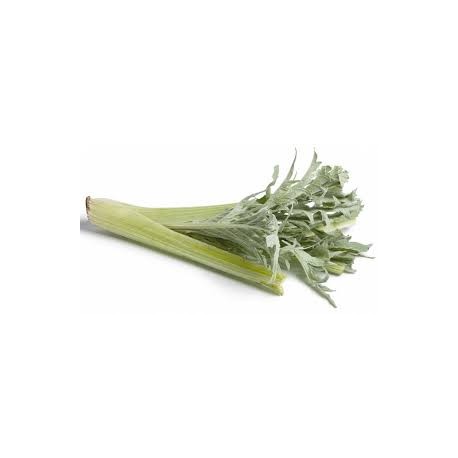
Cardoon Seeds
New product
[Cynara cardunculus var. altilis] Cardoon seeds, an ancient relative of the artichoke grown for its tender, delicately bitter leaf ribs.
100 Items
More info
- Cardoon
- The cardoon Plant
- How to Sow Cardoon
- How to Grow Cardoon
- Tips for Cardoon
- Diseases and Pests of Cardoon
- Uses and Curiosities of Cardoon
Cardoon
Cardoon, botanically Cynara cardunculus var. altilis, is an ancient, somewhat forgotten vegetable, grown since Roman and Egyptian times. Closely related to the artichoke, it's the fleshy leaf stalks, or ribs, that are eaten, with a distinctive, delicately bitter flavor.
The cardoon Plant
The plant is large and striking, with thick ribs and lance-shaped leaves that can grow over a meter and a half tall. It belongs to the Asteraceae family, the same as the artichoke, with hermaphrodite flowers in shades of blue-violet. Varieties range from more to less thorny, such as the giant Romagna cardoon, the Chieri cardoon, or the Bologna cardoon, which is thornless.
How to Sow Cardoon
Sow between April and May, directly in the field in rows about a meter apart, with 80-100 cm between plants, or in clusters of 3-4 seeds per hole at a depth of about 2 cm, later thinning out the weaker seedlings once they reach 6-8 leaves.
How to Grow Cardoon
It prefers rich, cool, deep soil, prepared with thorough tilling and generous organic feeding. It grows vigorously in the summer heat, giving an autumn-winter harvest. To get more tender, flavorful ribs, growers practice blanching, covering the base of the plant to reduce its light exposure.
Tips for Cardoon
Mulching helps keep the soil moist and weeds under control. It pairs well with onions, carrots, spinach and radishes. Being a biennial, if left in the ground it will flower, producing a head similar to an artichoke, from which seeds can be collected for the following year.
Diseases and Pests of Cardoon
It's a fairly hardy plant, but can be affected by aphids and slugs on young leaves. Powdery mildew can appear in overly humid conditions; good airflow between plants and regular, moderate watering help prevent it.
Uses and Curiosities of Cardoon
Cardoon is a classic ingredient in Piedmontese and Italian cuisine in general, the star of the famous bagna cauda dip, and also excellent oven-gratinated or fried in batter. There's even a curious curved variety, the "cardo gobbo" (hunchback cardoon) of Nice, obtained by artificially bending the stem as it grows.
| Nutritional values (100g) | |
|---|---|
| Energy | 17 kcal |
| Protein | 0.7 g |
| Fiber | 1.6 g |
| Potassium | present |
| Calories | very low |