

No products
Semi fiori ornamentali
-
Semi ortaggi
-
Summer vegetables seeds
- Garlic seeds
- Watermelon seeds
- Asparagus seeds
- Chili seeds
- Beet seeds
- Basil seeds
- Chard seeds
- Cabbage seeds
- Onion seeds
- Carrot seeds
- artichoke seeds
- Cucumber seeds
- Strawberry seeds
- Bean and green bean seeds
- Broad bean seeds
- Lettuce seeds
- Corn seed
- Eggplant seeds
- Melon seeds
- Okra seeds
- Tomato seeds
- Pea seeds
- Leek seeds
- Pepper seeds
- Radish seeds
- Arugula seeds
- Shallot seeds
- Celery seeds
- Spinach seeds
- Valerian seeds
- Pumpkin seeds
- Courgette seeds
-
Winter vegetables seeds
- broccoli seeds
- cauliflower seeds
- semi di cavolo
- fennel seeds
- Semi di lattuga
- chicory seeds
- Radicchio seeds
- Rocket seeds
- Chard and Beet Seeds
- Escarole Seeds
- Onion Seeds
- Basil Seeds
- Chard Seeds
- Artichoke Seeds
- Carrot Seeds
- Cucumber Seeds
- Bean Seeds
- Endive Seeds
- Leek Seeds
- Parsley Seeds
- Celery Seeds
- Spinach Seeds
- Valerian Seeds
-
Summer vegetables seeds
- Peperoncino secco
- Peperoncino in polvere
- Semi piante aromatiche
- Prati e tappeti erbosi
- Semi fiori ornamentali
- Fertilizzanti
- Fertilizzante solido
- Spezie
- eBook
- Bulbi
- Starter kit / Micro orto
- Idea regalo / Bomboniere
- Patate e tuberi da semina
- Buoni regalo digitali
- TEST posizioni
 View larger
Sweet William Seeds
New product
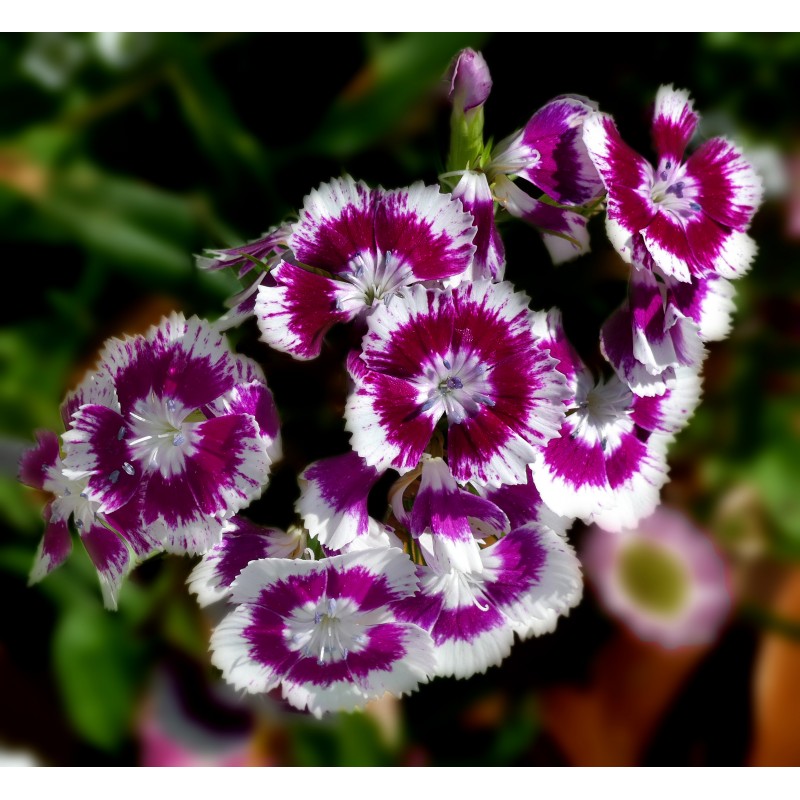
[Dianthus barbatus] Sweet William, also known as the poets carnation, is a biennial plant with clusters of fragrant, colourful flowers, perfect for borders and pots.
20 Items
More info
- Sweet William Seeds
- The Sweet William Plant
- How to Sow Sweet William
- How to Grow Sweet William
- Tips for Growing Sweet William
- Pests and Diseases
- Uses and Curiosities
Sweet William Seeds
Sweet William (Dianthus barbatus) is a plant of the Caryophyllaceae family, native to central and southern Europe. Also known as the poets carnation, it is loved for its clusters of small, fragrant flowers, often bicoloured.
The Sweet William Plant
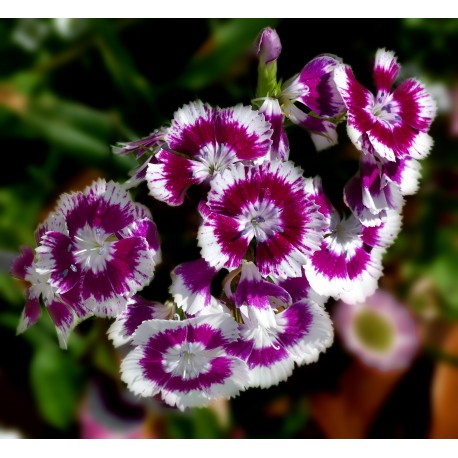
It forms clumps 20-60 cm tall, with upright stems and narrow, greyish-green leaves. The flowers, gathered in compact clusters, can be white, pink, red, bicoloured or speckled.
It is a short-lived perennial, usually grown as a biennial: the first year it develops a leaf rosette, the second it rewards with its full bloom.
How to Sow Sweet William
Sow in late spring, between May and June, in seed trays or directly in the ground, in a sunny spot. Transplant to its final position in autumn for an abundant bloom the following year.
How to Grow Sweet William
It prefers a loose, fertile, well-drained soil, in full sun though it tolerates partial shade. Watering should be moderate, avoiding waterlogging which favours fungal diseases.
Flowering occurs between May and August, with fragrant clusters that attract butterflies and bees.
Tips for Growing Sweet William
To prolong flowering, regularly remove spent blooms, cutting the stem just above a leaf pair to encourage new buds. The plant tends to self-seed easily.
Pests and Diseases
The main risks are fungal diseases linked to waterlogging. Well-drained soil and moderate watering are the best prevention.
Uses and Curiosities
Excellent as a cut flower thanks to its long vase life, and perfect for borders, flower beds and pots on balconies and terraces. In the language of flowers it symbolises love, elegance and fidelity; Kate Middleton chose it for her wedding bouquet in 2011, in honour of Prince William.
- Sowing: May-June, transplant in autumn
- Exposure: full sun, tolerates partial shade
- Flowering: May-August
- Height: 20-60 cm
- Soil: loose, fertile, well-drained
- Watering: moderate, avoid waterlogging
- Suggested use: borders, pots, cut flower