

No products
Semi fiori ornamentali
-
Semi ortaggi
-
Summer vegetables seeds
- Garlic seeds
- Watermelon seeds
- Asparagus seeds
- Chili seeds
- Beet seeds
- Basil seeds
- Chard seeds
- Cabbage seeds
- Onion seeds
- Carrot seeds
- artichoke seeds
- Cucumber seeds
- Strawberry seeds
- Bean and green bean seeds
- Broad bean seeds
- Lettuce seeds
- Corn seed
- Eggplant seeds
- Melon seeds
- Okra seeds
- Tomato seeds
- Pea seeds
- Leek seeds
- Pepper seeds
- Radish seeds
- Arugula seeds
- Shallot seeds
- Celery seeds
- Spinach seeds
- Valerian seeds
- Pumpkin seeds
- Courgette seeds
-
Winter vegetables seeds
- broccoli seeds
- cauliflower seeds
- semi di cavolo
- fennel seeds
- Semi di lattuga
- chicory seeds
- Radicchio seeds
- Rocket seeds
- Chard and Beet Seeds
- Escarole Seeds
- Onion Seeds
- Basil Seeds
- Chard Seeds
- Artichoke Seeds
- Carrot Seeds
- Cucumber Seeds
- Bean Seeds
- Endive Seeds
- Leek Seeds
- Parsley Seeds
- Celery Seeds
- Spinach Seeds
- Valerian Seeds
-
Summer vegetables seeds
- Peperoncino secco
- Peperoncino in polvere
- Semi piante aromatiche
- Prati e tappeti erbosi
- Semi fiori ornamentali
- Fertilizzanti
- Fertilizzante solido
- Spezie
- eBook
- Bulbi
- Starter kit / Micro orto
- Idea regalo / Bomboniere
- Patate e tuberi da semina
- Buoni regalo digitali
- TEST posizioni
 View larger
Snapdragon Seeds
New product
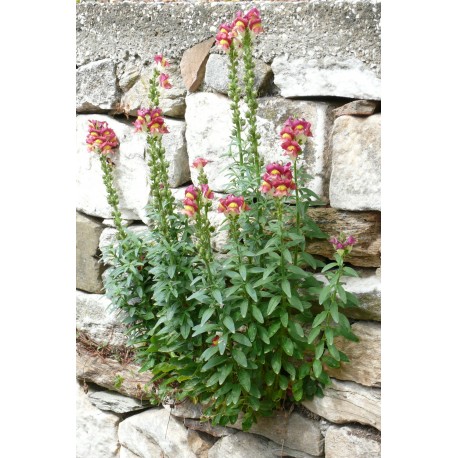
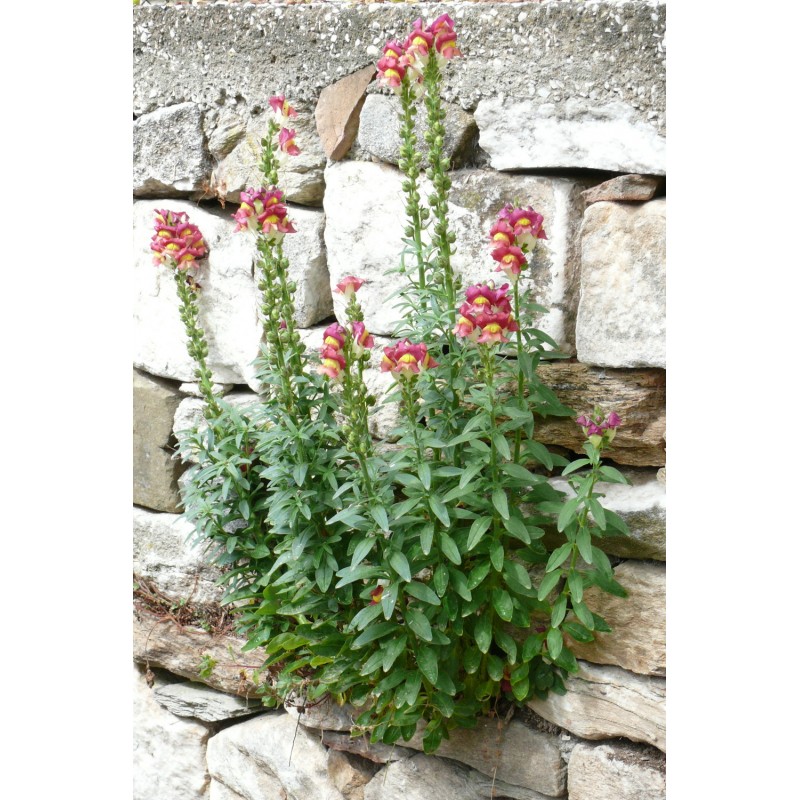
[Antirrhinum majus] Mediterranean herbaceous plant with flowers shaped like tiny jaws that open when gently squeezed on the sides.
20 Items
More info
- Snapdragon Seeds
- The Snapdragon Plant
- How to Sow Snapdragons
- How to Grow Snapdragons
- Growing Tips
- Diseases and Pests
- Uses and Curiosities
Snapdragon Seeds
The Snapdragon (Antirrhinum majus) is an ornamental herbaceous plant native to the Mediterranean region, found up to 800 meters in altitude. Its common name comes from the peculiar shape of the flower, which resembles a dragon's jaw and, when gently squeezed on the sides, opens and closes like a tiny mouth.
The Snapdragon Plant
It belongs to the Plantaginaceae family (once classified among the Scrophulariaceae). It is a bushy plant, grown as an annual or biennial, with a fleshy stem that tends to become woody at the base over time. The leaves are lance-shaped, dark green, opposite at the bottom and alternate higher up.
The flowers gather in showy terminal spikes, in colors ranging from yellow to pink, red to purple. Average height is around 50-60 cm, though some border varieties can exceed one meter.
How to Sow Snapdragons
Sowing is done from seed, either directly outdoors in spring or in seed trays at the end of winter (February-March) in colder areas. Use a light substrate made of equal parts peat and sand: the seeds are barely covered or just pressed onto the surface, then lightly misted with water.
Germination takes about two weeks. Once seedlings are sturdy enough to handle, they can be transplanted to their final spot.
How to Grow Snapdragons
Snapdragons prefer full sun to light shade and well-drained, loose soil. Water regularly but moderately, avoiding waterlogging, which the plant does not tolerate.
Flowering is long-lasting, from early summer through late autumn. Regularly deadheading spent flowers encourages new blooms and extends the colorful display in the garden.
Growing Tips
Taller varieties may need light staking to stay upright, while dwarf varieties are perfect for borders, pots and balconies without any support. It helps to promptly remove dry leaves and flowers, preventing them from becoming a source of fungal disease.
Diseases and Pests
Snapdragons are mainly threatened by black aphids, which can damage the flower spikes, and by slugs on young seedlings. Among fungal diseases, they are susceptible to powdery mildew and root rot in case of waterlogging; modern varieties have been bred to be far more resistant to rust than older ones.
Uses and Curiosities
Besides its ornamental use in borders and flower beds, the Snapdragon is prized as a cut flower for its long vase life. In the Middle Ages it was a symbol of indifference toward unwanted suitors, while in earlier times it was planted near doorways as it was believed to ward off evil spirits. A fun botanical fact: its dried seed pods, seen up close, strikingly resemble tiny skulls.