

No products
Semi fiori ornamentali
-
Semi ortaggi
-
Summer vegetables seeds
- Garlic seeds
- Watermelon seeds
- Asparagus seeds
- Chili seeds
- Beet seeds
- Basil seeds
- Chard seeds
- Cabbage seeds
- Onion seeds
- Carrot seeds
- artichoke seeds
- Cucumber seeds
- Strawberry seeds
- Bean and green bean seeds
- Broad bean seeds
- Lettuce seeds
- Corn seed
- Eggplant seeds
- Melon seeds
- Okra seeds
- Tomato seeds
- Pea seeds
- Leek seeds
- Pepper seeds
- Radish seeds
- Arugula seeds
- Shallot seeds
- Celery seeds
- Spinach seeds
- Valerian seeds
- Pumpkin seeds
- Courgette seeds
-
Winter vegetables seeds
- broccoli seeds
- cauliflower seeds
- semi di cavolo
- fennel seeds
- Semi di lattuga
- chicory seeds
- Radicchio seeds
- Rocket seeds
- Chard and Beet Seeds
- Escarole Seeds
- Onion Seeds
- Basil Seeds
- Chard Seeds
- Artichoke Seeds
- Carrot Seeds
- Cucumber Seeds
- Bean Seeds
- Endive Seeds
- Leek Seeds
- Parsley Seeds
- Celery Seeds
- Spinach Seeds
- Valerian Seeds
-
Summer vegetables seeds
- Peperoncino secco
- Peperoncino in polvere
- Semi piante aromatiche
- Prati e tappeti erbosi
- Semi fiori ornamentali
- Fertilizzanti
- Fertilizzante solido
- Spezie
- eBook
- Bulbi
- Starter kit / Micro orto
- Idea regalo / Bomboniere
- Patate e tuberi da semina
- Buoni regalo digitali
- TEST posizioni
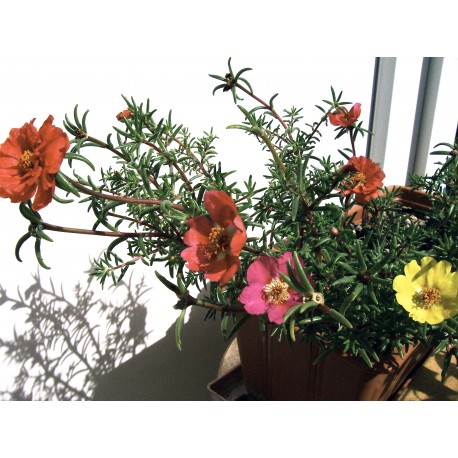 View larger
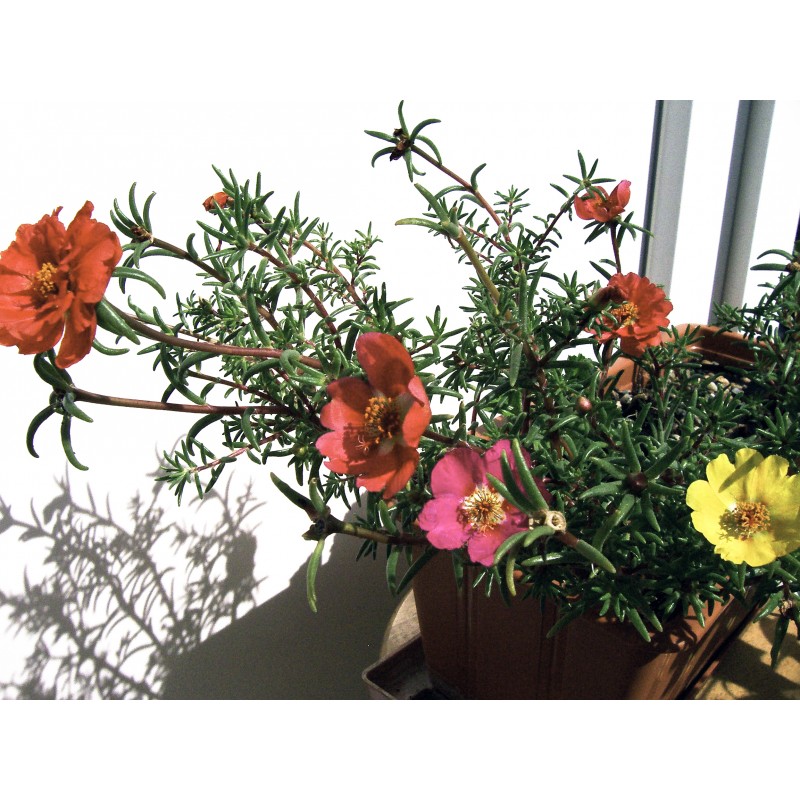
Portulaca Seeds
New product
20 Items
More info
- Portulaca Seeds
- The Portulaca Plant
- How to Sow Portulaca
- How to Grow Portulaca
- Tips for Growing Portulaca
- Portulaca Diseases and Pests
- Uses and Curiosities of Portulaca
Portulaca Seeds
Portulaca grandiflora is an annual herbaceous plant native to the semi-desert regions of South America, prized for its spectacular and long-lasting bloom. The cup-shaped flowers, single or double, open in the morning and close at sunset, creating a carpet of vivid colors from May to October. It is an ideal choice for gardeners looking for an easy, hardy plant suited even to poor soils.
The Portulaca Plant
It belongs to the Portulacaceae family and features prostrate or slightly erect stems, no taller than 20 cm, covered with fleshy, needle-like leaves about 2 cm long. The flowers, 2.5-4 cm wide, bloom abundantly throughout the warm season in white, yellow, orange, pink and red.
Thanks to its succulent leaves the plant tolerates short dry spells well, making it perfect for rock gardens, borders and pots in full sun.
How to Sow Portulaca
Sowing takes place from February to April in a protected seedbed, or directly outdoors from May once temperatures are milder. Seeds should be scattered on the surface and barely covered, as they germinate best when exposed to light, at temperatures between 18 and 22 degrees.
How to Grow Portulaca
It prefers light, well-drained soil, even nutrient-poor, and a full-sun position to ensure abundant flowering. Watering should be regular but not excessive, letting the soil dry out between waterings.
Flowering renews continuously from June to October; there is no need to deadhead, as the plant keeps producing new blooms vigorously.
Tips for Growing Portulaca
In pots it is especially suited to sunny balconies and terraces, where its trailing habit creates a lovely carpeting effect. Avoid waterlogging, the main cause of root rot, and always choose well-draining substrates such as those for succulents or geraniums.
Portulaca Diseases and Pests
It is a hardy plant rarely affected by disease. The main risk is root rot caused by compacted soil or overwatering; aphids may occasionally appear in the early growth stages.
Uses and Curiosities of Portulaca
Its scientific name comes from the Latin "portulla" (little door), referring to the way the seed capsule opens to release its tiny seeds. It is prone to spontaneous self-seeding, often reappearing on its own the following year in the same spot where it was grown.