

No products
Watermelon seeds
-
Semi ortaggi
-
Summer vegetables seeds
- Garlic seeds
- Watermelon seeds
- Asparagus seeds
- Chili seeds
- Beet seeds
- Basil seeds
- Chard seeds
- Cabbage seeds
- Onion seeds
- Carrot seeds
- artichoke seeds
- Cucumber seeds
- Strawberry seeds
- Bean and green bean seeds
- Broad bean seeds
- Lettuce seeds
- Corn seed
- Eggplant seeds
- Melon seeds
- Okra seeds
- Tomato seeds
- Pea seeds
- Leek seeds
- Pepper seeds
- Radish seeds
- Arugula seeds
- Shallot seeds
- Celery seeds
- Spinach seeds
- Valerian seeds
- Pumpkin seeds
- Courgette seeds
-
Winter vegetables seeds
- broccoli seeds
- cauliflower seeds
- semi di cavolo
- fennel seeds
- Semi di lattuga
- chicory seeds
- Radicchio seeds
- Rocket seeds
- Chard and Beet Seeds
- Escarole Seeds
- Onion Seeds
- Basil Seeds
- Chard Seeds
- Artichoke Seeds
- Carrot Seeds
- Cucumber Seeds
- Bean Seeds
- Endive Seeds
- Leek Seeds
- Parsley Seeds
- Celery Seeds
- Spinach Seeds
- Valerian Seeds
-
Summer vegetables seeds
- Peperoncino secco
- Peperoncino in polvere
- Semi piante aromatiche
- Prati e tappeti erbosi
- Semi fiori ornamentali
- Fertilizzanti
- Fertilizzante solido
- Spezie
- eBook
- Bulbi
- Starter kit / Micro orto
- Idea regalo / Bomboniere
- Patate e tuberi da semina
- Buoni regalo digitali
- TEST posizioni
 View larger
Seedless Watermelon Seeds
New product
Seeds of a triploid variety with sweet, crisp flesh free of the typical hard seeds. Needs a diploid pollinator variety nearby to set fruit.
99 Items
More info
- seedless watermelon
- The seedless watermelon plant
- How to sow seedless watermelon
- How to grow seedless watermelon
- Tips for growing seedless watermelon
- Diseases and pests of seedless watermelon
- Properties of seedless watermelon
- Nutritional values of seedless watermelon (per 100 g)
seedless watermelon
The seedless watermelon is a triploid variety with sweet, crisp flesh that is free (or nearly free) of the typical hard seeds, much appreciated for its ease of eating. Bred by crossing diploid and tetraploid varieties, it combines the authentic flavor of traditional watermelon with a practicality that makes it ideal for families and children.
The seedless watermelon plant
This is a cucurbit (Citrullus lanatus) with a trailing, vine-like habit, abundant foliage and a generally medium-early cycle. Being a triploid variety, the plant is sterile and does not produce fertile pollen: to ensure good fruit set it must be grown alongside a diploid pollinator variety, at an approximate ratio of one pollinator plant for every three seedless plants.
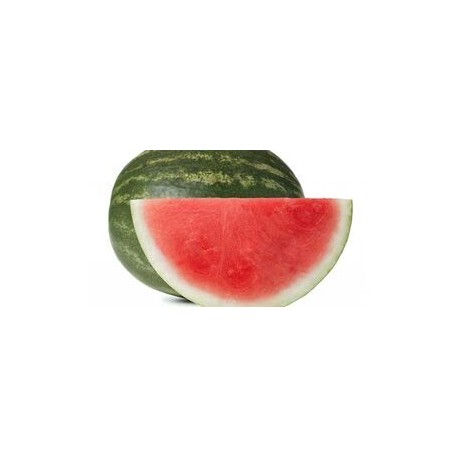
The fruit has a regular round shape, with size varying by selection, generally between 4 and 8 kg. The rind can be striped or dark depending on the variety, while the flesh inside is deep red, firm and crisp, often with a higher sugar content than traditional varieties.
How to sow seedless watermelon
Sowing should preferably take place in a protected seedbed from February-March, since triploid seeds have a harder seed coat and less uniform germination than diploid varieties, before transplanting into open field from April-May once the soil is stably above 20°C. It's essential to also sow the pollinator variety, planted nearby according to the recommended scheme. Seeds should be buried 1.5-2 cm deep and kept at a constant 28-30°C to support germination.
How to grow seedless watermelon
This variety prefers a warm, sunny climate, with optimal temperatures between 24 and 32°C, and fertile, well-draining soil rich in organic matter. The presence of bees and other pollinating insects nearby is essential for carrying pollen from the pollinator plant to the female flowers of the seedless variety, so it helps to support biodiversity in the garden with nectar-rich companion flowers.
Watering should stay regular during vegetative growth and fruit swelling, then be reduced as ripening approaches to concentrate sugars. It's advisable to clearly mark the pollinator plants (often distinguishable by different flowering or growth habit) to avoid confusing them at harvest, since their fruit contains normal seeds.
Tips for growing seedless watermelon
Keeping the right ratio between seedless plants and pollinator plants is the most important step for good production; without it, fruit can be scarce or poorly developed. Placing a straw base under each fruit prevents contact with damp soil, while good spacing between plants improves airflow and reduces the risk of fungal disease.
Diseases and pests of seedless watermelon
Like other watermelons, it can be susceptible to powdery and downy mildew during humid periods, best managed with preventive treatments and good air circulation between plants. Common pests include aphids and spider mites, manageable with regular checks and treatments based on potassium soap or neem oil.
Properties of seedless watermelon
The flesh of seedless watermelon is mostly water, making it very hydrating and refreshing, ideal during the warm months. It's naturally low in calories and easy to digest, while providing simple sugars that account for its sweet taste and immediate energy boost. It also contains lycopene, a powerful antioxidant, along with a good supply of potassium and vitamin C.
Nutritional values of seedless watermelon (per 100 g)
- Calories: 30 kcal
- Protein: 0.6 g
- Fat: 0.2 g
- Carbohydrates: 7.6 g
- Fiber: 0.4 g
- Vitamin C: 8 mg
- Potassium: 112 mg