

No products
Watermelon seeds
-
Semi ortaggi
-
Summer vegetables seeds
- Garlic seeds
- Watermelon seeds
- Asparagus seeds
- Chili seeds
- Beet seeds
- Basil seeds
- Chard seeds
- Cabbage seeds
- Onion seeds
- Carrot seeds
- artichoke seeds
- Cucumber seeds
- Strawberry seeds
- Bean and green bean seeds
- Broad bean seeds
- Lettuce seeds
- Corn seed
- Eggplant seeds
- Melon seeds
- Okra seeds
- Tomato seeds
- Pea seeds
- Leek seeds
- Pepper seeds
- Radish seeds
- Arugula seeds
- Shallot seeds
- Celery seeds
- Spinach seeds
- Valerian seeds
- Pumpkin seeds
- Courgette seeds
-
Winter vegetables seeds
- broccoli seeds
- cauliflower seeds
- semi di cavolo
- fennel seeds
- Semi di lattuga
- chicory seeds
- Radicchio seeds
- Rocket seeds
- Chard and Beet Seeds
- Escarole Seeds
- Onion Seeds
- Basil Seeds
- Chard Seeds
- Artichoke Seeds
- Carrot Seeds
- Cucumber Seeds
- Bean Seeds
- Endive Seeds
- Leek Seeds
- Parsley Seeds
- Celery Seeds
- Spinach Seeds
- Valerian Seeds
-
Summer vegetables seeds
- Peperoncino secco
- Peperoncino in polvere
- Semi piante aromatiche
- Prati e tappeti erbosi
- Semi fiori ornamentali
- Fertilizzanti
- Fertilizzante solido
- Spezie
- eBook
- Bulbi
- Starter kit / Micro orto
- Idea regalo / Bomboniere
- Patate e tuberi da semina
- Buoni regalo digitali
- TEST posizioni
 View larger
Mini Watermelon
New product
A rather early variety, giving fruit similar to melons weighing 3-4 kg, with dark green rind striped in lighter green and juicy red flesh, almost seedless.
100 Items
More info
- Mini Watermelon Seeds
- The mini watermelon plant
- How to sow mini watermelon
- How to grow mini watermelon
- Tips for growing mini watermelon
- Diseases and pests of mini watermelon
- Properties of mini watermelon
- Nutritional values of mini watermelon (per 100 g)
Mini Watermelon Seeds
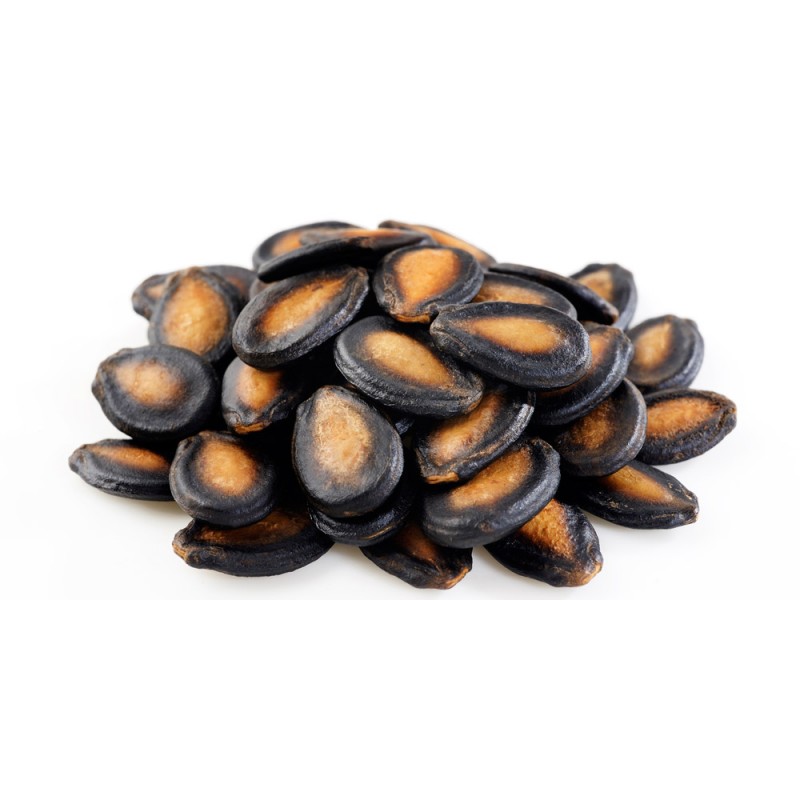
Mini watermelon seeds produce an early variety with a compact size, giving fruit similar in weight to a melon, generally between 3 and 4 kg. It's the ideal choice for anyone with limited garden or balcony space, and also for those who prefer more manageable portions for the family without waste, without giving up the sweet, juicy taste of a classic watermelon.
The mini watermelon plant
This is a cucurbit (Citrullus lanatus) with a trailing, vine-like habit, more compact than traditional varieties, a trait that makes it suitable for growing in tight spaces or in large containers too. The leaves are lobed and deep green, effectively protecting the small fruit as it develops.
The fruit has a dark green rind striped with lighter green, typical of mini varieties, and juicy, sweet-tasting red flesh, nearly seedless or with very small seeds depending on the selection. Given its small size and light weight, this variety is also particularly well suited to being sold in small cuts or eaten fresh with no waste.
How to sow mini watermelon
Being an early variety, protected seedbed sowing can start as early as February-March, while open-field sowing is recommended from April to May with a minimum soil temperature of around 18°C. Seeds should be buried about 2 cm deep, spaced at least 60-80 cm apart along the row thanks to the plant's more compact growth, with rows 120-150 cm apart. Germination usually occurs within 7-10 days at temperatures between 22 and 28°C.
How to grow mini watermelon
Mini watermelon prefers a warm, sunny climate, with optimal temperatures between 22 and 30°C: below 15°C growth slows noticeably. The ideal soil is well-draining, fertile and rich in organic matter, with a slightly acidic to neutral pH. Thanks to its more compact habit, this variety also adapts well to growing in large pots on sunny balconies.
Watering should stay regular during fruit development, avoiding waterlogging which encourages root rot. Given the variety's earliness, harvest can start as soon as 70-80 days after sowing, with fruit ready when the stem begins to dry out and the part touching the ground turns slightly yellow.
Tips for growing mini watermelon
Given the small fruit size, the plant can even be grown vertically on a sturdy trellis, saving valuable space in small gardens or urban plots. Supporting the developing fruit with slings prevents its weight from making it fall prematurely from raised vines. When growing in pots, make sure the container is large enough (at least 40-50 liters) to allow adequate root development.
Diseases and pests of mini watermelon
Like all cucurbits, mini watermelon can be affected by powdery mildew and downy mildew, both favored by excess humidity and poor air circulation: watering at the base rather than the foliage helps prevent them. Common pests include aphids and spider mites, manageable with regular checks and treatments based on potassium soap or neem oil if needed. Crop rotation remains the most effective preventive practice against soil-borne pathogens.
Properties of mini watermelon
The red flesh of mini watermelon is almost entirely made up of water, making it extremely hydrating and refreshing, ideal on hot days. It's naturally low in calories and fat-free, while providing simple sugars that explain its sweet taste and quick energy boost. It also contains lycopene, a powerful antioxidant, along with a good supply of potassium and vitamin C, useful for the body's fluid balance.
Nutritional values of mini watermelon (per 100 g)
- Calories: 30 kcal
- Protein: 0.6 g
- Fat: 0.2 g
- Carbohydrates: 7.5 g
- Fiber: 0.4 g
- Vitamin C: 8 mg
- Potassium: 112 mg