

No products
broccoli seeds
-
Semi ortaggi
-
Summer vegetables seeds
- Garlic seeds
- Watermelon seeds
- Asparagus seeds
- Chili seeds
- Beet seeds
- Basil seeds
- Chard seeds
- Cabbage seeds
- Onion seeds
- Carrot seeds
- artichoke seeds
- Cucumber seeds
- Strawberry seeds
- Bean and green bean seeds
- Broad bean seeds
- Lettuce seeds
- Corn seed
- Eggplant seeds
- Melon seeds
- Okra seeds
- Tomato seeds
- Pea seeds
- Leek seeds
- Pepper seeds
- Radish seeds
- Arugula seeds
- Shallot seeds
- Celery seeds
- Spinach seeds
- Valerian seeds
- Pumpkin seeds
- Courgette seeds
-
Winter vegetables seeds
- broccoli seeds
- cauliflower seeds
- semi di cavolo
- fennel seeds
- Semi di lattuga
- chicory seeds
- Radicchio seeds
- Rocket seeds
- Chard and Beet Seeds
- Escarole Seeds
- Onion Seeds
- Basil Seeds
- Chard Seeds
- Artichoke Seeds
- Carrot Seeds
- Cucumber Seeds
- Bean Seeds
- Endive Seeds
- Leek Seeds
- Parsley Seeds
- Celery Seeds
- Spinach Seeds
- Valerian Seeds
-
Summer vegetables seeds
- Peperoncino secco
- Peperoncino in polvere
- Semi piante aromatiche
- Prati e tappeti erbosi
- Semi fiori ornamentali
- Fertilizzanti
- Fertilizzante solido
- Spezie
- eBook
- Bulbi
- Starter kit / Micro orto
- Idea regalo / Bomboniere
- Patate e tuberi da semina
- Buoni regalo digitali
- TEST posizioni
 View larger


San Giuseppe Roman Broccoli Seeds (Lazio)
New product
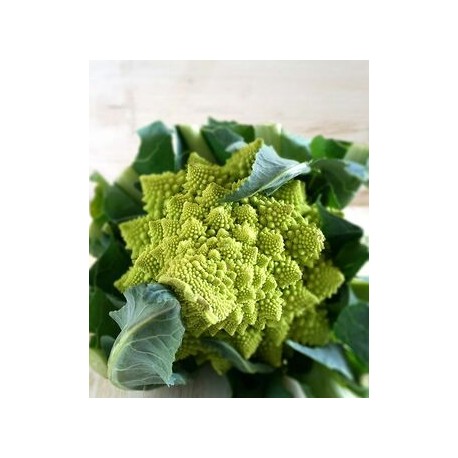
A late variety typical of Lazio, harvested about 140-145 days after transplanting, coinciding with the feast of San Giuseppe. Characteristic pyramidal head made of small spiral rosettes.
100 Items
More info
- San Giuseppe Roman Broccoli (Lazio)
- The San Giuseppe Roman Broccoli (Lazio) Plant
- How to Sow San Giuseppe Roman Broccoli (Lazio)
- How to Grow San Giuseppe Roman Broccoli (Lazio)
- Tips for Growing San Giuseppe Roman Broccoli (Lazio)
- Diseases and Pests of san giuseppe roman broccoli
- Properties of san giuseppe roman broccoli
- Nutritional Values of san giuseppe roman broccoli (per 100 g)
San Giuseppe Roman Broccoli (Lazio)
San Giuseppe Roman broccoli is a late variety typical of the Lazio region, harvested after about 140-145 days from transplanting — a period that traditionally coincides with the feast of Saint Joseph (San Giuseppe), from which it takes its name. It stands out for its characteristic pyramidal head, made up of many small spiral rosettes arranged in an almost perfect geometric order.
The San Giuseppe Roman Broccoli (Lazio) Plant
Its botanical name is Brassica oleracea var. italica, belonging to the Cruciferae family (Brassicaceae). The plant is vigorous, with an upright habit, blue-green foliage and good cold resistance, both of the plant and of the head. The head, bright and uniformly green, is actually made up of many small fractal-like heads gathered into a single compact cluster.
The cultivation of Roman broccoli in Lazio dates back to ancient times, with records reaching as far as Roman antiquity: it was already prized by Cato and Pliny the Elder as a genuine and healthy food.
How to Sow San Giuseppe Roman Broccoli (Lazio)
Seedlings are transplanted into open ground in early October, being a late variety. Row spacing is about 1-1.2 meters apart, with plants spaced roughly 60 centimeters apart along the row.
How to Grow San Giuseppe Roman Broccoli (Lazio)
Before transplanting, deep plowing to 40-50 centimeters is recommended, followed by clearing and harrowing. Watering is done via sprinkler irrigation on 10-15 day cycles, while fertilization is carried out about 30 days after transplanting. Pest treatments, when needed, are generally limited to 1-2 applications during the whole growing cycle.
Harvest, done by hand, should take place when the head is large, free of dark spots, with crisp outer leaves clinging to it.
Tips for Growing San Giuseppe Roman Broccoli (Lazio)
Being a late variety, careful planning of the October transplant is needed to align harvest with the feast of San Giuseppe. The head's good cold resistance makes it a reliable choice for the autumn-winter growing cycles typical of the Roman countryside.
Diseases and Pests of san giuseppe roman broccoli
Like other Brassicaceae, it can be subject to attacks by cabbage white caterpillars and aphids, controllable with Bacillus thuringiensis treatments and natural garlic or nettle macerates. It is important to avoid waterlogging, which favours root rot and fungal diseases such as downy mildew.
Properties of san giuseppe roman broccoli
San Giuseppe Roman broccoli is rich in antioxidants, vitamin C, fiber and carotenoids. Its juice was traditionally used for therapeutic purposes as an anti-anemic, emollient, diuretic and detoxifying remedy. Recent studies have shown that sulforaphane found in broccoli may help counter cellular aging.
Nutritional Values of san giuseppe roman broccoli (per 100 g)
- Calories: 28 kcal
- Protein: 3.0 g
- Fat: 0.4 g
- Carbohydrates: 2.7 g
- Fiber: 3.0 g
- Vitamin C: 93 mg
- Calcium: 47 mg