

No products
Chard and Beet Seeds
-
Semi ortaggi
-
Summer vegetables seeds
- Garlic seeds
- Watermelon seeds
- Asparagus seeds
- Chili seeds
- Beet seeds
- Basil seeds
- Chard seeds
- Cabbage seeds
- Onion seeds
- Carrot seeds
- artichoke seeds
- Cucumber seeds
- Strawberry seeds
- Bean and green bean seeds
- Broad bean seeds
- Lettuce seeds
- Corn seed
- Eggplant seeds
- Melon seeds
- Okra seeds
- Tomato seeds
- Pea seeds
- Leek seeds
- Pepper seeds
- Radish seeds
- Arugula seeds
- Shallot seeds
- Celery seeds
- Spinach seeds
- Valerian seeds
- Pumpkin seeds
- Courgette seeds
-
Winter vegetables seeds
- broccoli seeds
- cauliflower seeds
- semi di cavolo
- fennel seeds
- Semi di lattuga
- chicory seeds
- Radicchio seeds
- Rocket seeds
- Chard and Beet Seeds
- Escarole Seeds
- Onion Seeds
- Basil Seeds
- Chard Seeds
- Artichoke Seeds
- Carrot Seeds
- Cucumber Seeds
- Bean Seeds
- Endive Seeds
- Leek Seeds
- Parsley Seeds
- Celery Seeds
- Spinach Seeds
- Valerian Seeds
-
Summer vegetables seeds
- Peperoncino secco
- Peperoncino in polvere
- Semi piante aromatiche
- Prati e tappeti erbosi
- Semi fiori ornamentali
- Fertilizzanti
- Fertilizzante solido
- Spezie
- eBook
- Bulbi
- Starter kit / Micro orto
- Idea regalo / Bomboniere
- Patate e tuberi da semina
- Buoni regalo digitali
- TEST posizioni
 View larger
Red Chard Seeds
New product
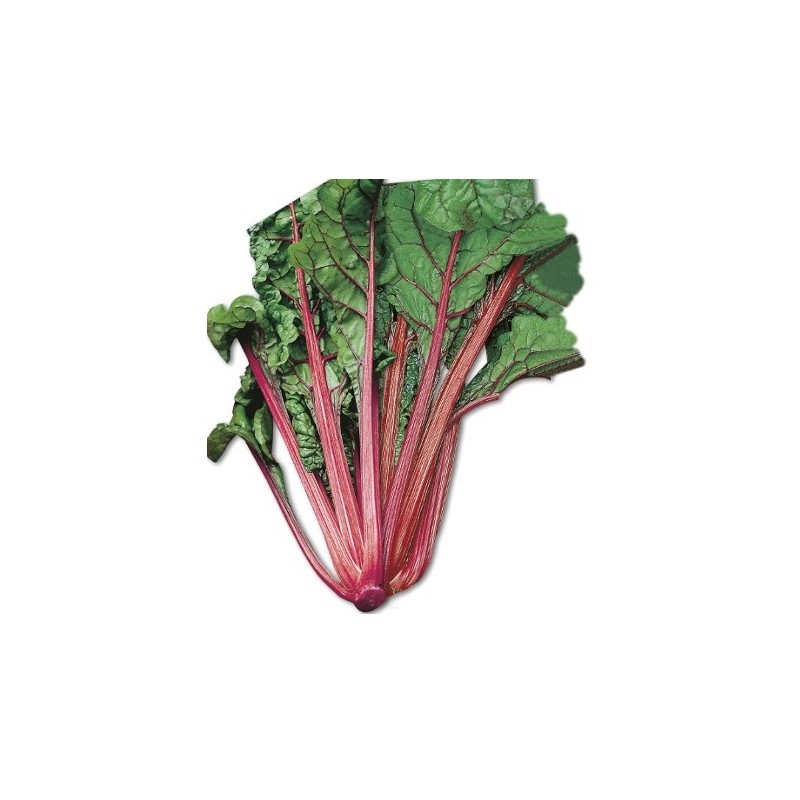
Four-season variety with bright dark green leaves and red veins, compact red-violet head, grown mainly for its leaves.
100 Items
More info
- Red Chard
- The Red Chard Plant
- How to Sow Red Chard
- How to Grow Red Chard
- Tips for Growing Red Chard
- Diseases and Pests of Red Chard
- Properties of Red Chard
- Nutritional Values of Red Chard (per 100 g)
Red Chard
Red Chard is characterized by bright dark green leaves with red veins. It is a four-season variety with a compact head and red-violet color, grown mainly for its leaves.
The Red Chard Plant
Its botanical name is Beta vulgaris subsp. cicla, family Amaranthaceae, the same species as beetroot but selected for leaf rather than root development.
How to Sow Red Chard
It can be sown almost year-round in mild climates thanks to its four-season habit, burying seeds 1-2 cm deep in rows 30-40 cm apart.
How to Grow Red Chard
It prefers a sunny spot and cool soil rich in organic matter. The compact head develops well with 25-30 cm between plants.
Leaves are harvested as they mature, cutting the outer ones and letting the central heart continue growing, allowing a staggered harvest lasting several months.
Tips for Growing Red Chard
Regular watering keeps the leaves crisp and the red veins more vivid; during prolonged drought the leaves tend to toughen and lose flavor.
Diseases and Pests of Red Chard
It can be attacked by leaf miners and aphids, as well as occasional rot in case of prolonged waterlogging. Good air circulation between plants prevents fungal issues.
Properties of Red Chard
The leaves are rich in vitamin A, vitamin K and antioxidants, with remineralizing properties; the red veins indicate a high content of betalains, the same pigments found in beetroot.
Nutritional Values of Red Chard (per 100 g)
- Calories: 19 kcal
- Protein: 1.8 g
- Fat: 0.2 g
- Carbohydrates: 3.7 g
- Fiber: 1.6 g
- Vitamin A: 306 mcg
- Vitamin K: 400 mcg