

No products
Chard Seeds
-
Semi ortaggi
-
Summer vegetables seeds
- Garlic seeds
- Watermelon seeds
- Asparagus seeds
- Chili seeds
- Beet seeds
- Basil seeds
- Chard seeds
- Cabbage seeds
- Onion seeds
- Carrot seeds
- artichoke seeds
- Cucumber seeds
- Strawberry seeds
- Bean and green bean seeds
- Broad bean seeds
- Lettuce seeds
- Corn seed
- Eggplant seeds
- Melon seeds
- Okra seeds
- Tomato seeds
- Pea seeds
- Leek seeds
- Pepper seeds
- Radish seeds
- Arugula seeds
- Shallot seeds
- Celery seeds
- Spinach seeds
- Valerian seeds
- Pumpkin seeds
- Courgette seeds
-
Winter vegetables seeds
- broccoli seeds
- cauliflower seeds
- semi di cavolo
- fennel seeds
- Semi di lattuga
- chicory seeds
- Radicchio seeds
- Rocket seeds
- Chard and Beet Seeds
- Escarole Seeds
- Onion Seeds
- Basil Seeds
- Chard Seeds
- Artichoke Seeds
- Carrot Seeds
- Cucumber Seeds
- Bean Seeds
- Endive Seeds
- Leek Seeds
- Parsley Seeds
- Celery Seeds
- Spinach Seeds
- Valerian Seeds
-
Summer vegetables seeds
- Peperoncino secco
- Peperoncino in polvere
- Semi piante aromatiche
- Prati e tappeti erbosi
- Semi fiori ornamentali
- Fertilizzanti
- Fertilizzante solido
- Spezie
- eBook
- Bulbi
- Starter kit / Micro orto
- Idea regalo / Bomboniere
- Patate e tuberi da semina
- Buoni regalo digitali
- TEST posizioni
 View larger


Rainbow Chard Seeds
New product
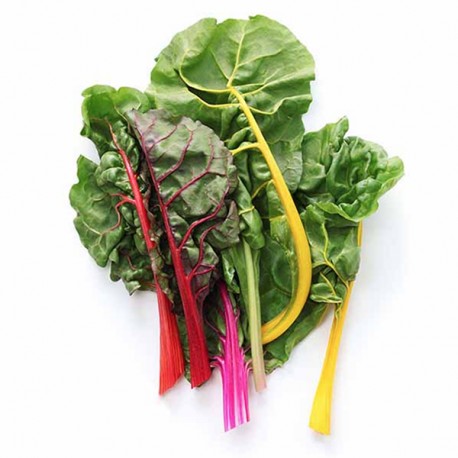
[Beta vulgaris var. cicla] Seeds of a colorful chard mix with red, yellow, orange, pink and white stalks, decorative and edible.
99 Items
More info
- Rainbow Chard
- The Rainbow Chard Plant
- How to Sow Rainbow Chard
- How to Grow Rainbow Chard
- Tips for Growing Rainbow Chard
- Diseases and Pests of Rainbow Chard
- Properties of Rainbow Chard
- Nutritional Values of Rainbow Chard (per 100 g)
Rainbow Chard
rainbow chard is a mix of ornamental and edible chard characterized by vividly colored stalks — red, yellow, orange, pink and white — making every plant different from the next. It is valued both as a decorative element for pots and gardens and in the kitchen, where it adds color to salads.
The rainbow chard Plant
Botanically it is a Beta vulgaris var. cicla, part of the Amaranthaceae family (formerly Chenopodiaceae), also known commercially as "Bright Lights" or similar colorful blends. Each plant develops glossy green leaves supported by thin stalks colored in different shades depending on the seed.
It is a species naturally variable in color, since the seed is actually a seed cluster that can contain multiple embryos, giving rise to plants with slightly different shades even from the same seed.
How to Sow rainbow chard
Sowing takes place from March to August, both in the open field and in pots, placing the seeds about 1.5 cm deep and 20-25 cm apart, a shorter distance than stalk chard since the plants stay more compact.
How to Grow rainbow chard
It adapts well to both full sun and partial shade, in cool, well-drained soil enriched with mature compost. Regular watering, never letting the soil dry out completely, helps keep the stalks crisp and colorful.
Young leaves can be harvested as early as 4-5 weeks after sowing, while for larger, more decorative stalks it's best to wait 8-10 weeks, always cutting the outer leaves to encourage continuous regrowth.
Tips for Growing rainbow chard
In pots it's ideal for borders and mixed displays thanks to its compact habit and decorative colors; in open ground it also does well mixed with other leafy vegetables. Light mulching keeps moisture in and reduces water stress during hot months.
Diseases and Pests of rainbow chard
Like other chards it can be susceptible to Cercospora leaf spot and downy mildew in conditions of excess leaf moisture, along with aphids on the tenderest shoots. Good ventilation and watering directed at the soil remain the best prevention.
Properties of rainbow chard
The colorful leaves are rich in antioxidants, betalains (responsible for the red and yellow shades), vitamin A and potassium, with nutritional properties similar to other chards but with an added visual appeal that makes them perfect for plating.
Nutritional Values of rainbow chard (per 100 g)
- Calories: 19 kcal
- Protein: 1.8 g
- Fat: 0.2 g
- Carbohydrates: 3.7 g
- Fiber: 1.6 g
- Potassium: 379 mg
- Vitamin A: 306 mcg