

No products
Chili seeds
-
Semi ortaggi
-
Summer vegetables seeds
- Garlic seeds
- Watermelon seeds
- Asparagus seeds
- Chili seeds
- Beet seeds
- Basil seeds
- Chard seeds
- Cabbage seeds
- Onion seeds
- Carrot seeds
- artichoke seeds
- Cucumber seeds
- Strawberry seeds
- Bean and green bean seeds
- Broad bean seeds
- Lettuce seeds
- Corn seed
- Eggplant seeds
- Melon seeds
- Okra seeds
- Tomato seeds
- Pea seeds
- Leek seeds
- Pepper seeds
- Radish seeds
- Arugula seeds
- Shallot seeds
- Celery seeds
- Spinach seeds
- Valerian seeds
- Pumpkin seeds
- Courgette seeds
-
Winter vegetables seeds
- broccoli seeds
- cauliflower seeds
- semi di cavolo
- fennel seeds
- Semi di lattuga
- chicory seeds
- Radicchio seeds
- Rocket seeds
- Chard and Beet Seeds
- Escarole Seeds
- Onion Seeds
- Basil Seeds
- Chard Seeds
- Artichoke Seeds
- Carrot Seeds
- Cucumber Seeds
- Bean Seeds
- Endive Seeds
- Leek Seeds
- Parsley Seeds
- Celery Seeds
- Spinach Seeds
- Valerian Seeds
-
Summer vegetables seeds
- Peperoncino secco
- Peperoncino in polvere
- Semi piante aromatiche
- Prati e tappeti erbosi
- Semi fiori ornamentali
- Fertilizzanti
- Fertilizzante solido
- Spezie
- eBook
- Bulbi
- Starter kit / Micro orto
- Idea regalo / Bomboniere
- Patate e tuberi da semina
- Buoni regalo digitali


Carolina Reaper Pepper
New product
[Capsicum chinense] Carolina Reaper Pepper seeds, the world-record-holding chili with up to 2.2 million Scoville Heat Units. Wrinkled red fruits, scorpion-tail tip, intense heat for hardcore chili lovers.
397 Items
More info
- Carolina Reaper Pepper
- The Carolina Reaper Pepper Plant
- How To Sow Carolina Reaper Pepper
- How To Grow Carolina Reaper Pepper
- Care Tips for Carolina Reaper Pepper
- Diseases and Pests of Carolina Reaper Pepper
- Properties of Carolina Reaper Pepper
- Nutritional Values of Carolina Reaper Pepper (per 100 g)
Carolina Reaper Pepper
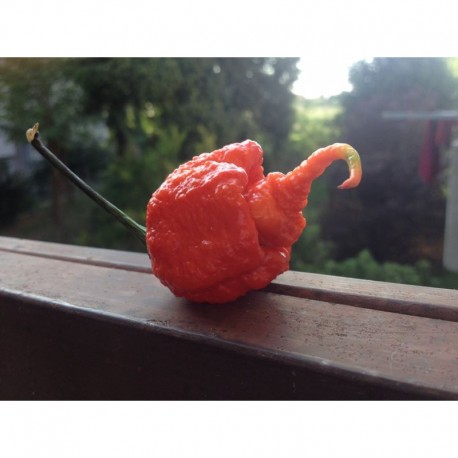
The Carolina Reaper is, to date, one of the hottest chili peppers ever measured. It belongs to the species Capsicum chinense and was bred by American grower Ed Currie of PuckerButt Pepper Company, crossing a Naga Morich with a Saint Vincent red Habanero. In 2013 Guinness World Records certified its record heat, averaging 1,569,300 Scoville Heat Units with peaks nearing 2,200,000 SHU. The fruit is instantly recognizable by its wrinkled, bumpy skin and the pointed "tail" at its tip, resembling a scorpion's sting.
The Carolina Reaper Plant
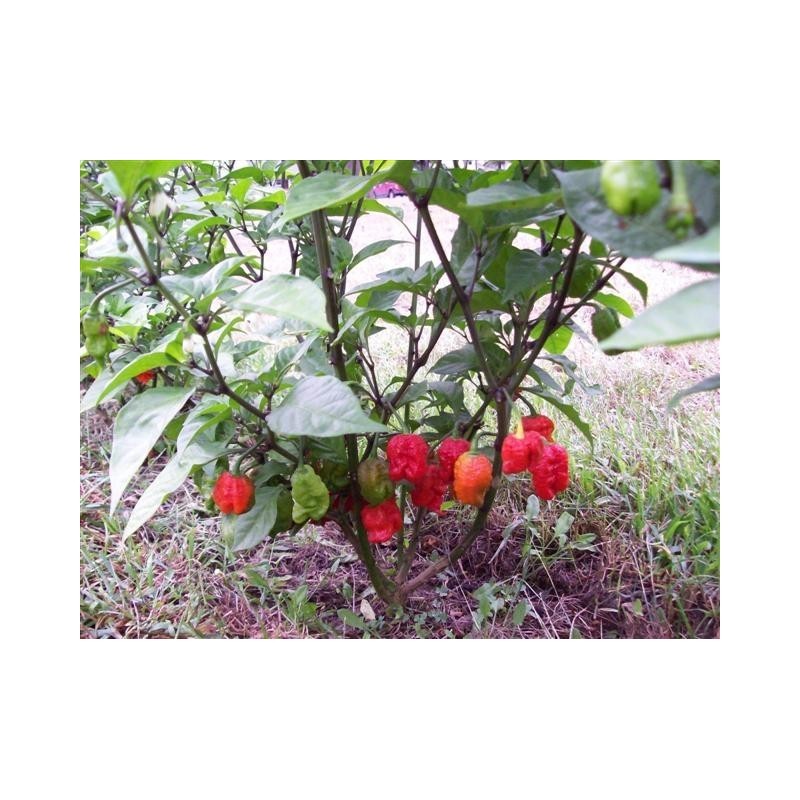
The plant grows as a compact, vigorous bush that can reach 80-100 cm in height outdoors under favorable conditions. The leaves are small, dark green and glossy; the white flowers, tinged with green at the center, open in succession throughout summer, ensuring staggered fruiting until the first autumn frosts.
Fruits ripen from green to bright red (a yellow variant known as Caramel also exists, equally hot but different in color), and can stay on the plant for a long time if left unpicked, growing even hotter and more flavorful.
How To Sow Carolina Reaper
Sow in a heated seedbed between February and March, keeping temperatures constant at 25-28°C: seeds of this species germinate more slowly than common chili peppers, sometimes taking 3-4 weeks. Bury them about 0.5 cm deep in a light, well-drained substrate, kept moist but never waterlogged.
How To Grow Carolina Reaper
Transplant outdoors once night temperatures stay above 15°C, generally from May. Carolina Reaper loves very sunny, wind-sheltered spots, with fertile, loose soil rich in organic matter. Recommended spacing is 50-60 cm between plants.
Watering should be regular but never excessive, avoiding waterlogging that favors root rot. Harvesting usually begins in late summer and continues until the first frosts, picking the peppers once they reach their final color.
Care Tips for Carolina Reaper
Given its extreme heat, always handle the fruits with disposable gloves, avoiding direct contact with eyes and mucous membranes. Container growing is possible and indeed recommended in colder areas, allowing the plant to be sheltered in a cold greenhouse or veranda over winter, since it behaves as a perennial in mild climates.
Diseases and Pests of Carolina Reaper
Like other Capsicum species, it can be affected by aphids, spider mites and whitefly, especially under protected cultivation with poor ventilation. Collar rot and fungal pathogens are prevented with good drainage and moderate watering, avoiding wetting the foliage during the hottest hours.
Properties of Carolina Reaper
Capsaicin, responsible for its extreme heat, has thermogenic properties and boosts metabolism; in tiny amounts it is also linked to antioxidant effects. Carolina Reaper is used almost exclusively as powder or in sauces and extracts, given its very small amount of flesh and intense flavor, requiring minimal doses even for the most seasoned palates.
Nutritional Values of Carolina Reaper (per 100 g)
- Calories: 40 kcal
- Protein: 1.9 g
- Fat: 0.4 g
- Carbohydrates: 8.8 g
- Fiber: 1.5 g
- Vitamin C: 144 mg
- Potassium: 322 mg