

No products
fennel seeds
-
Semi ortaggi
-
Summer vegetables seeds
- Garlic seeds
- Watermelon seeds
- Asparagus seeds
- Chili seeds
- Beet seeds
- Basil seeds
- Chard seeds
- Cabbage seeds
- Onion seeds
- Carrot seeds
- artichoke seeds
- Cucumber seeds
- Strawberry seeds
- Bean and green bean seeds
- Broad bean seeds
- Lettuce seeds
- Corn seed
- Eggplant seeds
- Melon seeds
- Okra seeds
- Tomato seeds
- Pea seeds
- Leek seeds
- Pepper seeds
- Radish seeds
- Arugula seeds
- Shallot seeds
- Celery seeds
- Spinach seeds
- Valerian seeds
- Pumpkin seeds
- Courgette seeds
-
Winter vegetables seeds
- broccoli seeds
- cauliflower seeds
- semi di cavolo
- fennel seeds
- Semi di lattuga
- chicory seeds
- Radicchio seeds
- Rocket seeds
- Chard and Beet Seeds
- Escarole Seeds
- Onion Seeds
- Basil Seeds
- Chard Seeds
- Artichoke Seeds
- Carrot Seeds
- Cucumber Seeds
- Bean Seeds
- Endive Seeds
- Leek Seeds
- Parsley Seeds
- Celery Seeds
- Spinach Seeds
- Valerian Seeds
-
Summer vegetables seeds
- Peperoncino secco
- Peperoncino in polvere
- Semi piante aromatiche
- Prati e tappeti erbosi
- Semi fiori ornamentali
- Fertilizzanti
- Fertilizzante solido
- Spezie
- eBook
- Bulbi
- Starter kit / Micro orto
- Idea regalo / Bomboniere
- Patate e tuberi da semina
- Buoni regalo digitali
- TEST posizioni
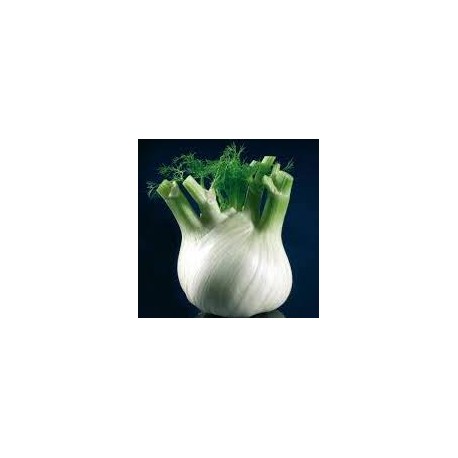 View larger
Tarquinio Fennel Seeds
New product
Seeds of a late winter variety with a globe-shaped, very white bulb, crisp low-fiber sheaths, highly resistant to cold and bolting.
100 Items
More info
- Tarquinio fennel
- The Tarquinio fennel plant
- How to sow Tarquinio fennel
- How to grow Tarquinio fennel
- Tips for growing Tarquinio fennel
- Diseases and pests of Tarquinio fennel
- Properties of Tarquinio fennel
- Nutritional values of Tarquinio fennel (per 100 g)
Tarquinio fennel
Tarquinio fennel is a late winter variety, highly valued for its strong resistance to cold and to bolting. The bulb is globe-shaped and very white, with crisp, fleshy sheaths that stay low in fiber. It also stands out for a particularly intense aroma, which makes it especially prized in the kitchen.
The Tarquinio fennel plant
This is a herbaceous plant (Foeniculum vulgare var. azoricum) of the Apiaceae family, with wide, fleshy leaf sheaths overlapping to form the characteristic bulb at the base and an upright, hollow stem with thin, finely divided leaves. Tarquinio has a late winter growing cycle, with a harvest time of about 150 days from sowing, the longest among the main bulb fennel varieties.
The mature bulb is globe-shaped and very white, with thick, fleshy sheaths that are very crisp and low in fiber. What sets this variety apart most, though, is its remarkable cold hardiness and very low tendency to bolt, qualities that make it ideal for winter crops extending into late autumn and early winter.
How to sow Tarquinio fennel
Being a long-cycle variety, sowing must be done well in advance, generally between late June and July, in a seedbed or directly in open field. Seeds should be buried about 1-1.5 cm deep, keeping the soil consistently moist until germination. Sowing early is essential to give the bulb the 150 days it needs to fully develop before the harshest part of winter.
How to grow Tarquinio fennel
Tarquinio fennel prefers medium-textured, fresh soil free of waterlogging, well supplied with organic matter. The ideal exposure is moderately sunny: the variety dislikes high temperatures, which is why it performs best precisely in the cold season, when excessive heat is not an issue.
A planting density of about 10 plants per square meter is recommended, to give the bulb enough room to develop. Watering must be generous and regular throughout the growing cycle, which is notably longer than that of early varieties.
Tips for growing Tarquinio fennel
Periodic earthing up of the base helps keep the bulb's very white color by protecting it from direct light. Thanks to its strong cold hardiness, this variety can stay in the field longer than others without risk of early bolting, but it's still advisable to protect plants with a floating row cover on nights with particularly hard frost.
Diseases and pests of Tarquinio fennel
Common diseases include septoria and cercospora, responsible for necrotic spots on the leaves, and powdery mildew, recognizable by its typical white powdery coating. The winter growing cycle, with lower temperatures, naturally reduces pressure from many pests typical of the warm season, such as aphids and fennel fly.
Properties of Tarquinio fennel
The bulb of Tarquinio fennel is rich in water and fiber, with a low calorie content that makes it suitable for light, balanced diets. It contains potassium, useful for the body's fluid and mineral balance, and the typical aromatic compounds of fennel, known for their digestive and carminative properties, especially pronounced in this intensely fragrant variety.
Nutritional values of Tarquinio fennel (per 100 g)
- Calories: 31 kcal
- Protein: 1.2 g
- Fat: 0.2 g
- Carbohydrates: 7.3 g
- Fiber: 3.1 g
- Vitamin C: 12 mg
- Potassium: 414 mg